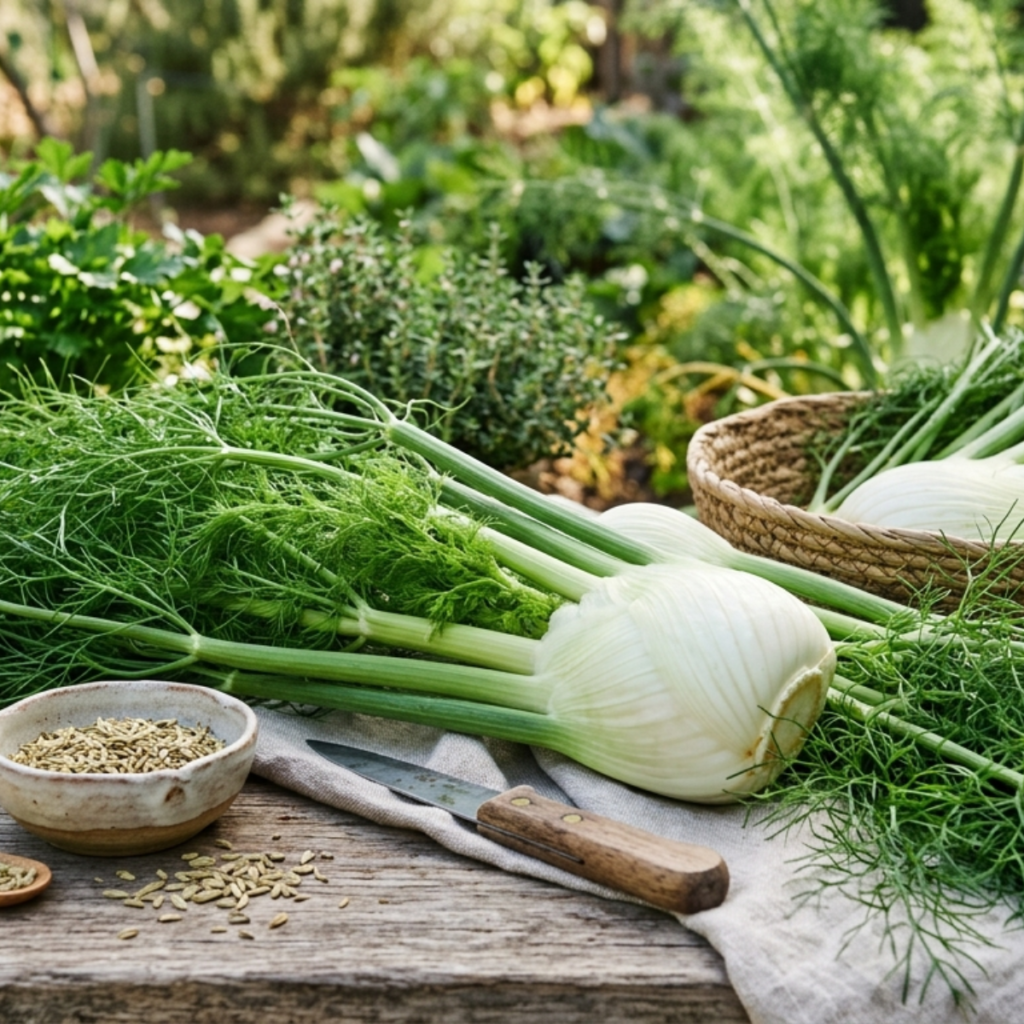
Discover fennel with this complete, eye opening guide. Learn about its traditional uses, culinary secrets and the best ways to store it, so you can bring more of this Mediterranean favorite into your kitchen.
I’ll admit I woke up today with a huge amount of energy, one of those mornings where you feel like you have to share something worthwhile because it just won’t stay inside. It happens to me all the time: I discover a new property, or a new way to cook something, and I need to tell the world. So get ready, because today we’re diving fully into the world of this plant, which is, without exaggeration, one of the most versatile gifts the Mediterranean has given us.
We’ll talk about what it has to offer, how to use it from root to seed, how to store it so not a scrap goes to waste, and I’ll answer all those questions that have probably been floating around your head. If you’re looking for something real, down to earth and genuinely useful, you’re in the right place.
Why fennel changed how I think about feeling good
I don’t know if this is you too, but I’m one of those people who can’t stop creating, thinking and trying new things. My mind runs at a thousand miles an hour and sometimes my body doesn’t keep up, especially when it comes to digestion. For years I dealt with the kind of bloating that makes you uncomfortable even in your loosest clothes. I tried plenty of things, but it wasn’t until I came back to fennel more deliberately that things started to click for me.
I remember one spring afternoon perfectly, walking through the countryside near my house. That sweet, almost licorice like smell filled the air. I stopped to look at those yellow flowers, so delicate and so tough at the same time, and I remembered what my grandmother always said about seed infusions. I decided I couldn’t just skim the surface.
So I started reading, testing recipes, planting my own bulbs and experimenting. What I found made enough of a difference that I felt lighter and, along with that, got back the spark to keep starting new projects.
That’s why I’m here today, because when something works this well for you, the natural thing is to share it with a friend. A note before we go on: everything here is about food and traditional uses, not medical advice, and none of it replaces talking with your doctor.
Fennel at a glance
| Category | Detail and use | What it’s known for |
| Digestion | Seed infusions and raw bulb. | A long standing folk remedy for gas and bloating. |
| Women’s health | Regular use in salads or as a tea. | Traditionally associated with menstrual comfort, though the research is limited. |
| In the kitchen: bulb | Raw in salads (with citrus) or roasted. | Adds fiber, some vitamin C and a sweet, anise like flavor. |
| In the kitchen: seeds | Seasoning for bread, bean stews or fish. | Rounds out heavy dishes and adds aroma. |
| In the kitchen: fronds | Garnish, plus a base for broths and oils. | Antioxidant compounds and instant freshness on the plate. |
| Storage | Fridge (short term) or blanched and frozen. | Keeps it fresh and stops the bulb from browning. |
| Growing at home | Needs direct sun and pots with good drainage. | Fresh fennel on hand whenever you want it. |
| Fluid balance | Fennel water or a daily infusion. | Has a mild traditional reputation as a diuretic. |
What fennel actually is, and why it’s a botanical treasure
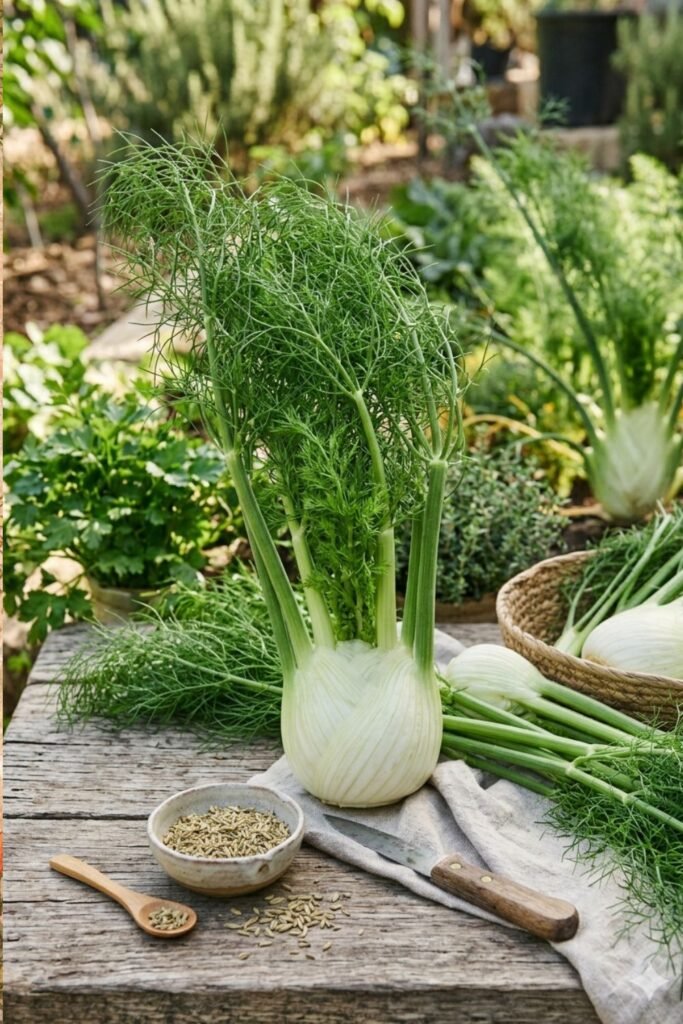
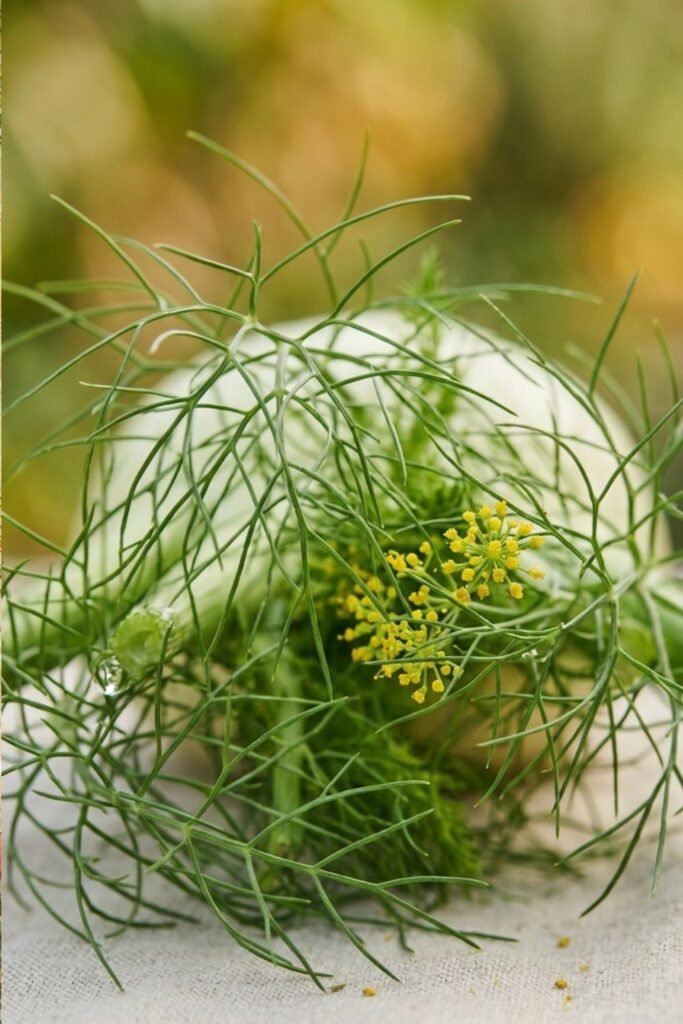
Let’s start with the formal introduction. Fennel is Foeniculum vulgare. It belongs to the Apiaceae family, which makes it a first cousin to celery, parsley, dill and carrot. But to me, fennel is the adventurous, elegant cousin. It’s an herbaceous plant that can reach six feet tall, with feathery fronds that look like green clouds and yellow flowers arranged in umbels that draw pollinators like magnets.
What makes fennel so special is that you can use essentially all of it. In cooking and in traditional herbalism, people say nothing on a fennel plant goes to waste. There’s the bulb, that fleshy white base you buy at the store, and the stalks, which are firm and aromatic. Then the fronds, which are lovely for garnishing and flavoring, and of course the seeds, which are little concentrated bombs of flavor.
The difference between wild fennel and Florence fennel
This is where a lot of people get confused, so it’s worth clearing up. Wild fennel is what you find growing along paths. It’s a scrappier plant that usually doesn’t develop a large bulb. It’s used mainly for its fronds and seeds, which have a very intense aroma.
Then there’s Florence fennel, or sweet fennel, the variety grown specifically so the base swells into that tender, crunchy bulb we love to eat. Both are wonderful, but they have slightly different roles in the kitchen and in the home remedy cabinet.
What fennel is traditionally used for
Let’s talk about what really matters, which is how fennel might work for you. It isn’t just that it smells good and tastes wonderful, its chemistry is genuinely interesting. It contains anethole, estragole and limonene, aromatic compounds that have been studied for a range of effects, though most of that research is early and much of it isn’t in humans.
Let’s bring that down to earth and look at how people actually use it day to day.
A traditional friend to the digestive system
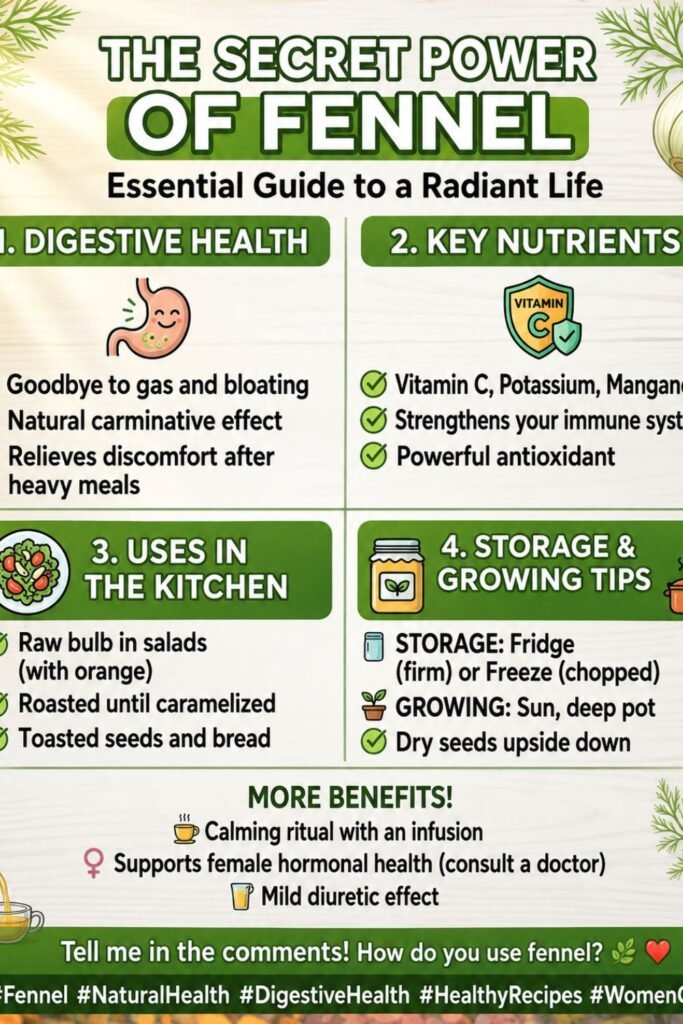
If there’s one thing fennel is known for around the world, it’s soothing digestion. It’s described as carminative, which in plain language means it has a long history of being used to ease gas and keep it from building up.
If you’re someone who feels like a balloon after eating beans or certain vegetables, fennel may be worth a try. It’s traditionally used to help relax the muscles of the digestive tract and ease cramping, and many people find a cup after a meal settles things. The evidence here is mostly small studies and centuries of habit rather than anything definitive, so treat it as a pleasant thing to try, and if bloating or abdominal pain is frequent or severe, that’s worth a conversation with your doctor rather than a cup of tea.
Antioxidants and vitamins
We don’t usually think of fennel as a source of vitamins, but it does contribute. It provides a useful amount of vitamin C, which matters for immune function and collagen production. It also gives you potassium, which plays a role in blood pressure regulation, and manganese, which is involved in metabolism and bone health.
It also contains flavonoids and other antioxidant compounds. None of that makes it a miracle food, but it does make fennel a genuinely good addition to a varied diet, which is really where the benefit comes from.
Fennel and women’s health
Fennel has been linked with women’s health for a very long time. It contains compounds with mild phytoestrogenic activity, and some small studies have looked at fennel extracts for premenstrual and menstrual symptoms with mixed results. A lot of women use it and find it helpful, but this is an area where the research is thin, so it’s worth going in with realistic expectations. If you have a hormone sensitive condition or you’re on hormonal medication, check with your doctor first.
It’s also been used traditionally to support milk supply during breastfeeding. Here I’d be especially careful: the evidence is weak, some health authorities advise caution because of the estragole content, and anything passing into breast milk deserves a real conversation with your midwife, lactation consultant or doctor before you start.
A gentle diuretic reputation
If you feel like you’re holding onto water, or your legs feel heavier than usual by the end of the day, fennel has a traditional reputation as a mild diuretic and plenty of people find a daily infusion helps them feel less puffy.
It’s not an aggressive diuretic, and it isn’t doing anything dramatic to your kidneys. Do keep in mind that persistent swelling can have causes worth investigating, so if it’s new, one sided or accompanied by other symptoms, get it checked rather than treating it with tea.
How to cook with fennel and impress everyone
Walking into the kitchen with a fennel bulb opens the door to real creativity. A lot of people stop at throwing it in soup, but there’s so much more to discover. The flavor is lightly sweet with that anise note, which can be subtle or pronounced depending on how you prepare it.
The bulb: the crunchy star
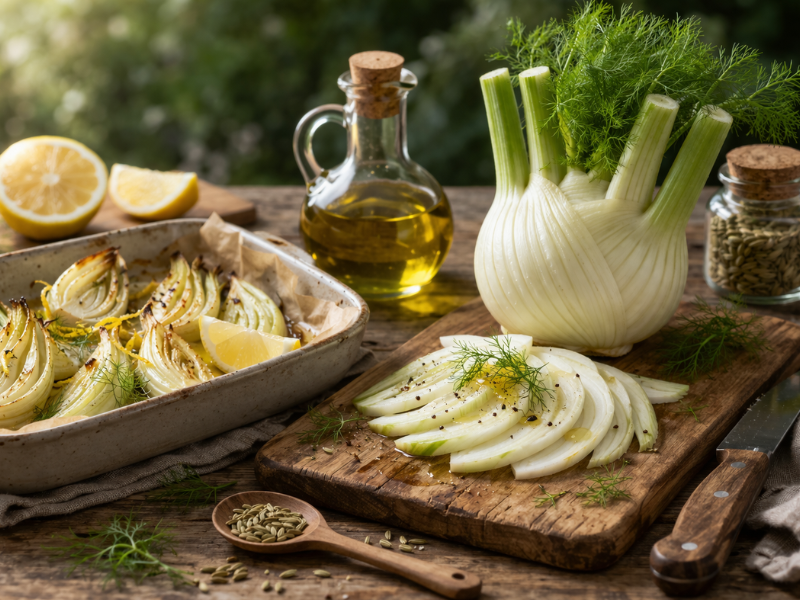
I love the bulb raw. If you slice it very, very thin, almost translucent, with a mandoline, you have the base for an incredible salad. Toss it with orange segments, some black olives and a good pour of extra virgin olive oil. The contrast between the sweetness of the orange and the anise of the fennel is a burst of flavor that wakes up every sense.
If you’d rather cook it, roasted fennel is another dimension entirely. In the oven’s heat, its natural sugars caramelize. Cut the bulb into quarters, add salt, pepper and a little thyme, and roast until tender with golden edges. It turns soft, sweet and almost buttery in texture, and it pairs beautifully with white fish or simply as a side for quinoa or brown rice.
Stalks and fronds: the aromatic touch
Don’t make the mistake of tossing the green stalks. They’re more fibrous than the bulb, but they carry a ton of flavor. I usually mince them finely and add them to a sauté base, or save them for a homemade vegetable broth that makes the whole house smell wonderful.
The fronds, the ones that look like little feathers, are my favorite substitute for dill or parsley in a lot of dishes. They look beautiful scattered over a butternut squash soup and add a fresh aroma right at the end of cooking that’s simply lovely.
The seeds: concentrated treasure
Fennel seeds are a staple in my pantry. I use them for everything, from flavoring homemade bread to adding them to a lentil stew so it sits more comfortably. If you want a professional trick, toast the seeds lightly in a dry skillet before using them. You’ll see how the aroma multiplies and fills the whole kitchen.
You can also crush them in a mortar to make a dressing with oil, lemon and salt that gives any tomato salad a different character.
Fennel tea: the calm ritual you need
We couldn’t talk about fennel without giving its tea a place of honor. For me, making a warm cup of fennel tea after dinner is a sacred ritual. It’s the moment I tell my body it can start winding down, that the day’s work is done and now it’s time to take care of myself.
For the perfect infusion, use a teaspoon of fennel seeds per cup of water. The secret is to crush the seeds a little before adding them to the boiling water so they release their aromatic oils. Let them steep for about ten minutes with the cup covered so nothing escapes.
Add a slice of ginger or a piece of lemon peel and you have a delicious drink that will make you feel refreshed. A cup or two a day is a reasonable habit; there’s no reason to drink it by the pot.
Growing your own fennel: a rewarding project
Planting fennel is one of those things that gives you enormous satisfaction. You don’t need a big plot of land, you can even grow it in a deep pot on your balcony or patio.
Fennel loves sun. Find the brightest corner you have. It needs soil that drains well, because it does not like sitting with wet feet. Spring is the ideal time to plant. One heads up for gardeners: fennel is famously unfriendly to many neighboring plants, so give it its own pot or a corner of its own rather than tucking it into a mixed bed.
You’ll need patience at first, but once it takes off it grows with incredible vigor. Watching those first green shoots appear and the bulb start to widen is humbling, and a direct connection to the cycles of life. Plus, having fresh fennel on hand is a small luxury.
Storage methods so you always have fennel on hand
Sometimes we buy more than we need, or the harvest is so generous we don’t know what to do with it all. Don’t worry, there are great ways to store fennel so it keeps its flavor.
Keeping it in the fridge
If you’ll use the bulb in the next few days, store it in a cloth bag or wrapped in damp paper towel in the crisper drawer. It holds up nicely for about five or six days.
Just try not to remove the stalks until you’re ready to use it, since they help keep the bulb fresh longer.
Freezing: the practical option
Yes, fennel freezes. My advice is to cut the bulb into pieces or slices, blanch it in boiling water for barely two minutes, then plunge it into ice water to stop the cooking. Dry it thoroughly, put it in freezer bags and you’re set.
This way it keeps its flavor and color. Keep in mind that thawed fennel loses its crunch, so it’s better used for stews, purées or roasting rather than eaten raw.
Drying: for seeds and fronds
If you have a lot of fronds or you’ve collected seeds, drying is your best friend. You can air dry the fronds somewhere dark and well ventilated, or use a dehydrator if you have one. Once dry, crumble them and store them in a tightly closed glass jar.
Seeds need to be completely dry before storing so mold doesn’t develop. Kept somewhere cool and dry, away from direct light, they’ll hold their flavor for a good year.
Quick pickled fennel
This is one of my favorite ways to keep fennel, because it gives it a whole new use. Slice the bulb thin and put it in a jar with a mix of apple cider vinegar, water, a little salt, a pinch of sugar and some mustard seeds or peppercorns. Leave it in the fridge for a couple of days before trying it.
You’ll end up with a crunchy, delicious pickle that adds something special to any sandwich or fish dish. This is a refrigerator pickle, so keep it in the fridge and eat it within a few weeks rather than storing it at room temperature.
Frequently asked questions about fennel
Can I give fennel tea to my baby for colic?
This is a classic question, and the answer is no, not without talking to your pediatrician first. It was traditionally done a great deal, but pediatricians today advise real caution. A baby’s digestive system is very immature, herbal teas can displace milk intake, and there are specific concerns about the estragole content. Please check with your pediatrician before giving an infant any herbal preparation.
Does fennel actually help with weight loss?
There are no magic plants that burn fat. Fennel can be a nice part of a balanced way of eating: it’s low in calories, it has fiber that helps you feel full, and some people find it makes them feel less bloated. But it isn’t going to change the scale on its own, and anyone promising that is overselling it.
Is there anyone who shouldn’t have fennel?
As a food, fennel is well tolerated by most people. More caution is warranted with concentrated forms like essential oil or large amounts of strong tea, and particularly if you’re pregnant or breastfeeding, if you have a hormone sensitive condition, if you have epilepsy or a seizure disorder, or if you take medication that might interact. People allergic to other plants in the carrot and celery family can also react to it. When in doubt, food amounts are the safe end of the range, and your doctor or pharmacist is the right person to ask.
How do I know if a fennel bulb is fresh at the store?
Look at the bulb: it should be nice and white, firm, with no brown spots or bruises. The stalks should be rigid rather than limp, and the fronds should be a vibrant green, not yellowing. If you give it a squeeze, it should feel dense.
Can you eat the fennel root?
We normally eat the bulb (which is technically the thickened base of the stalks) rather than the deep root. The root has been used in traditional preparations too, but from a cooking standpoint it isn’t the rewarding part. Stick with the bulb, the stalks and the seeds.
Fennel smells like anise, but does it taste the same?
It has a clear anise note, but fennel is much more complex. It has an herbal freshness that dried anise doesn’t. If you don’t like anise, I’d encourage you to try fennel cooked, since that note turns into a delicate, earthy sweetness that often wins over even licorice skeptics.
Folklore and curiosities: the magical side of fennel
I can’t help it, I love the history behind plants. Fennel has been part of our culture for thousands of years. In ancient Greece the plant was called marathon, and the famous battlefield of Marathon got its name because it was covered in wild fennel. Greek warriors believed fennel gave them strength and courage before battle.
In the Middle Ages it was considered a protective plant. People hung bunches of fennel on their doors to ward off evil spirits and keep witchcraft out. On Midsummer’s Eve, fennel was commonly included in the bundles of magical herbs left out overnight.
I like to think that protection is real, just in a more down to earth way: it protects us from heavy meals, sluggishness and dull cooking.
Having fennel at home means having a small piece of that old knowledge, the kind that reminds us how much what we eat shapes how we feel.
Fennel around the world: a journey of flavors
It’s fascinating how differently each culture has taken up fennel. In India, for example, it’s common to find sugar coated fennel seeds (called mukhwas) on the way out of restaurants. People chew them after meals to freshen breath and settle the stomach. It’s a wonderful habit you could easily adopt at home.
In Italy, fennel is king. Finocchiona is a classic Tuscan salami made with fennel seeds, and the story goes that they started using them because the strong aroma covered up meat that wasn’t top quality. Today it’s a gourmet delicacy. And then there’s fennel gratin with béchamel, an Italian classic that’s pure comfort on a winter day.
In Spain, it’s widely used to season olives. Wild fennel is the soul of many traditionally cured olives, giving them that rustic Mediterranean character that makes them irresistible. It’s also key in some traditional bean stews and in baked fish dishes along the coast.
Conclusion: Make fennel your new best friend
Well, my friend, we’ve covered a lot of ground today. I hope that after reading all this, the next time you see fennel at the market or growing in a field, you’ll look at it differently. It isn’t just another vegetable, it’s an ingredient worth getting to know, a source of inspiration in the kitchen and a link to our history and to nature.
I’ve shared my secrets, my own story and everything I’ve learned on this fennel journey. Now I’d love to hear from you. Do you like fennel, or are you still a little wary of that anise flavor? Do you have a family recipe you’d like to share? Or maybe a growing trick I don’t know about?
For me, the real magic happens when we share what we know. So I’d sincerely love it if you left a comment below. Tell me about your experience, ask me whatever you need, or just let me know whether you enjoyed this guide. I promise to read and reply with the same enthusiasm I wrote these lines with.
Before I go, let me say this: life is too short for heavy meals and boring food. Go ahead and put fennel in your cart this week. Experiment, taste, smell and see how you like it. Sometimes the biggest changes start with something as small and simple as a fennel seed.
Would you like the next article to go deeper into a specific fennel recipe, or would you rather we talk about another plant you’re curious about? Tell me in the comments and I’ll get to work!
A big hug, full of energy and good health. See you in the comments.