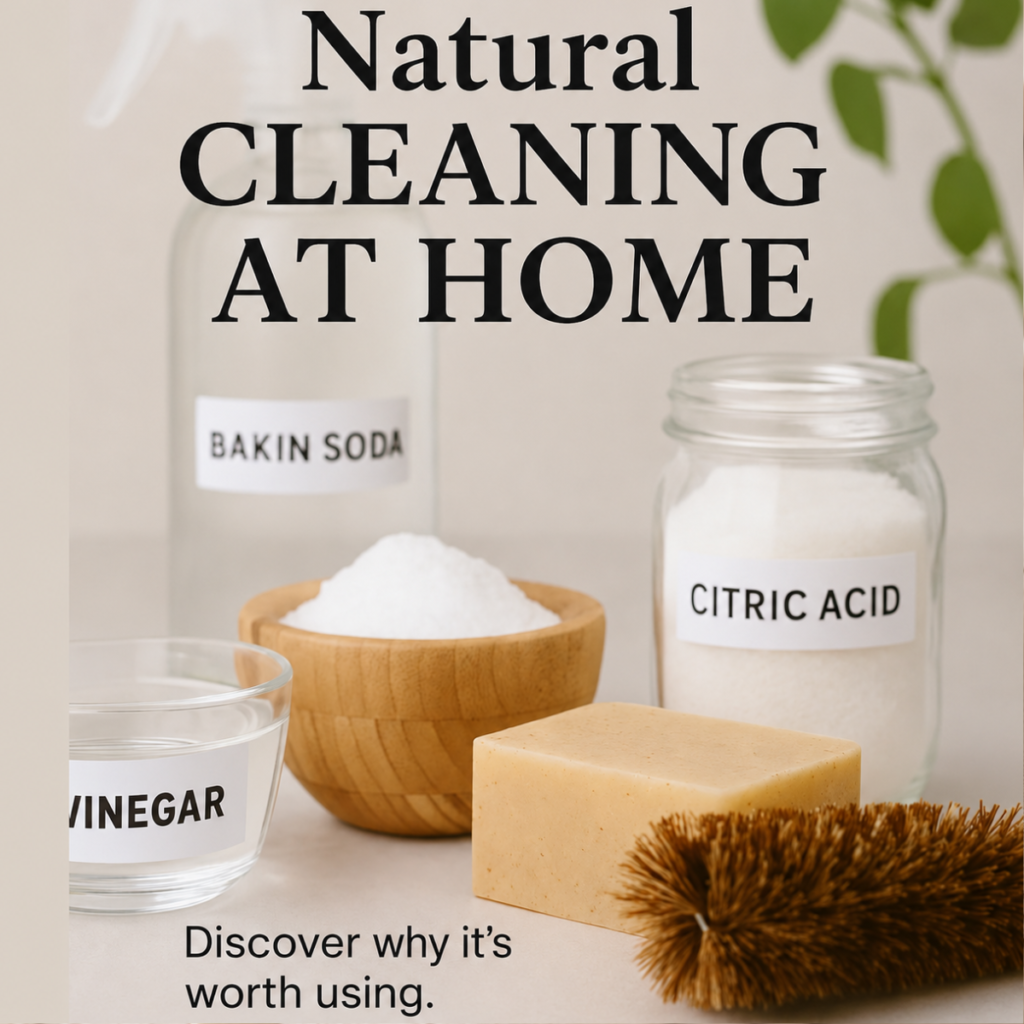
Today, I’d like to explain why I believe switching to natural cleaning products at home is worth considering. I’ve also put together a simple action plan to help you keep your home sparkling clean without relying on harsh chemicals. I hope you find it helpful!
Why I Switched to Natural Cleaning, and Why You Might Consider It Too
I initially switched to natural cleaning out of necessity, but I continued because I genuinely experienced the benefits. I grew tired of the strong smells of conventional cleaning products, of my hands getting irritated while cleaning, and of having countless cleaning products cluttering my cupboards.
I started by making a homemade all-purpose cleaner “just to try it” and ended up reassessing every cleaning product in my cupboard. What I discovered convinced me: I spent less money, generated less waste, and my home genuinely smelled fresh and clean rather than heavily perfumed.
This is the guide I wish I’d had when I first started. I’ll explain which natural cleaning products are genuinely worth using, how to use them properly (with tips and methods), which recipes actually work, how to store homemade cleaning solutions safely, what not to mix under any circumstances, and how to set up a realistic cleaning routine so that your home is spotless without making your life complicated. I hope you find it useful ^^
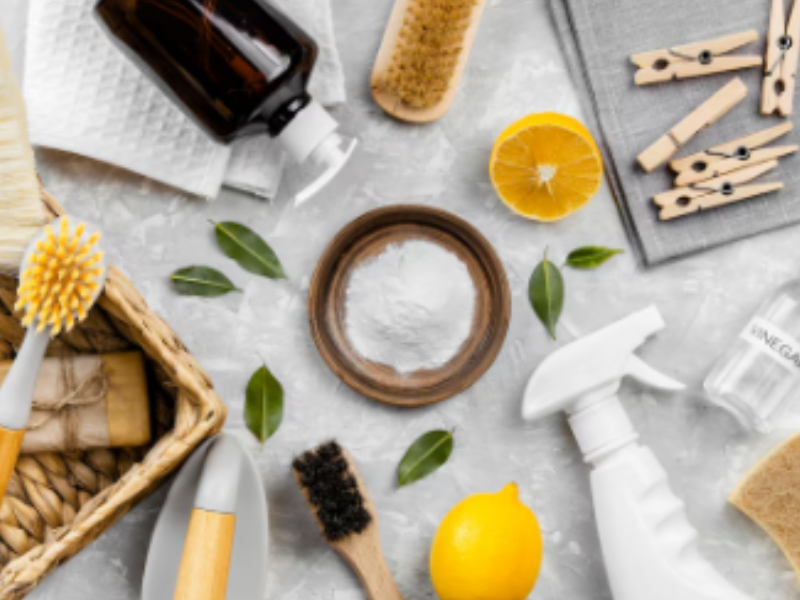
Real benefits of cleaning with natural products
Health and Well-Being: Breathe More Easily in Your Own Home
This used to happen to me all the time: I’d open a bottle of conventional cleaner and feel an unbearable itch in my nose. However, when I use simple products (cleaning vinegar, baking soda, Castile soap, citric acid, 70% rubbing alcohol, 3% hydrogen peroxide), the sensation changes.
Instead of being overwhelmed by strong artificial fragrances, the air in my home genuinely felt fresher. I think this is one of the best reasons to switch to natural cleaning.
Fewer synthetic fragrances and harsh cleaning chemicals may also mean less irritation for people with sensitive skin… Your house will smell clean, not like perfume.
Better for the Planet and Your Wallet: Less Waste, More Savings
With just five or six basic ingredients, you can tackle most cleaning jobs around the home, and if you buy the ingredients in larger quantities, they turn out super cheap.
Plus, you reduce plastics because you can reuse bottles with your own formulas. If you get organized, eco-friendly cleaning doesn’t have to be expensive—for example, percarbonate, citric acid, or baking soda go a long way.
Powerful Results: Remove Grease, Restore Shine, and Tackle Limescale
Natural products are not necessarily less effective. When used correctly, these ingredients can cut through grease, remove limescale, and brighten grout. The key is to combine them properly, allow each product enough contact time to work, and use the right tools (microfiber cloths, non-abrasive sponges, grout brushes, and a suitable mop..).
Your natural cleaning pantry: the 10 must-haves
These are the products that I think are essential to keep your house spotless:
1. Cleaning vinegar
It removes limescale, restores shine, and helps neutralize odors, so it’s perfect for cleaning faucets, shower screens, glass, and it is sometimes used as an alternative to conventional fabric softener. Tip: don’t use it on marble, limestone, or sensitive sealed surfaces.
2. Baking soda
It is mildly abrasive and helps neutralize odors. Perfect for cleaning ovens, greasy pans, drains, and heavily soiled areas. Making a “paste” with a little water works like magic.
3. Citric acid
Dissolves limescale, restores shine to surfaces, and replaces vinegar when you don’t want the smell. Perfect for use in kettles, coffee makers, faucets, and bathrooms. It dissolves easily in warm water. Prepared solutions should be labelled, stored correctly, and replaced if their appearance or smell changes.
4. Sodium percarbonate
An oxygen-based bleaching and stain-removal agent. Ideal for cleaning tile grout, white laundry, and toilet bowls… Use it with hot water and never mix it with vinegar or with chlorine (bleach).
5. Castile soap (liquid or grated)
A gentle and highly versatile cleaning base. It’s also biodegradable and very effective.
When properly diluted, it can be used for many everyday cleaning tasks and is particularly useful for floors and bathrooms.
6. 70% Rubbing Alcohol
Dries quickly and is useful for cleaning glass, some electronic screens when applied sparingly to a suitable cloth, or handles. Avoid using it on delicate woods and varnishes.
7. Hydrogen peroxide
A useful option for brightening grout and treating small areas of surface mould (always with ventilation and a dedicated cleaning cloth). Do not mix it with vinegar in the same container.
8. Sodium carbonate (washing soda)
Powerful degreaser for heavy-duty cleaning (for example, for the hood or the oven). Always wear gloves and rinse surfaces well when using it.
9. Essential oils (optional)
Eucalyptus, lemon, lavender, tea tree… They add fragrance, although they are not necessary for effective cleaning.
Use them in very small amounts, and check whether a particular essential oil is appropriate before using it around pregnant people, babies, pets, or anyone with allergies or respiratory sensitivities.
10. Tools that multiply results
Use high-quality microfiber cloths, non-abrasive sponges, grout brushes, ceramic hob scrapers, a microfiber mop, 500 ml spray bottles, funnels, and labels, and you’ll have everything you need for a basic natural-cleaning kit.
Safety: Ingredients You Should Never Mix and Essential Precautions
Dangerous Combinations to Avoid (important)
- Bleach + vinegar or acids = chlorine gas (dangerous).
- Bleach + ammonia = chloramines (toxic).
- Sodium percarbonate + vinegar or other acids: the ingredients react with and neutralize one another, reducing their cleaning effectiveness.
- Hydrogen peroxide + vinegar in the same container may form peracetic acid, which can irritate the eyes, skin, and respiratory system. Never combine them in the same bottle.
Protect your hands and your home
- Wear gloves when handling washing soda, sodium percarbonate, concentrated cleaning solutions, or carrying out heavy-duty cleaning.
- Always ventilate the rooms.
- Before using your formulas on a new surface, test them on a small, inconspicuous area.
- Label your homemade products with the date, ingredients, and their intended use.
- Keep them out of reach of children and pets.
Storage and Shelf Life: Keeping Your Homemade Cleaners in Good Condition
General rules
- Use distilled water when preparing water-based solutions, as this may help reduce contamination and extend their usable life.
- Use opaque or amber bottles to store your formulas with essential oils, this way you protect them from light.
- Keep your products away from heat and the sun.
- Prepare small batches based on how much you are likely to use within the recommended storage period.
Signs that it’s time to renew your products
- If you notice a “strange” or rancid smell.
- Persistent separation that does not disappear after shaking.
- Noticeable color change.
- Clear loss of effectiveness.
Action plan: clean better in less time
This is only a suggested plan, so feel free to adapt it to your household, schedule, and needs.
Weekly routine
- Monday: quick kitchen clean (countertop, stove, sink), with multi-purpose cleaner.
- Wednesday: bathrooms (sink, toilet, faucets), using a suitable homemade descaler and all-purpose cleaner.
- Friday: floors and shower screens.
- Sunday: oven or fridge, if needed.
Monthly maintenance
- Flush drains with hot water and clean the removable parts where possible. Avoid relying on baking soda and vinegar together, as they largely neutralize one another.
- Clean the grout with sodium percarbonate, following the product instructions.
- Clean the extractor hood and its filters (degreaser with carbonate + soap).
- Washing machine: if permitted by the manufacturer, run a maintenance cycle using an appropriate citric-acid solution.
Tools ready and accessible
Keep your essential cleaning supplies together in a caddy: all-purpose cleaner, limescale remover, glass cleaner, microfiber cloths (2 colors), sponges, grout brushes, gloves, mop… When everything is within easy reach, cleaning becomes quicker and easier.
Common mistakes (and how to avoid them)
Using More Product Means Better Results
No. More soap can leave streaks and needs more rinsing. Follow the recommended quantities.
“Vinegar is good for everything”
No. Natural stone, marble, cement, or some types of modern grout can be damaged by vinegar. For those surfaces, it’s better to use neutral soap and water. Remember to always do a test in an inconspicuous area, especially if the surfaces are delicate.
“Natural Products Cannot Sanitize Surfaces”
It depends. 70% rubbing alcohol, or 3% hydrogen peroxide, when used properly, can reduce microorganisms on certain suitable surfaces when used at the correct concentration and for the appropriate contact time. Still, most homes do not need to be disinfected as thoroughly as a clinical environment.
Mixing Everything Together Saves Time
This is a serious mistake. Household cleaning ingredients can react with one another. Follow the recipes, and respect the incompatibilities between products.
Frequently Asked Questions
Can I use these recipes with pets at home?
Yes, but take appropriate precautions. Avoid using essential oils on surfaces that pets may lick or in areas where they spend a great deal of time. Make sure to ventilate well, and keep products out of their reach.
Do they work in areas with very hard water?
Yes, but you may need to adjust the citric-acid concentration carefully, and then dry the surface thoroughly with a clean cloth to prevent marks.
What if I can’t stand the smell of vinegar?
In many recipes you can substitute it with citric acid, or infuse vinegar with citrus peel. The smell disappears when the surface dries.
How Should I Clean Delicate Surfaces?
Avoid acidic cleaners on marble, many natural-stone surfaces, and unfinished wood. It’s better to use highly diluted Castile soap and a soft cloth, then dry the surface immediately.
Are essential oils a must?
No. Essential oils are entirely optional and are mainly used to add fragrance. If you use them, use a small amount and choose the right ones. If there are pregnant women, babies, or people with allergies at home, it’s better to do without them.
Can I always refill the same bottle?
Yes, but wash it with hot water and let it dry well before making a new batch. Avoid mixing leftovers from different formulas.
How Often Do I Really Need to Disinfect?
In a normal home, regular cleaning is enough. You only need occasional disinfection in high-touch areas, like when someone at home is sick, for example.
Honest comparison: natural vs. conventional
Cost
With natural ingredients, you spend a lot less money in the medium term. A kilo of citric acid or percarbonate, for example, lasts for several months.
Performance
When it comes to limescale, grease, and odors, natural products can be very effective if used properly. For tough stains, you might need a more specific, targeted approach.
Health and environment
Using simpler cleaning products can reduce the number of synthetic fragrances and harsh solvents used indoors, while reusable containers can also help cut down on packaging waste.
A Cleaner, More Mindful Home, Without the Complication
Using simpler cleaning products is more than just a trend; it can be a practical way to reduce waste, control costs, and simplify your cleaning routine. When you try a good homemade all-purpose cleaner, a descaler that brings shine back to your kitchen in minutes, or a paste that can clean an oven without any hassle, you realize that cleaning can be simpler, cheaper, and gentler on your home and better suited to your household’s needs.
A simple place to start is with one basic recipe, such as an all-purpose cleaner. I’d love to hear how you get on with natural cleaning in your home.
Tell me, do you already use natural products at home? What’s your go-to recipe, or is there a particular surface you’d like me to test a cleaning formula on and feature in a future post? I’d love to read about your experiences in the comments.
If you think someone around you would benefit from this guide, share it: sometimes changing just one product makes a huge difference.