Here’s the most effective way to make a homemade floor cleaner with plain white bar soap. Natural, inexpensive cleaning without harsh chemicals, for a home that feels genuinely clean.
For a long time I assumed that cleaning the house properly meant using strong products with intense scents and near magical promises on the label. The ones that say “ultra,” “extra,” “maximum power”… and yes, they seem effective, but something about it never quite sat right with me.
Because in the end you do clean, but you’re left with the feeling that you’re filling your home with products you don’t really need. That’s when I started questioning all of it.
What if I could clean just as well, but in a simpler, more natural and smarter way? That’s how I found something that seems almost too basic, and yet it completely changed how I clean: a homemade floor cleaner made with white bar soap.
It’s not just a recipe, it’s a way of doing things with more intention, more calm and, as it turns out, better results.
Why Make Your Own Floor Cleaner With White Soap
Cleaning With More Awareness
When you start making your own cleaning products, you notice something important. You control what goes into them. You know exactly what’s in every mix, and that changes how you live in your home.
White bar soap is a simple product, with no frills, no heavy perfumes and nothing extra thrown in. That makes the whole process gentler, not just on your surroundings but on you as well.
This isn’t about going to extremes or throwing out everything store bought overnight. It’s more of a natural shift toward more balanced options.
The Savings That Don’t Look Like Much but Add Up
At first this might look like just one more alternative, but once you’re using it regularly the difference in cost becomes noticeable.
A single bar of white soap lasts a very long time. With a small amount you can make several quarts of floor cleaner, which means you stop buying bottles over and over.
That kind of saving is quiet, but when you look back you realize you’d been spending on something you could make yourself for a fraction of the cost.
It Works Better Than You’d Expect
There’s a common idea that natural options don’t clean as well, as if they were gentler but less effective. In this case I’ve found the opposite to be true.
White soap cuts grease well, lifts everyday dirt without much scrubbing, and leaves the floor clean without the artificial layer some commercial products leave behind.
The result is a floor that’s actually clean, with no residue, no sticky feel and a much more natural finish.
| Section | Summary |
|---|---|
| What it is | A natural cleaner made from white bar soap and water, with no harsh chemicals. |
| Ingredients | Hot water, grated white soap, rubbing alcohol |
| How to make it | Dissolve the soap in hot water, mix well, add scent and let it cool. |
| How to use it | Add a splash to a bucket of water and mop as usual, no rinsing needed. |
| Recommended amount | Very little, less than a commercial product. |
| Floor types | Great for tile, porcelain, terrazzo and vinyl. |
| Precautions | Use sparingly on wood or laminate, and spot test first. |
| Benefits | Effective, residue free, more natural and inexpensive. |
| Scent | Soft and natural, customizable with essential oils. |
| Storage | Keep in a closed bottle somewhere cool and dark. |
| Shelf life | Roughly 2 to 3 weeks. |
| How often | Fine for regular, everyday use. |
| Households with kids and pets | A gentler option than many commercial cleaners, though it should still be stored out of reach. |
| Main advantage | Real cleaning without unnecessary extras. |
| Customization | Can be adapted with different essential oils. |
What White Soap Is and Why It Works So Well
White bar soap is one of those traditional products that gets handed down from one generation to the next. For a long time it was the go to for washing clothes, surfaces and basically everything in the house. If you’re not sure what to look for, a Marseille style or castile soap bar (or soap flakes) is the same idea.
Its makeup is simple, generally based on saponified fats and oils, which is what gives it cleaning power without needing anything aggressive added in.
What’s interesting is that, despite being such a simple product, it’s still remarkably effective. It doesn’t need strong perfumes or complicated formulas to do its job.
It’s also biodegradable, which makes it a more environmentally friendly choice. That combination of effectiveness, simplicity and sustainability is what makes it such an appealing option today.
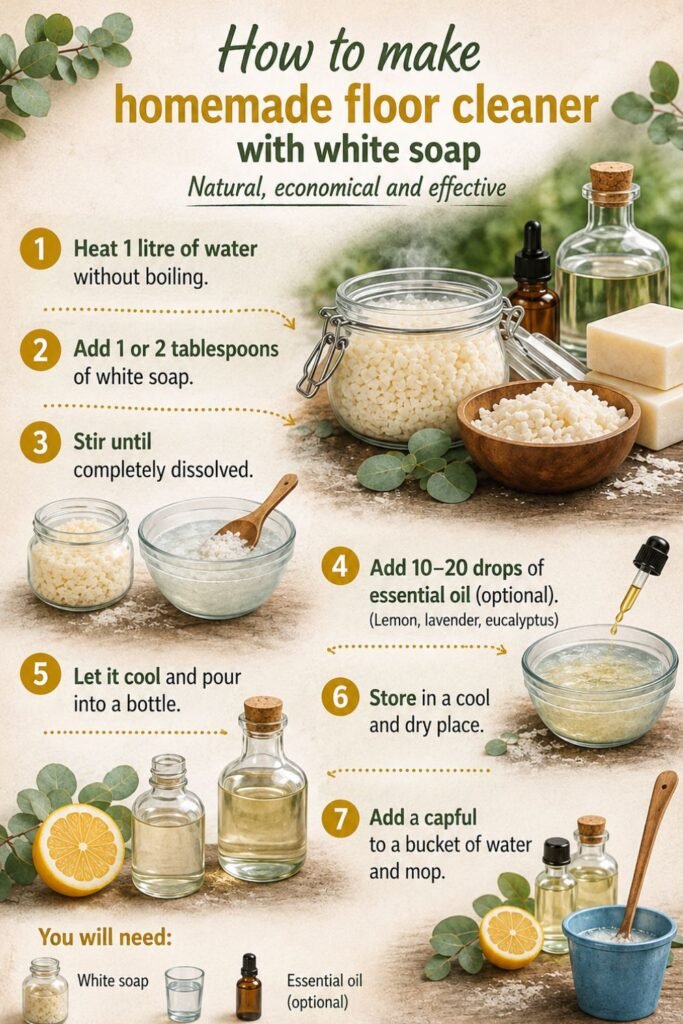
How to Make Homemade Floor Cleaner With White Soap Step by Step
Here’s the practical part. I’ll walk you through it exactly the way I do it, no complications.
Ingredients
- 2 liters (about half a gallon) of hot water
- 100 grams (about 3.5 oz) of grated white soap
- 20 ml (about 4 teaspoons) of rubbing alcohol
Preparation
Step 1: heat the water
Hot water helps the soap dissolve more easily.
Step 2: add the soap
Add the soap a little at a time while you stir.
Step 3: mix well
Make sure there are no solid bits left.
Step 4: add the alcohol
A little is plenty. Let the mixture cool off the heat before you add it, since alcohol is flammable, and work somewhere with decent ventilation. Never combine this mix with bleach or ammonia based cleaners.
Step 5: let it cool
Once it’s cool, it’s ready to use. Add a capful to a bucket of water
You can watch the whole process on YouTube
How to Use Your Homemade Floor Cleaner Properly
One of the more surprising things when you start using a cleaner like this is that you don’t need much of it to get a good result. If anything, the opposite is true. The simpler you keep it, the better it works.
What I usually do is fill the bucket with warm water and add a small splash of the homemade cleaner. There’s no need to measure precisely. Over time you’ll land on the amount that suits your home, but in general it’s quite a bit less than you’d use with a store bought product.
As you mop, you’ll notice the water doesn’t produce much foam. That can feel strange at first, since we’re used to associating suds with cleaning, but the two really aren’t connected. White soap cleans without needing to put on that visual show.
The floor comes out clean and residue free, and the best part is that you generally don’t need to rinse afterward. That alone simplifies the routine and makes everything faster. If your water is very hard, though, soap can leave a slight film, so in that case use less product and go over the floor once with clean water.
You’ll also notice the floor dries more evenly. No odd streaks and none of that artificial shine that sometimes looks more like a coating than actual clean.
Which Floor Types It Works Best On
This homemade cleaner is fairly versatile and adapts well to most surfaces, but there are a few things worth keeping in mind.
On porcelain, ceramic tile or terrazzo it works especially well. These are durable surfaces where white soap can do its thing easily, lifting dirt and grease without trouble.
On vinyl floors it also gives very good results. It cleans without damaging the surface and leaves a natural finish with nothing left behind.
When it comes to wood or laminate, it’s worth adjusting the amount. It’s not that you can’t use it, but a lower dose is better and you’ll want to wring the mop out thoroughly. Wood does better with gentler, more controlled cleaning, and if your floors are sealed with a specific finish, it’s worth checking the manufacturer’s care instructions first.
Either way, if you’re unsure about a particular floor type, the smart move is to test a small area first and see how it responds.
Benefits You Start Noticing Over Time
Beyond the cleaning itself, there are small changes that show up gradually and make a real difference.
The first is the smell. It isn’t that strong artificial scent that takes over the whole house, it’s something much softer. A clean smell, almost imperceptible, that doesn’t overwhelm the room.
Another one is the texture of the floor. It doesn’t end up sticky or coated with residue. Instead it dries clean and natural.
It also changes the way you think about cleaning. It becomes simpler, less loaded, calmer. Hard to explain until you experience it.
How to Customize Your Homemade Floor Cleaner
One of the best parts of making your own products is being able to tailor them to your taste.
White soap on its own cleans perfectly well, but adding essential oils turns it into something more personal.
Lemon essential oil is one of the most popular because it reads as clean and fresh. It’s ideal if you like the house to smell clean without feeling heavy.
Lavender is a softer, more relaxing choice. It works nicely if you’re after a calm atmosphere.
Eucalyptus brings a sharper sense of freshness, almost like airing out the house in the middle of winter. If you have pets, especially cats or birds, it’s worth looking into which essential oils are appropriate around them before you add any, since some can be a problem for them.
You can also combine small amounts until you land on the blend you like best. Over time, that scent becomes part of your home.
Storing Your Homemade Floor Cleaner
Since this is a natural mixture, it’s worth paying attention to how you store it.
The ideal setup is a closed bottle, preferably glass or sturdy plastic. Keeping it somewhere cool and out of direct light helps it hold up better. Label it clearly and store it out of reach of children and pets.
It usually keeps for two to three weeks. There’s no need to make large batches. In fact, it’s better to make just enough for that window so the product is always in good shape.
If at any point you notice a change in the smell or the texture, make a fresh batch. It’s so easy to put together that it’s no trouble at all.
Frequently Asked Questions About White Soap Floor Cleaner
Does it foam?
Very little, and that’s normal.
Does it clean as well as a commercial product?
In my experience yes, and on everyday dirt and grease it often holds its own. For sanitizing after something like raw meat on the floor, you’d want a product labeled as a disinfectant.
Is it safe around pets?
It’s a gentler option than many commercial cleaners, since there’s no bleach or ammonia involved. Even so, keep pets off the floor until it’s dry, store the bottle where they can’t reach it, and check which essential oils are appropriate before adding any.
Can I use it every day?
Yes, for regular use it’s fine. On wood floors, use less and wring the mop out well.
Since I started using this floor cleaner, I haven’t gone back. Because when something is simpler, more natural and works well on top of that, there’s not much reason to complicate it.
Learn step by step how to make a homemade floor cleaner with white bar soap. A natural, inexpensive and effective recipe for cleaning floors without harsh chemicals.
Total Time: 10 minutes
Heat the water
Heat 2 liters (about half a gallon) of water without letting it boil. Hot water helps the soap dissolve more easily.
Add the white soap
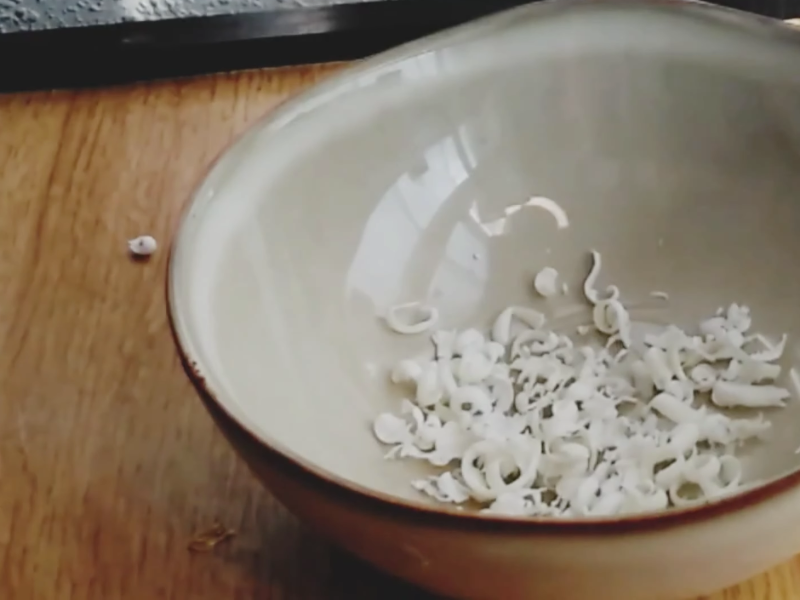
Add 100 grams (about 3.5 oz) of grated white soap or soap flakes to the hot water.
Mix well
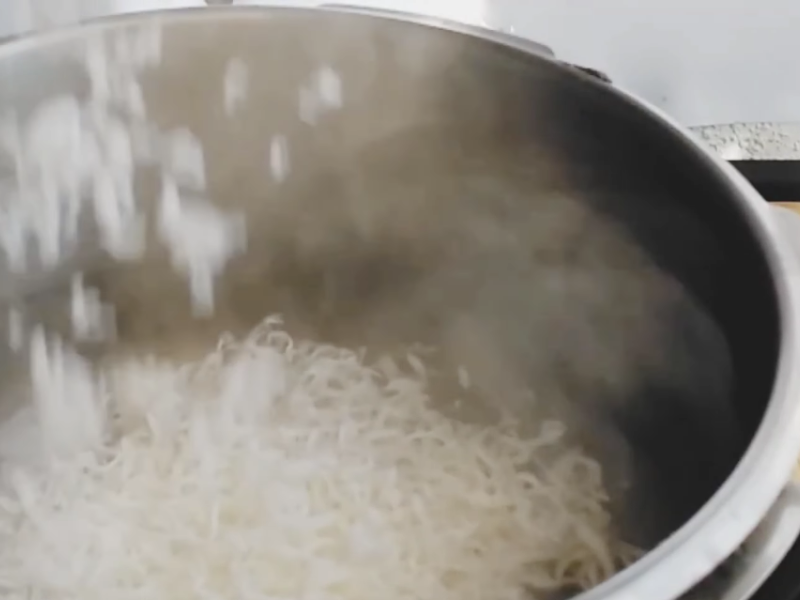
Stir the mixture until the soap dissolves completely and no solid bits remain.
Add the alcohol
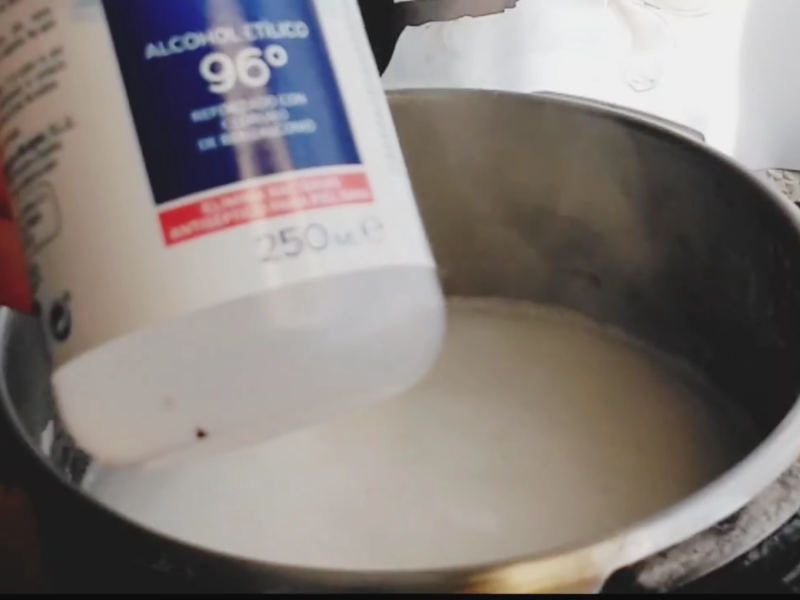
Add 20 ml (about 4 teaspoons) of rubbing alcohol once the mixture is off the heat, since alcohol is flammable.
Let it cool
Let the mixture sit until it cools completely before storing it.
Store the cleaner
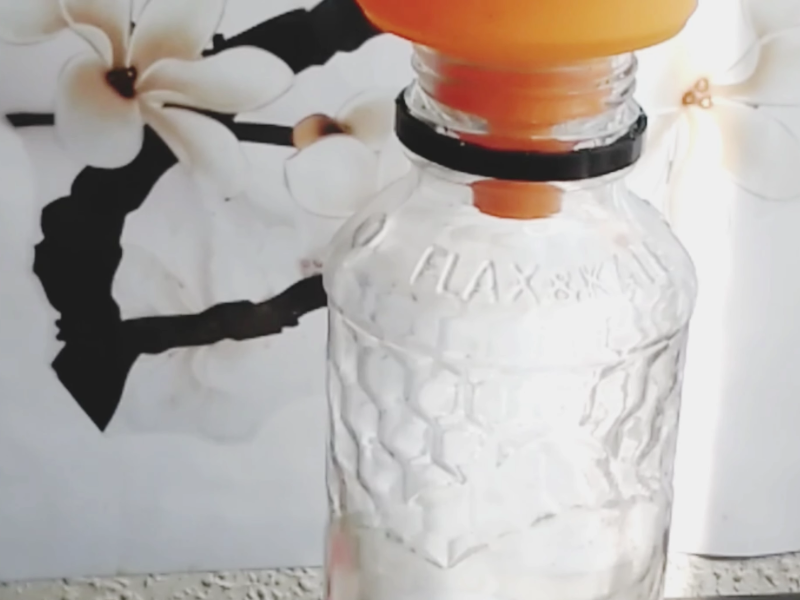
Pour the liquid into a clean bottle, label it, and keep it somewhere cool and dark, out of reach of children and pets.
Use the cleaner
Add a splash to a bucket of water and mop as usual, with no need to rinse
Tools:
- Bowl or container.
- Spoon for mixing.
- Bottle for storage.
Materials: Hot water. Grated white soap or soap flakes. Rubbing alcohol
Simpler, Stronger, More Yours
You don’t need more products, you just need to go back to basics and do it well. This homemade floor cleaner with white soap is exactly that.
Before you go, try the citrus cleaner too, I think you’ll love it! ^^
Now It’s Your Turn
Are you going to give it a try? Tell me in the comments, I’d love to hear how it goes!