Everything you need to know about yarrow (Achillea millefolium): its traditional medicinal uses, how to grow it, how to harvest and store it, and common questions answered in plain language.
Some days I head out for a walk through the countryside with no destination in mind, just looking to clear my head and leave the noise of daily life behind. I love noticing the small gifts the land puts out without asking for anything in return.
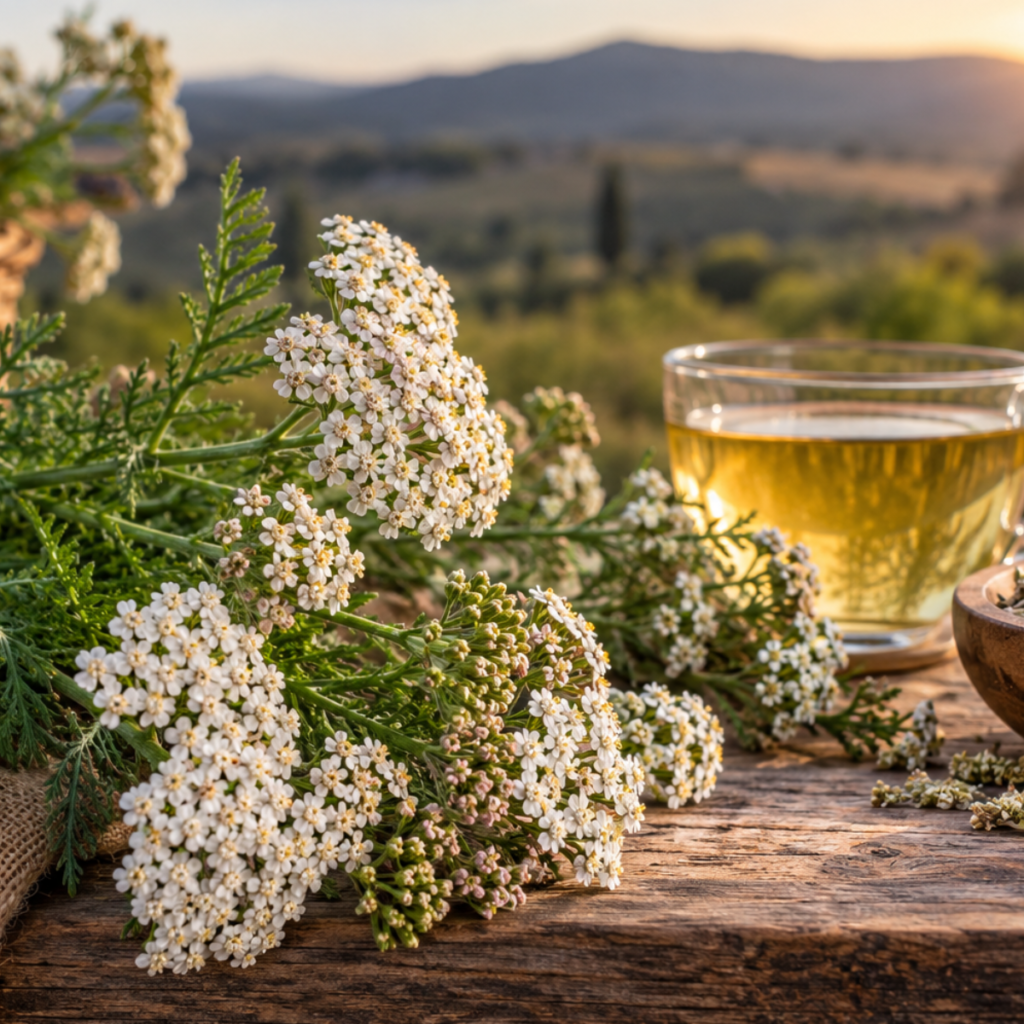
There, almost always at the edge of the path, holding its own in dry, poor, or trampled soil, I spot it. A cluster of tiny white or pinkish flowers gathered into flat-topped heads, sitting on an upright stem surrounded by finely divided leaves that look like feathers or lace.
Yarrow, known scientifically as Achillea millefolium, is one of those plant companions that, once you learn to really look, completely changes the way you understand the nature around you.
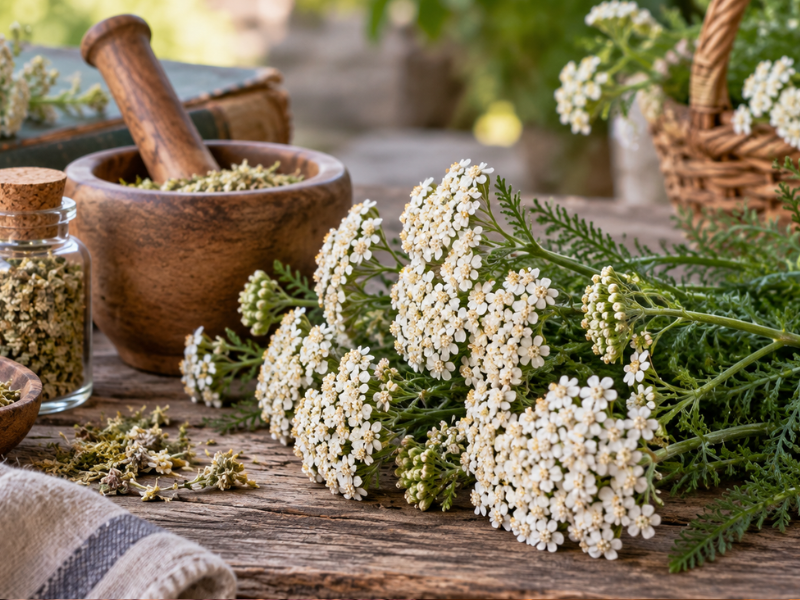
The images in this post were generated for illustrative purposes
This post contains affiliate links; see the disclosure for details.
What yarrow is and why it deserves your attention
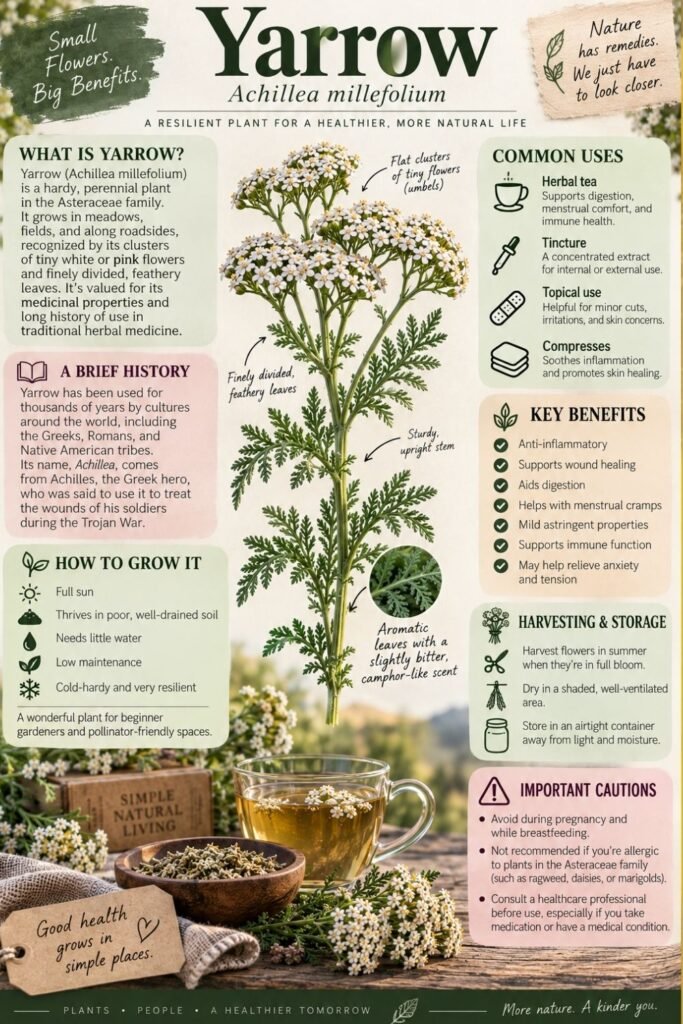
The first thing you notice when you get close to a yarrow plant is the texture. The leaves are so finely divided they look and feel like soft little feathers. That’s where part of its scientific name comes from: Achillea, a nod to the Greek hero Achilles, who according to mythology used this plant to treat his soldiers’ wounds during the Trojan War.
After trying it out in small, everyday situations myself, the myth doesn’t seem all that far-fetched.
Yarrow is a perennial plant in the Asteraceae family, the same one that includes daisies, sunflowers, and dandelions.
It’s incredibly adaptable. You’ll find it just as easily in an alpine meadow as along a dusty rural road in the middle of summer, holding up under hundred-degree heat without flinching.
That built-in resilience has always fascinated me. There’s a quiet lesson in it about how to weather change and stay grounded when things get tough.
Physically, yarrow is an herbaceous plant that can reach anywhere from about twelve to thirty-six inches tall. Its stem is ridged, and the lower leaves form a fairly dense basal rosette. But the most beautiful part, at least to me, is the flower head: a cluster of tiny blooms grouped into flat corymbs that look like little cushions in white or cream, sometimes leaning toward pink depending on the soil and its acidity.
If you rub the leaves and flowers between your fingers, you’ll pick up a very distinctive herbal scent, slightly camphor-like and bitter, which is your first clue to the essential oils and bioactive compounds packed inside.
Where the name comes from and a little bit of history
I like to think of plants not just as botanical specimens but as living archives of human history. The relationship between people and yarrow stretches back thousands of years. In virtually every culture across the Northern Hemisphere where this species grows, someone figured out a practical use for it.
In medieval Europe, yarrow was known as “carpenter’s weed” or herba militaris because of its constant use for stopping bleeding and healing cuts from tools or weapons.
Soldiers carried handfuls of it because they knew that if they got cut on the battlefield, chewing a few leaves or pressing them into a poultice could help slow the bleeding quickly.
Even in Eastern traditions, yarrow has played a role. In the ancient Chinese practice of the I Ching, dried yarrow stalks have traditionally been used to perform divination rituals, considered a bridge between the earthly and the intuitive.
When I gather my own stalks at the end of summer to dry at home, I can’t help thinking about all the generations who made the exact same gesture before me.
Traditional medicinal properties and active compounds of Achillea millefolium
Let’s get to the point, because I know you want to understand what this plant actually does and why it’s earned a permanent spot in so many households. Yarrow isn’t a miracle fix or a magic solution, but its biochemical profile is well-rounded enough that it has traditionally been valued on several fronts, especially for digestive support, circulation, and women’s wellness.
Its key compounds include essential oils (featuring chamazulene, which sometimes gives the extracted oil a bluish tint and is known for its anti-inflammatory properties), flavonoids (which support cellular protection and healthy circulation), tannins (responsible for its astringent and wound-healing reputation), and alkaloids like achilleine, which has traditionally been associated with supporting healthy blood clotting.
Digestive comfort
If you’re someone who often deals with sluggish digestion, bloating, or that heavy feeling after eating, a warm cup of yarrow tea may offer some welcome relief.
Its flavor is bitter, and herbalists know that bitters are great friends of the stomach. They’re thought to help stimulate the natural production of gastric and bile juices, which may make it easier for the body to process food more smoothly.
I like to sip it slowly when I notice the day’s stress has settled right in my stomach.
Traditional support for menstrual cycles
This is one of the most valued and time-honored uses of the plant. Yarrow has long been considered a supportive herb for the female reproductive system.
It’s traditionally used to help regulate irregular cycles, ease intense menstrual cramps thanks to its antispasmodic qualities, and moderate heavy flow through its gentle hemostatic action.
Of course, if you’re dealing with persistent issues, your first step should always be talking to a healthcare professional. This is meant as a complement, not a substitute.
Skin care and minor wounds
As the Achilles story hinted, yarrow’s vulnerary properties (meaning its ability to support wound healing) are well documented in traditional herbalism. A good salve or a strong infusion applied as a cool compress may help soothe irritated skin, minor cuts, scrapes, mild eczema, or even the discomfort of hemorrhoids.
It’s an astringent plant, which means it helps tighten damaged tissues and may support the skin’s natural repair process without harsh chemicals.
How to prepare and use yarrow
Here are the most common and effective ways to put yarrow to use.
The classic infusion
To make a good cup of yarrow tea, you’ll need about one teaspoon of dried flowering tops (or fresh ones, if you’ve just harvested them).
- Heat water until it reaches a rolling boil.
- Pour the hot water over the plant material in a cup or teapot.
- Cover it immediately to keep the volatile essential oils from escaping with the steam.
- Let it steep for ten to fifteen minutes.
- Strain and drink it warm.
The flavor is herbal, mildly bitter, with a balsamic undertone that can be surprising if you’re not used to bitter herbs.
If it’s too strong for your palate, try blending it with a little peppermint or chamomile to mellow out the flavor without losing the yarrow’s benefits.
Tincture
If you prefer the convenience of a few drops, a tincture is a great option. It’s made by macerating the fresh or dried plant in high-proof alcohol for several weeks.
This process extracts both the water-soluble and alcohol-soluble compounds. About twenty to thirty drops diluted in a small amount of water, taken three times a day during specific periods, gives you a concentrated dose ready to go. It’s especially handy during those rough days of your cycle.
Sitz baths
For localized discomfort, whether it’s hemorrhoids, mild urinary irritation, or itching in sensitive areas, a sitz bath with a strong yarrow decoction can be incredibly soothing.
Prepare about a quart of concentrated infusion by simmering the plant for five minutes, let it cool down to a comfortable temperature, pour it into a basin or shallow tub, and sit in it for ten to fifteen minutes. The relief tends to be almost immediate.
How to identify and forage yarrow in the wild
If you’re curious and want to head out and find your own yarrow, here are the guidelines I always follow. They’ll help you forage safely, respectfully, and sustainably.
Key botanical features so you don’t mix it up
Yarrow is easy to identify once you know what to look for, but caution is always warranted with wild plants.
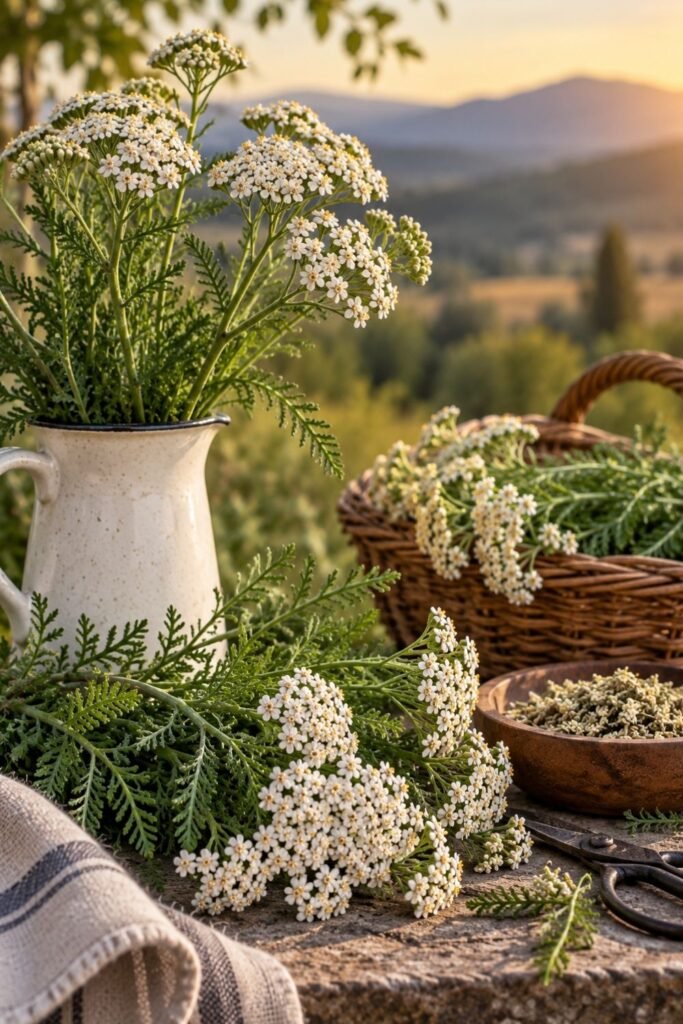
- Leaves: deeply divided, alternate, lance-shaped in outline, with a feathery or fern-like appearance.
- Stems: upright, ridged, with varying degrees of fine hair depending on the variety.
- Flowers: tiny daisy-like blooms clustered in flat-topped inflorescences (corymbs) at the top of the stem. Usually white, though pink tones appear in certain areas.
- Scent: crush the leaves and you’ll get a sharp, herbal, slightly camphor-like and bitter smell.
Be careful not to confuse it with certain toxic umbellifers like poison hemlock. Yarrow’s flat corymb flower structure and its finely cut, feather-like leaves set it clearly apart if you pay attention to the botanical details.
When in doubt, don’t pick it. Consult a local expert or a reliable field guide instead.
Smart wild harvesting tips
- Pick clean spots: never harvest along busy roadsides (heavy metals and exhaust accumulate), in fields treated with pesticides or herbicides, or in areas heavily used for dog walking.
- Timing matters: head out on a dry morning after the dew has evaporated but before the sun gets too intense. That’s when the essential oils are at peak concentration in the flowers.
- Cut, don’t pull: always use clean pruning shears or a sharp knife. Snip the flowering tops (the top eight to twelve inches), leaving the rest of the plant intact so it can complete its life cycle and keep feeding pollinators.
- Be respectful: don’t strip an entire patch. If you see ten plants, take a few flowers from two or three of them at most. Always leave the majority so the local population can thrive.
Drying and storing at home: saving your harvest for winter
Once you get home with your fresh bunch of yarrow, it’s time to process it properly so it keeps for months without losing its qualities or developing mold.
This is honestly one of my favorite parts of the whole process. The scent that fills the kitchen while I prep the plants for drying is wonderful.
Step by step
- Clean up: go through the stems and flowers patiently. Remove any dirt, stray insects, or wilted leaves. Avoid washing the plant with water unless it’s really dirty, since moisture slows drying and can ruin the batch. If you do need to wash it, shake it off thoroughly and pat it dry with a clean cloth.
- Bundle them: group the stems into small bunches of five to ten and tie them with cotton twine or yarn, loosely enough that air can circulate between them.
- Hang in the shade: hang the bundles upside down in a dry, dark, well-ventilated spot away from direct sunlight. Direct light breaks down the active compounds and causes the flowers to lose both their color and their properties.
- Check for dryness: the process usually takes one to three weeks depending on the humidity in your area. You’ll know they’re done when the stems snap instead of bending, and the flowers crumble easily to the touch.
Proper storage
Once fully dried, gently crumble the flowering tops, separating them from the woodier stems if you prefer, and store them in airtight glass jars, either opaque or kept inside a dark cabinet. Always label the jar with the plant name and the year you harvested it. Stored properly, they’ll hold their qualities for at least a year, keeping you stocked through the entire winter.
Growing yarrow in the garden or in a pot
If you don’t have access to clean wild areas or you simply want this botanical gem closer to home, you’ll be happy to know that growing yarrow is about as easy as it gets.
It’s a no-fuss plant that barely asks for anything, which makes it a fantastic choice even if you don’t have much gardening experience.
Location and soil type
Yarrow loves full sun. The more hours of light it gets per day, the bushier it grows and the more generously it blooms. As for soil, it’s not picky. It actually prefers well-drained ground, even poor or chalky soil, and handles summer dry spells better than most garden ornamentals.
The one thing it doesn’t tolerate well is constantly soggy soil. If the ground holds too much water and stays waterlogged, the roots will suffer and the plant will eventually rot.
Sowing and propagation
You can buy a packet of seeds at a garden center or collect your own from wild plants at the end of summer. They can be sown directly in spring, either in the garden bed or in seed trays like these.
The seeds are tiny, so just scatter them over the surface of moist soil and press them in lightly without burying them too deep. Many of them need some light exposure to germinate well.
If you already have a mature plant in the garden, you’ll notice that over the years it forms pretty generous clumps. In spring or early fall, you can divide those clumps by carefully working a shovel in, separating several offsets with their roots, and replanting them elsewhere in the garden or giving them to a friend who’s into plants.
It’s a lovely way to spread green around for free.
Possible side effects and precautions to keep in mind
As much as we talk about natural remedies and traditional wild plants, natural doesn’t automatically mean harmless or free from side effects if used carelessly.
Yarrow is generally considered safe for most adults when consumed in moderation, but there are certain situations where extra caution is needed or where it’s best to skip it entirely.
Pregnancy and breastfeeding
Because of its strong action on uterine muscles and its emmenagogue effect (meaning it may stimulate blood flow to the pelvic area), yarrow is not recommended during pregnancy, as it could potentially stimulate unwanted contractions.
There’s also no conclusive data on its safety during breastfeeding, so during these sensitive periods it’s better to leave it on the shelf and look for safer alternatives.
Allergies to the Asteraceae family
Yarrow belongs to the Asteraceae family (formerly known as Compositae), the same group that includes ragweed, chrysanthemums, daisies, and arnica.
If you know you’re allergic to plants in this family, yarrow is very likely to trigger allergic skin reactions (contact dermatitis) or respiratory symptoms if you handle it directly or consume it.
If it’s your first time, always do a small patch test on a limited area of skin, or try a very small amount as tea to see how your body responds.
Drug interactions
If you’re taking medication for blood pressure, blood thinners (since yarrow may mildly affect blood clotting), or sedatives, it’s wise to check with your doctor or healthcare provider before drinking yarrow tea or using tinctures on a regular basis.
Plant compounds are powerful, and the active ingredients in herbs can interact with medications in your body.
Frequently asked questions about yarrow
Can you eat yarrow leaves in cooking?
Yes, with some caveats. The young, tender leaves can be finely chopped and added raw in small amounts to spring salads, or cooked into soups and omelets, lending a bitter, aromatic note similar to tarragon or wild parsley.
That said, because of its strong bitter flavor and its concentration of potent essential oils, yarrow isn’t meant to be eaten in large quantities like lettuce. Think of it more as a seasoning or a wild herb that adds nutritional and digestive support in small doses.
What’s the difference between wild yarrow and the ornamental garden varieties?
At nurseries and garden centers, you’ll often find cultivated varieties of Achillea millefolium (like ‘Paprika’, ‘Cerise Queen’, or ‘Moonshine’) that stand out for their vivid flower colors, ranging from deep red to bright yellow to hot pink.
While these cultivars are gorgeous and brighten up any garden bed, traditional herbalists tend to prefer the original wild form with white or pale pink flowers, since that’s the one with the most documented history and the traditional essential oil profile. That said, the garden varieties do share many of the same properties.
Can men drink yarrow tea?
Absolutely. Yarrow often gets pigeonholed as a women’s herb because of its connection to menstrual health, but its digestive, anti-inflammatory, wound-healing, and circulatory support properties benefit everyone equally. My partner makes himself a cup of yarrow and mint tea whenever he’s dealing with a heavy meal, and it works great for him.
How long can you take yarrow tea in a row?
As a general rule in traditional herbal practice, when you’re using a medicinal herb for a specific purpose (for example, digestive support or help with an irregular cycle), the recommendation is to use it consistently for about three to four weeks and then take at least a one- to two-week break.
Giving your body a rest helps prevent desensitization and keeps your system responsive to the plant’s active compounds. If you’re looking to use it long-term, it’s best to consult a qualified herbalist.
The value of looking toward the wild
Walking through the countryside and knowing the names, the stories, and the uses of the plants around you completely changes the way you move through the world.
Yarrow reminds us that we don’t need to look halfway around the globe for wellness and everyday care. Often, the best tools for our health have been growing quietly and patiently right at the edge of our paths, just waiting for us to stop, take a closer look, and learn to listen to what the earth has been saying all along.
If you want to learn more about plants and flowers, head over to the blog’s plant section. You’re bound to find something you like!