Discover everything about chamomile, a flower with centuries of history that soothes, regenerates, and beautifies. Learn about its medicinal and cosmetic properties, how to prepare and store it, its myths, ancient uses, and why it remains a natural treasure.
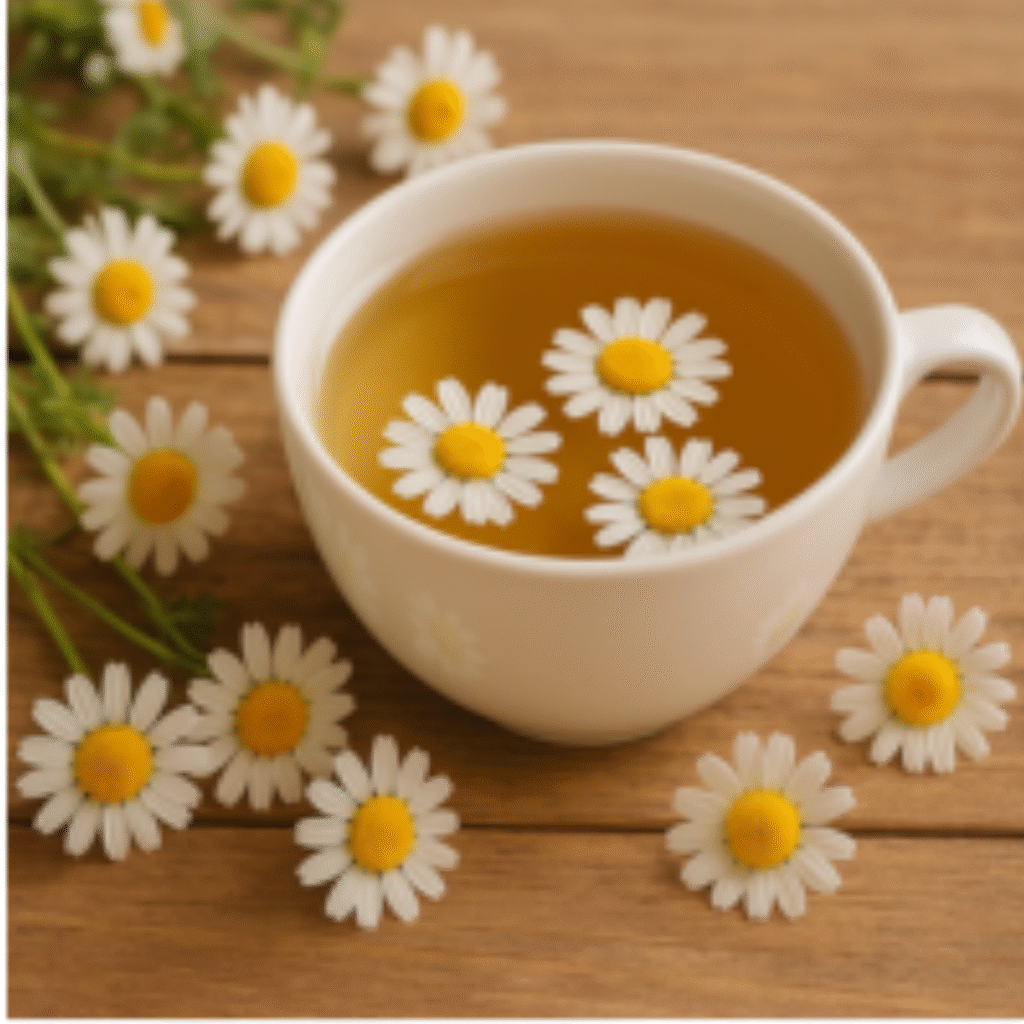
If I close my eyes, I can still smell it, that soft and sweet aroma rising from the cup of chamomile tea when my grandmother made it. At home, chamomile was the answer to almost everything. Whether it was a stomachache, a restless night, or irritated skin, her answer was always the same: ‘Have some chamomile.
Years later I realized that this simple yellow flower was much more powerful than it seemed; beneath its delicate appearance lies a true natural treasure full of benefits for the body, mind, and skin.
What chamomile is and why it is so special
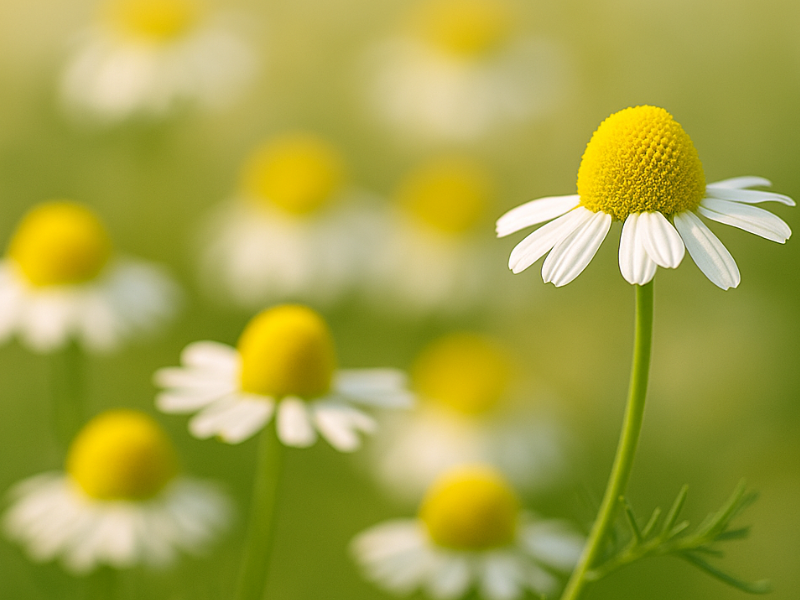
Chamomile is a herbaceous plant from the daisy family, with small white flowers and a yellow center. There are two main types: German chamomile, also known as common chamomile, called Matricaria chamomilla, and Roman chamomile, known as Chamaemelum nobile. Both have similar properties, although Roman chamomile has a more intense slightly bitter aroma.
It grows easily in sunny fields, along paths, and in gardens. Its simplicity is part of its charm; it doesn’t need much to bloom, and maybe that’s why it symbolizes calm, resilience, and harmony with nature.
Its richness in essential oils and active compounds like chamazulene, bisabolol, flavonoids, and phenolic acids gives it anti-inflammatory, soothing, antiseptic, and digestive properties.
A bit of history: from Egypt to our grandmothers
The history of chamomile goes back thousands of years. The Egyptians considered it a gift from the sun god Ra, and used it both to treat fevers and as a sacred offering. In Greece, Hippocrates prescribed it to relieve pain and improve digestion. The Romans used it in thermal baths and as a natural perfume, drawn to its floral fragrance.
During the Middle Ages, monks grew it in the medicinal gardens of monasteries, and later it became an essential remedy in traditional European apothecaries. Women used it to lighten their hair, relieve menstrual cramps, and prepare soothing ointments for the skin.
In Spain, chamomile has always been a familiar and beloved plant; almost every household has turned to chamomile tea at some point to calm the stomach or help sleep better.
Myths and legends of chamomile
Chamomile is surrounded by legends. It was once believed to help other sick or wilting plants recover. Medieval farmers believed that if a plant withered, it was enough to plant chamomile next to it for it to come back to life.
It was also associated with protection and good luck. In some regions, chamomile flowers were scattered around the house to ward off negativity and attract peace. In popular tradition, it represents humility and quiet strength—iit is unassuming, yet healing. It doesn’t seek the spotlight, but its presence changes everything.
Medicinal Properties of Chamomile
Chamomile is one of the most versatile medicinal plants out there; its benefits range from the digestive system to the skin and the nervous system.
Digestive properties
It’s perhaps its most well-known use: it eases indigestion, gas, cramps, and nausea. Its anti-inflammatory action relaxes the muscles of the stomach and intestines, making digestion easier. Drinking chamomile tea after meals helps prevent that heavy feeling and soothes stomach discomfort.
Soothing and sedative properties
Chamomile helps relax the nervous system. Taken as an infusion before bed, it promotes rest and reduces mild anxiety, and it can also calm stomach nerves and relieve built-up tension.
Anti-inflammatory and antiseptic properties
Thanks to bisabolol and chamazulene, chamomile reduces inflammation and fights bacteria. It’s used to treat skin irritations, insect bites, minor burns, or small wounds.
Respiratory properties
Steam inhalations with chamomile may help relieve nasal congestion, a sore throat, and symptoms of mild colds
Traditional uses for eye discomfort
Chamomile infusiona has traditionally been used to relieve eye irritation or conjunctivitis, although using chamomile around the eyes requires caution and always straining the infusion very well.
Cosmetic uses of chamomile
Chamomile not only takes care of you from the inside, it also beautifies you on the outside. It’s a common ingredient in natural skincare and haircare products.
For the hair
Chamomile naturally lightens the hair, adding golden highlights and shine. A rinse with a concentrated infusion after washing softens and enhances the color, especially on light hair. It also helps soothe the scalp and balance the scalp’s pH.
For the skin
Its soothing and anti-inflammatory effect makes it a perfect ally for sensitive or irritated skin. You can use it in tonics, creams, masks, or simply apply a compress soaked in cold infusion on the skin.
In homemade cosmetics
Chamomile infusion or hydrosol can be added to solid shampoos, moisturizing creams, balms, or natural soaps. IIts delicate floral scent makes homemade preparations feel even more relaxing..
How to prepare chamomile infusions and treatments
Basic infusion
Boil a cup of water, add a tablespoon of dried flowers, and let it sit for five to ten minutes. Strain and enjoy hot or cold.
Facial toner
Prepare a concentrated infusion, let it cool, and store it in a glass jar in the fridge; it lasts about five days. Applied with a cotton pad, it refreshes, soothes, and tones the skin.
Lightening hair rinse
Boil half a liter of water with three tablespoons of chamomile flowers, let it sit, strain it, and apply it to clean, damp hair. Do not rinse your hair afterwards.
How to store chamomile
Dried flowers are best stored in airtight glass jars, in a cool, dark place. Avoid plastic containers and direct sunlight.
If you make infusions or tonics, keep them in the fridge and use them within a week. Oils or extracts can last several months if stored properly, away from heat and humidity.
Contraindications and precautions
Although chamomile is generally considered safe, there are some considerations worth keeping in mind. Avoid consuming it if you are allergic to plants from the Asteraceae family. During pregnancy, it’s best to consult a healthcare professional before using chamomile regularly. And if you are going to use the infusion directly in your eyes, make sure it is very carefully strained.
For external use, try it first on a small area to check your tolerance.
Curiosities about chamomile
In some countries, it’s called the sun plant because of its color. The ancient Egyptians considered it sacred and offered it to the gods. It’s said that planting chamomile near other sick plants helps them recover.
Also, it’s one of the most used flowers in natural cosmetics and aromatherapy.
Frequently asked questions about chamomile
What’s the difference between Roman chamomile and German chamomile?
The Roman one has a more intense and bitter aroma, while the German one is milder and floral. Both have similar properties.
Can you drink chamomile tea every day?
Yes, as a mild infusion. Ideally, It’s best to vary herbal infusions rather than relying on the same one every day..
Does it lighten dark hair?
It doesn’t change the color drastically, but it adds golden highlights and a natural shine.
Is it good for babies?
Yes, iIn small amounts, chamomile is sometimes given as an infusion, and it is also traditionally used externally to soothe irritated skin. However, it’s always best to check with a pediatrician first.
Can I grow chamomile at home?
Yes, it grows easily in pots with good sunlight and requires little care.
Chamomile has been with me my whole life; it’s one of those plants that make you feel cared for and understood. It has no pretensions, but it’s always there to soothe a nervous stomach, sensitive skin, or one of those difficult days.
Every time I make an infusion, I picture my grandmother calmly stirring the cup. There’s something deeply human in that gesture, something that connects generations. Using chamomile is a way to get back to the essentials, to remember that nature already gives us what we need, if we know how to listen.
The Beauty of Simplicity
In a world full of products with complicated names, chamomile remains the perfect example of simplicity; it is humble, yet effective. Its power isn’t in complexity, but in harmony with nature.
Sometimes, we forget that the simplest things can also be the most powerful. Chamomile teaches exactly that: that softness is not weakness, that caring is healing, and that calm is a form of strength.
Have you ever used chamomile? Do you drink it as an infusion, use it in cosmetics, or have a family recipe? Tell me in the comments; I’d love to hear about your experiences and keep learning together about this simple yet remarkable flower.
And, if you want to keep learning about plants, eel free to check out the flowers and plants section—I think you’ll like it ^^