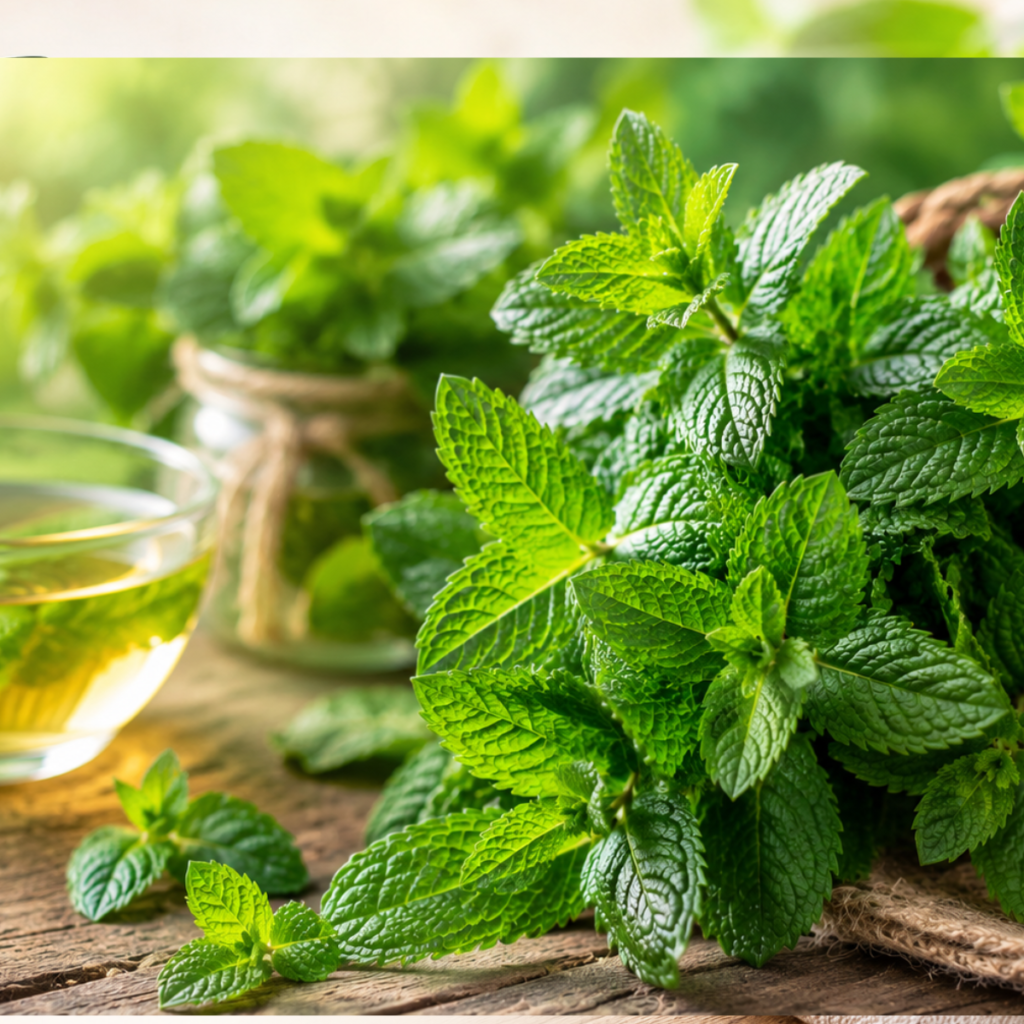
Everything you need to know about mint: its origins, its properties, its benefits, how to use it in the kitchen and in beauty routines, how to store it, and practical growing tips. A complete, natural guide to one of the most beloved aromatic plants there is.
Mint has shown up in teas, candies, beauty products, home remedies and traditional recipes for centuries. There’s something special about that fresh aroma. Just brushing a few leaves is enough to change how a whole room smells, making everything feel cleaner and lighter.
Most people know mint for its cooling flavor, but behind that distinctive sensation is a plant with a fascinating history and a lot going for it. The curious thing is that the more you learn about it, the more you understand why cultures all over the world have valued it so highly.
Mint isn’t just a pretty herb to keep in a pot. It has culinary, cosmetic and traditional medicinal uses. It’s long been used to settle the stomach, it adds natural freshness, it may ease certain mild complaints, and it’s incredibly versatile in cooking. It’s also very easy to grow at home, even if you don’t have much of a green thumb.
The images in this post were created for illustrative purposes with AI assistance
What Peppermint is
Mint belongs to the genus Mentha, within the Lamiaceae family. There are many different varieties and each one has its own subtle differences in aroma, intensity and flavor. Some are sweeter and milder, while others have a much sharper, more medicinal edge.
What makes mint so recognizable is menthol, the natural compound behind that cooling sensation that seems to clear your head and wake up your senses instantly.
Peppermint and spearmint often get treated as the same thing because they’re so similar, but they aren’t identical. They share plenty of characteristics, though they differ in flavor and in how much menthol they contain.
Mint stands out for its aromatic green leaves, its fast growth and how easily it adapts to different environments. That’s exactly why it’s been grown in gardens, kitchen plots and backyards around the world for centuries.
| Aspect | Summary |
|---|---|
| Common name | Mint. |
| Scientific name | Mentha. |
| Family | Lamiaceae. |
| Origin | Used since antiquity in Egypt, Greece and Rome for its aroma and in traditional medicine. |
| Main characteristic | Fresh, intense aroma thanks to menthol. |
| Best known properties | Traditionally used for digestion and freshness; contains antioxidant compounds. |
| Main benefits | Often used to ease a heavy stomach, freshen breath and add a sense of freshness. |
| Key components | Menthol, antioxidants and natural aromatic oils. |
| Types of mint | Peppermint, spearmint, pennyroyal, lemon mint and chocolate mint. |
| Traditional medicinal use | Digestive teas and aromatic steams. |
| Cosmetic use | Shampoos, creams, toners and cooling products. |
| Household use | Scenting rooms and adding a sense of natural freshness. |
| Growing | Easy to care for, fast growing and well suited to pots. |
| Light | Plenty of natural light, avoiding harsh direct sun. |
| Watering | Needs consistent moisture without waterlogging. |
| Keeping it fresh | In the fridge with stems in water, or loosely wrapped in a damp towel. |
| Long term storage | Dried or frozen. |
| Peppermint vs spearmint | Peppermint is stronger and more mentholated; spearmint is milder and sweeter. |
| Cautions | Can worsen symptoms for people with reflux. Pennyroyal is a special case and should not be used medicinally. |
| Essential oil | Always dilute and use with care. Keep away from infants and young children. |
| Fun facts | There are dozens of varieties, and its aroma creates a cold sensation without actually lowering the temperature. |
| The feeling it gives | Freshness, clarity and natural wellbeing. |
Where mint comes from
A plant with thousands of years of history
Mint’s history goes back much further than most of us imagine. It was already in use in ancient civilizations like Egypt, Greece and Rome. Traces of mint have been found in Egyptian tombs, which tells you how important it was even thousands of years ago.
The Greeks and Romans valued it for its aroma and for its use in traditional medicine. It was common to use it to scent rooms and baths, and even to accompany important banquets. Back then it was already associated with freshness and wellbeing.
Greek mythology has a story connected to mint as well. According to legend, Minthe was a nymph transformed into a plant. Mythology aside, it’s remarkable how a plant this simple has turned up in ancient stories and cultural symbols.
Over time, mint spread across Europe, Asia and later the Americas. Because it’s so easy to grow, it ended up woven into countless culinary and medicinal traditions.
How it became indispensable
Mint slipped into daily life naturally. Its fresh scent made it a perfect fit for hygiene and wellness products. Little by little it started showing up in toothpastes, teas, candies, essential oils and traditional remedies.
It’s still one of the most widely used aromatic plants in the world. What’s interesting is that it keeps succeeding in traditional recipes and in modern cosmetics alike.
The properties of mint
Rich in menthol
Menthol is what’s responsible for mint’s signature cooling sensation. When you feel that coldness in your mouth or on your skin, it’s menthol acting on certain receptors in the body.
This natural compound has a soothing, cooling effect, which is exactly why it turns up in so many products aimed at breathing comfort, digestive wellbeing or sore muscles. Worth knowing: menthol creates the sensation of easier breathing rather than actually opening the airways, which is a real distinction if you have a respiratory condition.
Digestive properties
One of mint’s best known uses is helping meals sit more lightly. For generations people have had it after eating because it seems to ease that heavy feeling. Peppermint oil in enteric coated capsules is actually one of the better studied herbal options for irritable bowel symptoms, though that’s a specific preparation rather than a cup of tea.
Mint may help with gas, sluggish digestion and a bloated feeling. A lot of people reach for a cup of mint tea when their stomach feels overloaded, because the relief tends to come fairly quickly.
Antioxidant compounds
Mint contains natural antioxidants that help protect cells from oxidative stress, a process linked to cellular aging and various health issues.
We tend to associate antioxidants only with fruit or specific foods, but aromatic plants contribute interesting compounds too. That said, you’d be eating fairly small quantities of mint, so think of it as a nice addition to a varied diet rather than a health strategy on its own.
Mild antibacterial properties
Mint has been shown in lab studies to have mild antibacterial activity, which is part of why it’s so common in oral care products. Its aroma freshens breath and creates a pleasant sense of cleanliness.
A revitalizing sensation
There’s something about mint’s aroma that clears your head almost instantly. That fresh, clean feeling explains why so many people reach for peppermint essential oil when they’re mentally tired or overloaded.
It isn’t only about the smell. Mint has a way of creating a sense of clarity and freshness that arrives almost immediately.

The benefits of Peppermint
It helps meals sit more comfortably
A cup of mint tea after eating is one of those classic habits that keeps working generation after generation. Its digestive effect is probably the reason most people start drinking it.
After a big meal, mint can help ease that heavy feeling. It’s also useful when there’s gas or mild digestive discomfort. If stomach pain or bloating is frequent or severe, though, that’s worth talking to a doctor about rather than treating with tea.
It may ease mild congestion
That mentholated aroma creates a cooling sensation in the airways. It doesn’t replace any medical treatment, but plenty of people feel relief using steam or mint products when they’re stuffed up.
That cooling effect is why menthol turns up in cough drops, inhalers and chest rubs. Note that products containing menthol or camphor shouldn’t be used on the face or chest of babies and young children.
It freshens breath
Mint has been used to freshen the mouth for centuries. It’s still one of the main ingredients in toothpastes and mouthwashes, precisely because of that clean, fresh feeling it leaves behind.
It may help you feel clearer headed
Even though mint is usually associated with energy and freshness, it can also contribute to a sense of wellbeing. Many people find it helps clear the mind and dial down that overloaded feeling.
Its aroma can be especially welcome during stressful or tiring stretches.
The best known types of mint
Peppermint
One of the most intense varieties. High in menthol with a powerful aroma. It’s used heavily in essential oils and medicinal teas.
Spearmint
Spearmint is milder and sweeter. It’s the one most commonly used in cooking and in refreshing drinks.
Pennyroyal
Popular in digestive teas in some countries, with a distinctive aroma. This one needs a clear warning, though: pennyroyal essential oil is genuinely toxic and can cause serious liver damage, and pennyroyal in any concentrated form should be avoided entirely during pregnancy. Given how easy it is to confuse preparations, most herbalists now suggest choosing peppermint or spearmint instead.
Lemon mint
Combines classic mint freshness with soft citrus notes.
Chocolate mint
A curious aroma with hints that faintly recall cocoa.
How to grow mint at home
An easy plant to care for
Mint is perfect for anyone wanting to start growing herbs at home, because it doesn’t need complicated care.
It grows quickly and adapts well to both pots and garden beds.
It needs consistent moisture
The soil should stay damp, especially in hot weather. Don’t let it dry out completely, because the plant notices fast.
Natural light without harsh sun
Mint appreciates light, though intense sun can scorch its leaves. A bright spot that’s sheltered during the hottest hours of summer is usually ideal.
It spreads a lot
One of the most surprising things about mint is how fast it takes over. Planted straight into the ground it spreads aggressively and is considered invasive in many places, so a pot is the safer choice, ideally one that isn’t sitting directly on soil.
Using Peppermint in the kitchen
Refreshing teas
Mint tea is still one of the most popular ways to enjoy it. Hot in winter, iced in summer.
With lemon, ginger or honey it’s even better.
Fresh salads
Mint brightens up all kinds of salads. It pairs especially well with cucumber, feta, tomato, yogurt or summer fruit.
Desserts
Chocolate and mint is a classic that never misses. It’s also delicious in ice cream, tarts, mousses and fruit salads.
Drinks
From mojitos to infused water. Adding a few mint leaves to a drink changes it completely.
Savory dishes
Mediterranean and Middle Eastern cooking use it constantly in rice dishes, meats, sauces and spiced preparations.
How to use Peppermint as a home remedy
Mint has been used in home remedies for centuries. We often associate medicinal plants with complicated formulas or difficult preparations, but mint stands out precisely because it’s so simple to work into daily life.
Its aroma, its freshness and its digestive reputation have kept it going generation after generation. What’s most interesting is that it stays popular because people genuinely feel better for it.
Mint tea for digestion
Tea is still the best known way to take mint. After a big meal it can help ease that heavy feeling and leave you feeling lighter.
Making it couldn’t be simpler. All you need is hot water and a few fresh or dried mint leaves. Let it steep for several minutes so the plant releases its aroma properly.
A lot of people add a squeeze of lemon or a little honey, though on its own it already tastes lovely and refreshing.
Drinking mint tea can also become a small pause in your day. Just the aroma conveys calm.
Mint steam for stuffy noses
Mint’s mentholated aroma creates a very fresh sensation that many people find comforting when congested.
Traditional steam inhalations are still widely used. Add mint leaves or a couple of drops of essential oil to hot water and breathe the steam in carefully. Do keep your face at a safe distance, since scalds from a bowl of hot water are a real risk, and this isn’t something to do with young children.
The cooling sensation usually arrives right away.
Cool mint compresses
Some people use cooled mint tea as a compress on the skin. The cooling effect can feel wonderful in hot weather or at the end of a tiring day.
Peppermint essential oil
Peppermint is one of the best known essential oils in aromatherapy. It has an intense, fresh, stimulating aroma.
That said, use it properly and in small amounts. Essential oils are highly concentrated and should never be applied undiluted to skin. Keep it away from the eyes, and never use it on or near the face of babies and young children, since menthol can cause breathing problems in infants.
In a diffuser it can help create a clean, clear feeling in a room.
Cosmetic uses of mint
Mint in skin care
Mint’s cooling sensation is why it shows up in so many cosmetic products. It’s especially welcome in summer, when that immediate freshness is exactly what you want.
Plenty of masks, toners and facial products include mint extract for the revitalizing feel it leaves on the skin. If your skin is sensitive, go easy, since menthol can be irritating for some people.
Shampoos and hair products
Mint is also common in hair care. You’ve probably used a shampoo with that cooling effect, and that sensation comes from menthol.
It leaves a pleasant clean feeling and a fresh scalp.
Cooling balms and creams
Menthol appears in many muscle rubs and soothing products. That cold sensation helps create a feeling of relief.
Mint in aromatherapy
A scent that clears the air
Some scents completely change how a space feels, and mint is one of them.
It reads as clean, fresh and clear. Many people use mint in diffusers to make their home feel lighter. If you have pets, especially cats or birds, look into which oils are appropriate around them before diffusing anything.
A sense of energy and mental clarity
Mentholated aromas tend to be associated with alertness and focus, which is why people reach for them while studying, working or flagging in the afternoon.
You don’t need to overcomplicate it. Even keeping a pot of mint nearby changes the feel of a room.
How to store Peppermint properly
Fresh mint is wonderful, but it’s also fairly delicate. Stored badly, it loses its aroma and freshness quickly.
Luckily there are several simple ways to keep it in good shape longer.
Keeping fresh mint in the fridge
One of the best methods is standing the stems in a glass of water, just like fresh flowers.
Then loosely cover the leaves with an open bag and keep it in the fridge. It usually lasts much longer this way.
Wrapping it gently in a damp paper towel works too.
Freezing mint
Freezing is a practical option because it holds the aroma reasonably well.
You can do it a few different ways:
Store clean leaves in airtight bags.
Make ice cubes with mint leaves inside.
Blend it with a little water before freezing.
Mint ice cubes are especially good for cold drinks in summer.
Drying mint at home
Drying mint is incredibly easy and lets you enjoy it for months.
Just wash the leaves well, dry them carefully and hang small bunches somewhere airy and free of humidity.
Once dry, store them in airtight containers away from light.
Dried mint loses some intensity compared with fresh, but it’s still perfect for tea.
Peppermint versus spearmint
This is probably the most common question of all. Plenty of people assume they’re the exact same plant, and while they’re very similar, there are meaningful differences.
Peppermint has a stronger flavor
Peppermint contains more menthol, which is why its aroma and flavor are sharper and cooler.
It’s used heavily in medicinal products, candies, essential oils and cosmetics.
Spearmint is milder
Spearmint has a more delicate, sweeter flavor. It’s the one that dominates in cooking and cold drinks.
It’s the classic choice for mojitos, teas and Mediterranean recipes.
Both share similar properties
Differences aside, the two plants share many of the same digestive and aromatic qualities.
Things about Peppermint you probably didn’t know
Mint grows invasively
If you’ve ever planted mint in a garden, you already know. It grows enormously and spreads fast.
That’s why many people prefer to keep it in pots.
There are dozens of varieties
There are many different types of mint and some have genuinely surprising aromas, like chocolate, lemon or even apple.
Bees love mint
Mint flowers attract pollinators, especially bees and butterflies.
Its aroma creates cold without lowering the temperature
This is one of the most fascinating things about menthol. It activates receptors associated with cold even though the actual temperature doesn’t change.
That’s why it feels so refreshing.
How to work Peppermint into your daily routine
We often assume that making use of a plant’s benefits means overhauling our habits, but with mint it’s the opposite.
It’s remarkably easy to add in gradually.
Add fresh leaves to your water
A pitcher of water with lemon and mint is a completely different drink. Much fresher and more enjoyable.
Have a cup of tea after meals
One of the simplest and most rewarding habits there is.
Keep a pot at home
Besides being useful, mint looks lovely and adds a wonderful scent to a room.
Cook fresher recipes
Salads, sauces, drinks and desserts all gain a lot from a few fresh mint leaves.
How to dry mint step by step
Drying mint at home is one of the best ways to keep it for months without losing all of its character.
Step 1. Wash the leaves
Clean the leaves well to remove any soil or dust.
Step 2. Dry them gently
Getting the moisture off before you start drying matters.
Step 3. Make small bunches
Group the stems into small bundles so air can circulate properly.
Step 4. Hang them upside down
A dry, well ventilated spot out of direct sunlight is ideal.
Step 5. Store in airtight jars
Once the leaves are completely dry, they’ll keep for quite a while.
Peppermint and everyday wellbeing
Some plants create very particular sensations, and mint has a special talent for conveying freshness and lightness.
Its aroma seems to clean the air. The feeling it leaves is hard to describe until you’ve had it nearby.
It brings something lovely to a space. Having fresh mint at home even changes how a room feels.
A lot of people associate it with mental clarity, freshness and gentle energy. Maybe that’s why it’s still part of so many small daily rituals.
Cautions and things to keep in mind
Mint is natural and widely used, but that doesn’t mean it can be consumed without any thought in every situation. We tend to assume that natural always means completely harmless, but every plant has its particulars and it’s worth knowing them.
Mint is generally well tolerated in normal amounts, especially as tea or as part of everyday cooking. Even so, there are specific situations where more care is warranted.
People with reflux or heartburn
For some people, particularly anyone with acid reflux, mint can increase heartburn or worsen certain digestive symptoms.
This happens because it can relax the esophageal sphincter, making it easier for acid to travel back up.
It doesn’t happen to everyone, but if you notice more burning or discomfort after having mint, cut back and see how your body responds.
Using peppermint essential oil
Peppermint essential oil deserves its own mention because it’s far more concentrated than the fresh or dried plant.
It shouldn’t be applied undiluted to skin and shouldn’t be overused. In sensitive people it can cause irritation.
It should never be used near babies or small children, or applied to delicate areas without professional guidance. Menthol applied near an infant’s face can trigger serious breathing problems, so this is one to take seriously. Essential oils should also be stored out of reach, since swallowing them is genuinely dangerous.
Pregnancy and breastfeeding
During pregnancy or breastfeeding it’s always wise to check with a professional before consuming large amounts of medicinal plants or using essential oils. Pennyroyal in particular should be avoided entirely.
Mild teas are usually well tolerated, but every situation is different and caution is the sensible default.
Overdoing it
As with practically any medicinal plant, more isn’t better.
Having mint occasionally or working it into your routine in a balanced way rarely causes problems, but large amounts can cause digestive discomfort in some people.
Peppermint across different cultures
Mint has been part of very different traditions for centuries. What’s interesting is that no matter the country or custom, it’s almost always tied to freshness, hospitality and wellbeing.
Mint in Mediterranean culture
In Spain and other Mediterranean countries, mint and spearmint feature heavily in drinks, teas and traditional dishes.
Its aroma is strongly associated with summer, with fresh food and with that characteristic lightness of Mediterranean cooking.
You’ll also commonly find pots of mint on patios and balconies, since it’s decorative as well as useful.
Mint in Morocco
Mint tea is a genuine cultural tradition in Morocco. It isn’t just a drink, it’s a gesture of hospitality and connection.
The scent of mint is part of everyday life there in a way that’s hard to overstate.
Mint in Asia
Across different parts of Asia it’s used constantly in aromatic dishes and traditional preparations.
Its ability to add freshness makes it especially prized in hot climates.
Common mistakes when caring for a Peppermint plant
People assume mint is basically indestructible because it grows so fast, but there are still a few common mistakes that can leave it weak or less aromatic.
Letting the soil dry out too much
Mint needs consistent moisture. When it goes thirsty too long, the leaves start looking dull and lose their freshness.
You don’t need to drown it, but do keep the soil lightly damp.
Too much direct sun
It needs light, but strong summer sun can scorch the leaves.
In hot climates it usually appreciates partial shade or indirect light during the most intense hours.
Not pruning it
Pruning helps enormously in keeping the plant strong and producing new leaves.
When mint is left to grow unchecked, it gets straggly and less vigorous.
Using pots that are too small
Mint grows much more than you’d expect. It needs room to spread and develop healthy roots.
Why Peppermint is still so popular today
Some medicinal plants go out of fashion and others stay part of daily life generation after generation. Mint clearly belongs to the second group.
Part of its success comes down to how easy it is to use. You don’t need complicated formulas or special knowledge to enjoy what it offers.
Its aroma is instantly refreshing. Its digestive uses go back centuries. Its flavor pairs with a huge range of things. And it’s easy to grow and very forgiving.
There’s also something that doesn’t get mentioned enough. Mint produces a pleasant sensation almost instantly. Some plants work subtly, but mint you notice right away.
Just the smell changes the room.
How to pick good fresh Peppermint
When you buy fresh mint or cut it from a plant, a few details tell you whether it’s really in good shape.
Green, firm leaves
The leaves should look alive and fresh with good color. Yellowing or very limp leaves mean the plant has lost its freshness.
A strong aroma
Good mint announces itself by smell. Brush the leaves lightly and you’ll catch that characteristic freshness right away.
Healthy stems
The stems should be firm, with no dark or dried out patches.
Frequently asked questions about Peppermint
Are peppermint and spearmint the same thing?
Not quite. They’re very similar plants in the same family, but peppermint tends to have a stronger, more mentholated flavor, while spearmint is milder and sweeter.
Does mint help with digestion?
It’s traditionally used that way, and many people drink it after meals to ease a heavy feeling or gas. Peppermint oil capsules have also been studied for irritable bowel symptoms with reasonably encouraging results.
Can I have mint every day?
In normal amounts it’s usually well tolerated, especially as a mild tea. Even so, listen to your body and avoid going overboard, and skip it if it triggers reflux for you.
How do I keep fresh mint longer?
The best options are standing the stems in water in the fridge, or freezing the leaves if you want to keep them for longer.
Does mint help with bad breath?
Yes. Its fresh aroma helps freshen breath, and it has mild antibacterial properties. That said, persistent bad breath is usually worth mentioning to your dentist, since it often has a dental cause.
Is mint hard to grow at home?
No. It’s one of the easiest herbs to care for and it usually grows quickly.
Can mint be grown indoors?
Yes, as long as it gets good natural light and some humidity.
Does mint repel insects?
Its aroma may help keep some insects at bay, though it isn’t a reliable solution on its own.
A small everyday luxury
Peppermint is one of those plants that ends up woven into daily life almost effortlessly. It’s there in small everyday gestures, familiar smells and customs that have been with us for centuries.
Its freshness is unmistakable. It has interesting properties, countless uses, and it’s easy to grow and store. Few plants combine simplicity and versatility this well.
Maybe that’s the most special thing about mint. It doesn’t need to be extravagant to become essential. A single leaf changes the aroma of a room, a cup of tea, or even how you feel at the end of a long day.
It’s still one of the most loved aromatic plants because it works, because it comforts, and because that natural freshness is hard to match.
Do you have mint at home, or would you like to grow it?
Do you prefer it as tea, or do you just enjoy the scent?
Tell me about your experience in the comments. I’d love to hear it.