Discover the benefits of Dead Sea mud baths, an ancient treatment that purifies the skin, relaxes the body, and eases muscle and joint pain. Learn how to apply it, store it, and enjoy it at home with visible and lasting results.
What Dead Sea mud is and why it’s so special
A sea unlike any other
The Dead Sea isn’t exactly a sea, but a salty lake located between Israel, Jordan, and Palestine. Its extreme salinity makes it difficult for most forms of life to survive, but that’s exactly what makes it unique.
The mud that accumulates on its shores forms after thousands of years of natural processes, and it’s packed with minerals and salts that slowly settle to create a rich, thick mixture with amazing properties.
Essential minerals and their benefits
The secret of Dead Sea mud lies in its mineral composition. Each component has a positive effect on the skin and the body:
- Magnesium relaxes the muscles and improves circulation.
- Calcium strengthens the skin and promotes cell regeneration.
- Potassium balances natural moisture levels.
- Sodium and zinc can help cleanse the skin and support its natural balance.
- Sulfur has antibacterial and anti-inflammatory properties.
The result is a complete natural treatment that cleanses, revitalizes, hydrates, and rejuvenates.
History and tradition of Dead Sea mud baths
An ancient ritual
For thousands of years, the Dead Sea has been considered a place of healing and beauty. It’s said that Cleopatra had mud and salts from its shores brought to her for her beauty rituals, and Herod the Great is also said to have bathed in its waters to relieve pain and improve his skin.
For centuries, the people of the region have gone to its shores seeking relief for muscle, joint, and skin ailments. Mud baths were valued not only for their physical benefits, but they also represented a moment of calm and spiritual purification.
From tradition to modern wellness
Nowadays, that ancient wisdom is still alive. Spas, clinics, and wellness centers around the world use Dead Sea mud in facial, body, and therapeutic treatments. What was once a traditional wellness ritual has evolved into a mindful self-care experience.
Properties and benefits of Dead Sea mud
Benefits for the skin
Dead Sea mud deeply cleanses, removes impurities, and helps remove dead skin cells, which improves skin texture, leaving it softer and more radiant. It also regulates oil, making it perfect for dry, oily, or combination skin.
It may help soothe skin affected by conditions such as psoriasis, eczema, or acne. The minerals reduce inflammation, improve hydration, and promote cell regeneration.
Benefits for the body
Mud may help stimulate circulation and reduce feelings of swelling and muscle tension. It’s especially helpful for people with joint pain, lower back pain, or tight muscles. The mineral-rich mud, particularly its magnesium and potassium content, is associated with a relaxing effect on tired or stiff muscles.
Emotional and mental benefits
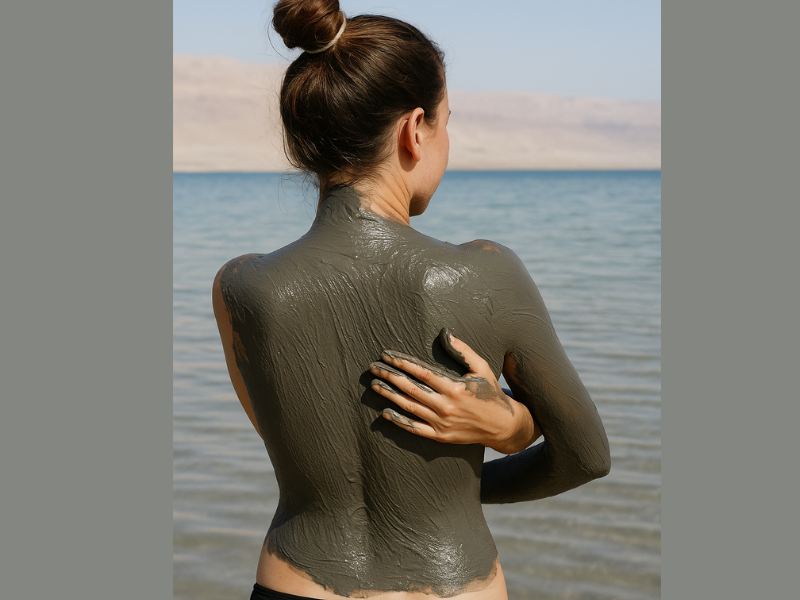
Applying mud on the body is a unique sensory experience. The temperature, the texture, and the earthy smell connect with something very primitive, very human. It helps you stop, breathe, and reconnect with yourself. It’s a ritual that invites silence and presence, a little pause that brings back balance.
How to enjoy Dead Sea mud baths at home
You don’t have to travel all the way to the desert to enjoy its benefits; nowadays it’s easy to find natural Dead Sea mud in specialty stores or herb shops.
What you need
- 100% natural Dead Sea mud.
- Warm water.
- Large container or bathtub.
- Soft towel.
- A natural body oil or moisturizer to apply afterward
How to use it step by step
- Mix the mud with a little warm water until you get a smooth, even texture.
- Apply the mud with your hands or a brush on clean skin, covering the areas you want to treat.
- Let it dry for 15 to 20 minutes. During this time, you may notice a warming or stimulating sensation in the skin.
- Rinse with warm water, without rubbing, and pat your skin dry with a towel.
- If you want, you can then apply a body oil or a light lotion to boost hydration.
Recommended frequency
A body mud treatment or mask once a week is enough to keep your skin balanced. If your skin is oily or you have body acne, you can do it twice a week.
How to store Dead Sea mud
Dead Sea mud should be kept in an airtight container and away from sunlight. If the container is vacuum-sealed, it’s best to open it only when you’re going to use it.
Once opened, keep it moist. If it dries out, you can add a few drops of purified water to rehydrate it. Metal utensils are best avoided, as they may interact with some of the minerals.
Therapeutic effects and scientific evidence
Several studies have explored the potential benefits of Dead Sea mud in both beauty and therapeutic treatments.
On the skin
Research suggests that Dead Sea treatments may help improve symptoms associated with conditions such as psoriasis and certain forms of dermatitis. The mineral content may help soothe the skin, reducing redness and improving skin elasticity.
In the muscles and joints
The heat and mineral properties of the mud help reduce inflammation and pain. It may be used as a complementary wellness practice for people experiencing joint or muscle discomfort.
For general well-being
In addition to their physical benefits, mud baths promote relaxation and reduce stress levels. The combination of the feel of the mineral-rich mud, temperature, and its natural scent can create a calming, relaxing experience.
Tips and precautions
Do not apply on open wounds
Mud can cause irritation if used on cuts or burns, so be careful if you have any wounds.
Avoid contact with the eyes
Its high salt concentration can cause stinging or irritation.
Suitable temperature
The water should be lukewarm. If it’s too hot, it can dry out the skin and mess with the mineral salts.
Don’t use it too often
One or two applications a week is more than enough. Overuse may irritate or sensitize the skin.
I have to admit that since I started incorporating Dead Sea mud into my care routines, my skin has completely changed. Dry areas, like elbows and legs, became much softer. I noticed that my skin felt fresher and its tone was more even.
But beyond the physical aspect, what really hooked me was the feeling of relief. After a long day, applying warm mud to my back or legs feels deeply relaxing. It feels as though the tension of the day melts away.
For me, this ritual has become a moment of reconnection. It’s not just a beauty treatment, it’s a reminder that taking care of yourself also means stopping and listening to yourself.
Frequently asked questions about Dead Sea mud baths
Can I use Dead Sea mud on my face?
Yes, but apply a thin layer and avoid the eye area.
How long do you leave it on?
Between 15 and 20 minutes, until it dries slightly.
Is it suitable for sensitive skin?
Yes, although it’s a good idea to do a patch test on a small area first.
Can it be used during pregnancy?
It’s generally best to check with your healthcare professional first, especially if you have sensitive skin or any pregnancy-related concerns.
Can I heat it up before applying it?
Yes, warming it slightly may make the experience feel more relaxings.
Every time I apply Dead Sea mud, I remember how little we really need to take care of ourselves. Simply earth, water, time, and attention. Nothing complicated just a connection with what’s natural.
The mud cleanses the skin, but it also seems to wash away fatigue, tension, and mental noise. It brings you back to yourself, to your body, to your presence. Maybe that’s why it’s still fascinating after thousands of years: because it combines the power of nature with the calm of silence.
Have you ever tried the mud from the Dead Sea? Would you like to try it? Share your experience or any questions in the comments. I’d love to hear from you and keep sharing this journey toward a more natural and mindful wellbeing with you.
And if you like this kind of care with history and tradition, you might also enjoy reading about the history of roses in Persia, I’m sure you’ll like it ^^