Discover the surprising power of active oxygen. I’m sharing my real experience and all the lesser known uses that can help your home shine without harsh chemicals. A complete, natural guide!
Has this ever happened to you? You walk into the cleaning aisle at the store and feel completely overwhelmed by all those plastic bottles and that sharp bleach smell. It used to happen to me all the time. I felt like the only way to have a “clean” house was to turn my home into a chemistry lab. Then one day, over coffee with a friend, she told me about active oxygen. At first I thought, “great, another trend,” but once I started using it… oh my goodness!
In this post I’m going to tell you, one friend to another, everything I’ve learned. And I’m not going to stay on the surface. We’re going to dive deep into this ingredient so you can become a total pro.

What exactly is active oxygen, and why is everyone so obsessed with it?
First things first: forget the intimidating lab names. When we talk about active oxygen in the cleaning world, we’re usually talking about sodium percarbonate. It’s a compound that breaks down when it comes into contact with water, releasing oxygen. That oxygen is what does all the work.
Picture millions of tiny bubbles working for you, loosening dirt in all the spots you can’t reach. What I love most is that it’s biodegradable. Yes, you read that right. It breaks down into water, oxygen and sodium carbonate, so it doesn’t leave the kind of lingering residue that stronger products can. For me, someone who cares about the environment but also wants white sheets, it was a real turning point.
The real difference between good old bleach and our new best friend
“But isn’t this the same thing as bleach?” The answer is a firm no. Chlorine bleach is very aggressive, it can yellow white fabrics over time and, let’s be honest, the smell is rough. Active oxygen is much gentler. It tends to be kinder to fabric fibers, and in most cases you can use it on colors without worrying that they’ll come out looking like a science experiment.
Why now might be the right time to make the switch
If you’re anything like me, juggling a thousand things at once and needing results that are fast and effective, active oxygen is a great ally. It saves you from scrubbing like there’s no tomorrow. All that energy we spend fighting a wine or grease stain? We could be using it to enjoy a good book or play with the kids instead. That’s what I call efficiency.
How to start using active oxygen in your laundry and never look back
This was the first way I used it and, honestly, the one that impressed me most. My whites are no longer “yellowish white,” they’re the kind of white that gleams in the sunlight.
The trick for impossible stains on kids’ clothes
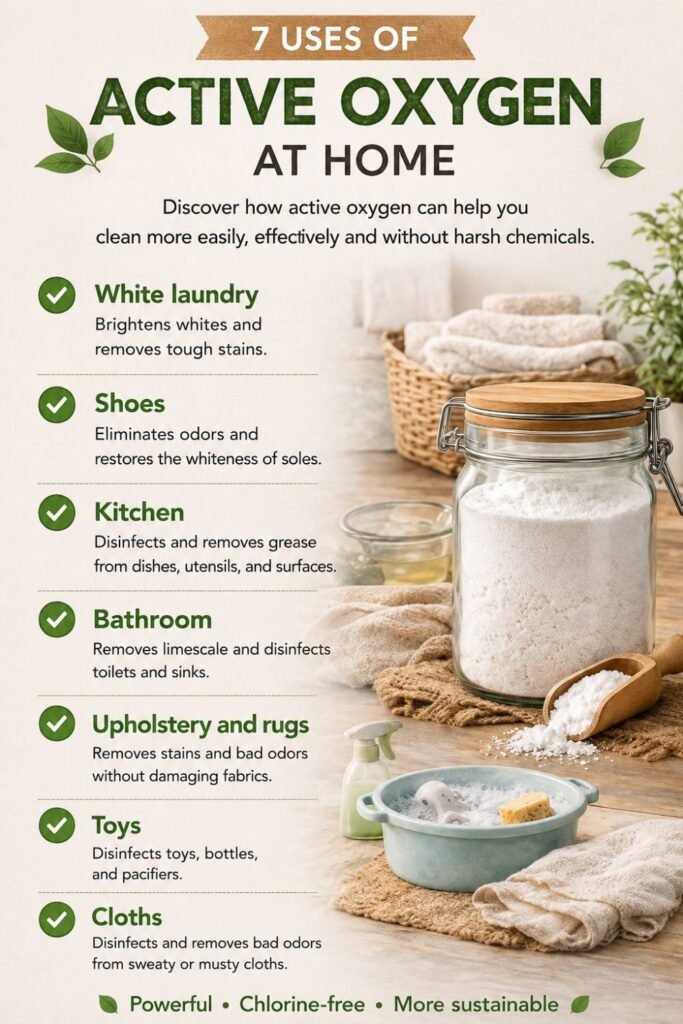
If you have little ones, you know that mud, tomato sauce and fruit stains are just part of daily life. What I do is fill a basin with hot water (heat helps release the oxygen faster) and add a couple of tablespoons of active oxygen. I let the item soak for a couple of hours, then wash it as usual. I think you’ll be amazed at how those stains lift with barely any scrubbing.
Boost the detergent you already use without spending more
You don’t need to buy some expensive specialty detergent. I still use my usual one, but I add a tablespoon of percarbonate straight into the drum. It helps soften the water so the detergent works better. It also helps keep the washer itself cleaner inside, which can cut down on those musty smells that sometimes show up.
Colored clothes: are you sure they won’t be ruined?
This is the million dollar question. I use it on my colored clothes (as long as they’re not very delicate fabrics like pure silk or untreated wool) and the colors come out vibrant. Because it isn’t corrosive the way chlorine is, active oxygen tends to be gentle on the dye while it lifts sweat and organic soil. That said, colorfastness varies a lot from garment to garment, so it’s always worth testing a hidden seam first.
The kitchen: where active oxygen turns into liquid magic
The kitchen is the room that gives me the most trouble. Grease, food residue, smells that cling to everything… and this is where active oxygen really shines. As someone who loves to cook but hates scrubbing the range hood, this trick was a lifesaver.
Goodbye to the sticky grease on range hood filters
You know that yellowish, sticky grease that builds up on range hood filters? It’s honestly one of the grossest things in the house.
- Fill the sink (or a large basin) with very hot water.
- Add a generous pour of active oxygen (or a couple of tablespoons if it’s powdered).
- Submerge the filters and leave them for about 20 minutes.
- You’ll watch the grease release on its own and literally float to the surface. It’s incredibly satisfying! Then just rinse and they’re good as new.
Cutting boards and countertops: a deep clean without the chemical smell
Wooden boards tend to absorb odors (garlic, onion and so on), and plastic ones hold onto ugly stains.
- Make a paste with a little water and active oxygen.
- Spread it over the board, let it sit for 10 minutes, then rinse.
- It doesn’t just lift the stain, it also helps sanitize the surface. And the best part is you’re not leaving bleach residue where you’ll be setting your family’s food. Just keep in mind that for true disinfection, especially after raw meat, you’ll want a product specifically labeled as a food contact sanitizer.
Bring your stained coffee and tea mugs back to life
Do you have mugs with that dark ring inside that not even the dishwasher removes?
- Put a pinch of active oxygen in the mug.
- Fill it with hot water.
- Wait 5 minutes.
- When you pour the water out, the mug should be bright white again, like the day you bought it. It looks like black magic, but it’s just clean chemistry!
The bathroom: a fresh, clean space without the fumes
Cleaning the bathroom usually means shutting yourself in a small room with strong fumes that make you cough. With active oxygen, that’s a thing of the past.
Tile grout: from dingy gray to bright white
This is the use that generates the most “before and after” photos on Instagram, and for good reason.
- Mix hot water with active oxygen in a spray bottle.
- Spray the grout lines in the shower or on the floor.
- If they’re really dark, scrub a little with an old toothbrush.
- You’ll see the oxygen bubbles pull the dirt out of the pores in the grout. The difference is honestly incredible, it looks like you remodeled the whole bathroom.
A deeper clean for the toilet
For the bottom of the bowl, where you sometimes get that unpleasant discoloration from hard water and regular use:
- Add a couple of tablespoons before you go to bed.
- Let it work overnight.
- In the morning, go over it with the brush and flush. Fresh, clean and odor free.
Other uses that will leave you speechless
Just when you think you’ve seen it all, active oxygen surprises you with more uses in corners you’d never have imagined.
Cleaning mattresses and sofas
If you have sweat stains or an “accident” from the kids or pets on the mattress:
- Dampen the area (don’t soak it).
- Sprinkle on a little active oxygen.
- Let it dry completely, then vacuum up the residue.
- It lifts the stain and, more importantly, it works on the odor itself instead of just covering it with fragrance.
Rugs and carpets
That living room rug that’s lost its color from all the daily foot traffic…
- Dissolve active oxygen in warm water.
- Wipe the whole surface with a damp microfiber cloth.
- You’ll see the colors come back to life as the layer of dust and organic grime lifts away. Test a hidden corner first, since some rug dyes are more sensitive than others.
Trash cans: the end of bad smells
No matter how carefully you use liners, trash cans always end up smelling.
- Once a month, fill them with water and active oxygen.
- Let them sit for a while.
- They’ll come out spotless, without that lingering garbage smell that sometimes drifts through the kitchen
How to mix and store your active oxygen so it doesn’t lose its punch
This is where a lot of us go wrong at the beginning. Active oxygen is a little particular about temperature and timing. It’s not like glass cleaner, which you can leave in a bottle for six months and it still works the same.
The temperature secret: not too cold, not too hot
Sodium percarbonate needs a little nudge to start releasing those magic bubbles.
- If you use very cold water, the powder doesn’t dissolve well and settles at the bottom.
- The sweet spot is around 85 to 105°F. That’s the temperature where you dip your hand in and it feels nice and warm but doesn’t burn.
- For really heavy duty jobs (like range hood filters), you can go up to about 140°F, but be careful not to damage the material.
Use it right away or lose it
Here’s the golden rule: active oxygen has a very short working life once it’s mixed with water. The chemical reaction only lasts a few hours.
- Don’t make the mistake of filling a quart spray bottle to use all week. After 4 or 5 hours, you’ll basically have water with a bit of carbonate in it, because the “oxygen” has already gone off into the air.
- Mix small batches, just what you plan to use right then.
Storage: keep it dry and cool
In its dry powder form it’s very stable, but it hates humidity.
- Store it in an airtight container, away from direct sunlight and away from heat sources like the water heater or the oven.
- If the powder starts clumping together, moisture is getting in and it’s losing strength.
Precautions worth taking, because “natural” doesn’t mean “harmless”
Even though we love it because it’s gentler than bleach, it’s still a powerful chemical compound. As a good friend, I have to tell you where not to go wrong.
Fabrics to avoid
There are delicate fibers that active oxygen can basically eat right through.
- Silk and wool: Don’t even think about it! It can weaken these natural fibers to the point where they break down or lose their shape permanently.
- Leather: Active oxygen is very drying on leather. For your leather sofa, stick with a product made for it or a glycerin based soap.
Delicate metal surfaces
- Aluminum: Be careful with untreated aluminum, since it can oxidize or discolor. If your range hood filters are made of cheap aluminum, test a corner before submerging the whole thing.
- Untreated wood: Sealed or varnished wood is usually fine, but on bare wood, active oxygen can raise the grain or lighten the color unevenly.
Personal safety
- Never mix it with acids (like strong vinegar) or with ammonia. It’s much safer than mixing bleach with things, but we don’t want any strange experiments at home.
- If you have sensitive skin like I do, wear gloves when you’re handling the concentrated paste, since it can dry out your hands by stripping the skin’s natural oils. It’s also a good idea to keep it away from your eyes and to work in a well ventilated space.
- Store it out of reach of children and pets, and always check the manufacturer’s label, since concentrations and instructions vary by brand.
Frequently asked questions about active oxygen
Is it safe for septic systems?
It’s generally considered one of the better options if you have a septic system, since it breaks down into water, oxygen and sodium carbonate, which tends to be less disruptive to the “good” bacteria in the tank than chlorine bleach. If you’re not sure, your septic service can tell you what works best with your setup.
Can I use it if I have pets?
Generally yes. It’s a popular choice for cleaning areas where dogs or cats spend time, because it works on urine odor at the source and doesn’t leave behind strong chemical residue. Still, keep pets away while you’re cleaning, rinse the area and let it dry fully before letting them back on it, and store the powder somewhere they can’t get to.
Does the product expire?
The powder usually lasts around 2 years if it’s kept tightly sealed. If you add a tablespoon to hot water and don’t see any bubbles, it’s probably past its prime.
Does it work on mold?
It works really well on the look of mold stains in bathroom grout, lifting the discoloration and helping reduce surface growth through oxidation. Keep in mind that for mold to stay gone you need to fix the moisture problem causing it, and for large areas or anyone in the home with respiratory issues or allergies, it’s worth getting a professional opinion.
Can I mix active oxygen with vinegar?
This is the million dollar question. Here’s the deal: your house isn’t going to explode, but you are wasting your money. Vinegar is an acid and active oxygen (percarbonate) is alkaline. When you mix them, they cancel each other out and both lose their cleaning power. The better approach is to use one to clean and save the vinegar for the rinse cycle as a softener.
Is it safe for silver or stainless steel flatware?
For stainless steel it’s fantastic and brings back a really nice shine. But be careful with silver or metals with delicate plating, since leaving them submerged too long can cause them to darken from oxidation. A quick dip of a couple of minutes is usually plenty.
Can I use it in my dishwasher?
Absolutely! If your glasses are looking cloudy from hard water, add a teaspoon to the bottom of the dishwasher before you start the cycle. It helps freshen the machine and leaves glassware looking clearer.
I have a baby at home. Is it safe for toys and bottles?
A lot of parents like it for plastic toys and for lifting fruit stains out of bibs, since it doesn’t leave the strong smell that bleach does. Rinse everything thoroughly with water afterward. For bottles and pacifiers specifically, check the manufacturer’s care instructions first and consider using a product that’s specifically labeled for baby feeding items, and follow the label directions closely.
Does it work on damp or mildew stains on walls?
It can, but go carefully. If the wall is painted, test a hidden corner first because it may lift some of the color. Spray the water and active oxygen mixture onto the stain, let it sit for a few minutes, then wipe it away with a damp cloth. If the dampness keeps coming back, the underlying moisture issue is what really needs to be addressed.
What happens if I use boiling water to dissolve it?
If the water is too hot (much above 140 to 160°F), the reaction is so vigorous that the oxygen is released all at once and burns itself out quickly. It’s better to use comfortably warm water so the cleaning action stays steady throughout the job.
Does it help with the “wet dog” smell in rugs?
That’s one of its strengths. It oxidizes the molecules behind the odor rather than just masking them. Spray a little on (without soaking the rug), let it dry, then vacuum thoroughly.
Can I use it in my pool or hot tub?
There are active oxygen products made specifically for pools that some people prefer as an alternative to chlorine, since they tend to be less irritating to eyes and hair and don’t have that chlorine smell. Make sure you buy one that’s labeled for water treatment, follow the dosing instructions, and keep testing your water regularly.
Does it damage the rubber gasket in the washing machine?
If anything, it helps keep the gasket free of mildew and soap buildup, which is what tends to break rubber down over time. Running a monthly maintenance wash with active oxygen can help extend the life of your machine.
Tell me your tricks
Well, after this deep dive, I hope you’re looking at that tub of percarbonate in the back of your cabinet with fresh eyes. Changing the way we clean can mean fewer harsh products in the house, and it gives the planet a little breathing room too.
Do you already use active oxygen in your routine? Do you have a secret trick I didn’t mention? I’m dying to hear it! Leave me a comment below and let’s chat, because you know how much I love learning from all of you.