Discover the power of sodium percarbonate, an eco-friendly, economical, and effective ingredient for naturally cleaning, whitening, and disinfecting. Learn how to use it for home cleaning and homemade cosmetics, how to store it, and make the most of it.
What Sodium Percarbonate Really Is
Sodium percarbonate, also called “solid hydrogen peroxide,” is a compound made from sodium carbonate (washing soda) and hydrogen peroxide. When it comes into contact with water, it breaks down, releasing active oxygen, which makes it a powerful natural cleaner and disinfectant.
Unlike bleach or chlorine-based products, it doesn’t pollute, leaves no toxic residue, and is completely biodegradable. Once it has done its work, it turns into water, oxygen, and sodium carbonate, three substances that are harmless to the environment. That’s why it’s earned the nickname “the eco-friendly bleach,” and it’s a popular ingredient in natural cleaning and homemade cosmetics.
Why Percarbonate Is So Effective
The secret of its effectiveness lies in its ability to release active oxygen. This oxygen breaks down stubborn stains, odors, and grime, but without damaging surfaces or fabrics. Plus, it works as a disinfectant, getting rid of bacteria, viruses, and fungi. It’s perfect for cleaning damp areas like the bathroom or kitchen, where mold tends to build up.
In short, it cleans, whitens, disinfects, and deodorizes, all at the same time and without relying on harsh chemicals.
How to Use Sodium Percarbonate for Household Cleaning
When you try it, it’s hard to believe that something so simple works so well. Here are some of my favorite ways to use it at home.
1. Natural Laundry Whitener
Add one or two tablespoons of percarbonate to the washing machine drum, along with your usual detergent. If the clothes are really dirty, dissolve it first in hot water and let the garments soak for an hour. The result is amazing, stains disappear, and whites regain their brightness without damaging the fibers.
2. Cleaning the Bathroom
The bathroom is one of the places where I use it the most; I mix a spoonful of percarbonate with hot water and apply the mixture to the toilet, sink, or bathtub. I let it sit for a few minutes and then scrub with a sponge.
It easily removes limescale, mold, and moisture stains, and it also leaves a fresh, clean scent.
3. Deep-Cleaning Tiles and Grout
If the grout is blackened, make a paste with percarbonate and warm water, apply it with an old toothbrush, and let it sit for about 15 minutes before rinsing. The grout will look much closer to its original color with very little effort.
4. Disinfecting Kitchen Utensils
Sometimes I wash cutting boards,bottles, containers, or baby bottles with a mix of percarbonate and hot water. It gets rid of bacteria and odors without leaving chemical residues.
5. Cleaning Carpets and Curtains
To clean delicate fabrics, dissolve a tablespoon in warm water, gently rub with a cloth, and rinse. You can also use it in a spray to remove odors from curtains or sofas.
Sodium Percarbonate in Homemade Cosmetics
One of the things that surprised me the most was discovering that percarbonate also has cosmetic uses, although always with caution.
1. Cleaning utensils
If you make your own soaps or creams, you know that sometimes the containers get greasy. A bit of percarbonate dissolved in hot water leaves them spotless and disinfected.
2. Cleaning Makeup Brushes
Brushes accumulate bacteria and product residue. Soak them in hot water with half a teaspoon of percarbonate for a few minutes, rinse well, and let them air dry.
3. Natural Tooth Whitener (use with caution)
Some people use it as an occasional ingredient in homemade toothpaste, mixed with baking soda and coconut oil. Personally, I prefer to use it very sparingly because it can be abrasive if used often.
How to make homemade cleaners with percarbonate
I like to keep a spray bottle of the mixture ready to use
Multipurpose Cleaner
- 500 ml of hot water.
- 1 tablespoon of percarbonate.
- 10 drops of lemon or tea tree essential oil.
Mix the ingredients in a spray bottle and use it to clean surfaces, floors, or tiles. Don’t store it for more than a couple of days, as it loses effectiveness.
Bathroom and Kitchen Descaler
Make a paste with 3 tablespoons of percarbonate and a few drops of hot water. Apply it to the areas with limescale or grease, let it sit, and scrub. It’s especially effective on faucets, grout, or sinks.
How to Store Sodium Percarbonate
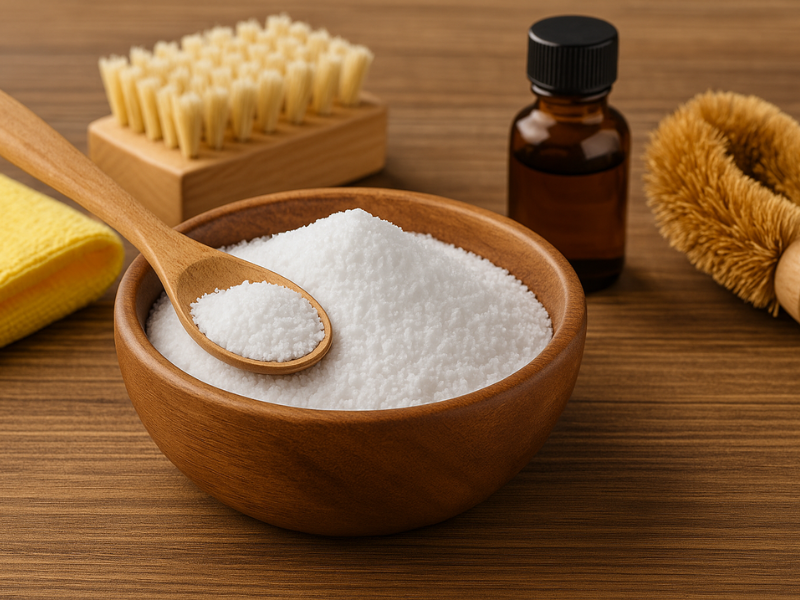
Sodium percarbonate should be stored in a cool, dry place, away from direct light. Moisture breaks it down, reducing its effectiveness, so ideally, store it in an airtight jar or a glass container with a lid.
Never mix it with vinegar or strong acids, as this reduces its effectiveness.
If stored properly, it can last over a year without losing potency.
Environmental and Personal Benefits
Since I started using it, I’ve not only cut down on cleaning product costs, but also the amount of plastic waste and harsh cleaning products in my home. It’s an easy way to take care of the environment without sacrificing effectiveness.
Also, it has something really comforting: knowing exactly what you’re using. No mysterious ingredients or confusing labels, just a simple substance that works. And, honestly, I love that feeling of going back to the essentials.
Precautions and Responsible Use
Although sodium percarbonate is often used as an eco-friendly cleaner, it is still a powerful product. It’s a good idea to wear gloves if you’re going to handle it for a long time or in high concentrations.
Avoid mixing it with acids (like vinegar or lemon), and keep it out of reach of children or pets.
And above all, remember that you don’t need to use much—a small amount is usually more than enough.
Frequently Asked Questions About Sodium Percarbonate
Can I use percarbonate on colored clothes?
Yes, as long as the fabric is colorfast and durable. Test it on an inconspicuous area first if you have any doubts.
Is it good for getting rid of mold?
Yes, it’s very effective. Make a paste with sodium percarbonate and hot water and apply it to the affected area, let it sit, and rub.
Does It Disinfect as Effectively as Bleach?
es, but without the strong smell or chlorine residue. It is also gentler on many surfaces and fabrics.
Can it be used in the dishwasher?
Yes, but in small amounts. It helps clean the machine and get rid of odors.
How Long Does It Remain Effective?
odium percarbonate starts releasing oxygen as soon as it comes into contact with water, so it’s best to use it right after mixing it.
Over time, percarbonate has become a staple in my home. I use it for washing, cleaning, disinfecting, and, above all, because it helps me care for my home in a more mindful way. There’s something so satisfying about seeing how such a simple ingredient can do so much; I like to think it’s proof that we don’t need to overcomplicate things to keep our homes clean and pleasant.
When someone asks me if it really works, I smile. Because it really does work., and it works quietly, without strong odors or unnecessary harsh chemicals—and in a world full of chemicals and endless labels, that feels like a little luxury to me.
Sodium percarbonate is much more than a cleaner; it’s a way to simplify your cleaning routine, use fewer unnecessary products, and return to a simpler approach to household cleaning.
Every time I use it, I feel like I’m doing something good not just for my home, but also for the planet. And once you discover that, there’s no going back.
If you haven’t tried it yet, I encourage you to give it a try. Start with something simple, like washing a white garment or cleaning the bathroom. You’ll see the results and, who knows, it might even become your new favorite ally.
Did you know about percarbonate? How do you use it? I’d love to read your tips or experiences. Leave me a comment so we can keep discovering new, more natural ways to care for our homes together.
If you want to know more about ingredients for natural remedies, I encourage you to check out our section—it’s small right now but we’re adding new content all the time. ^^