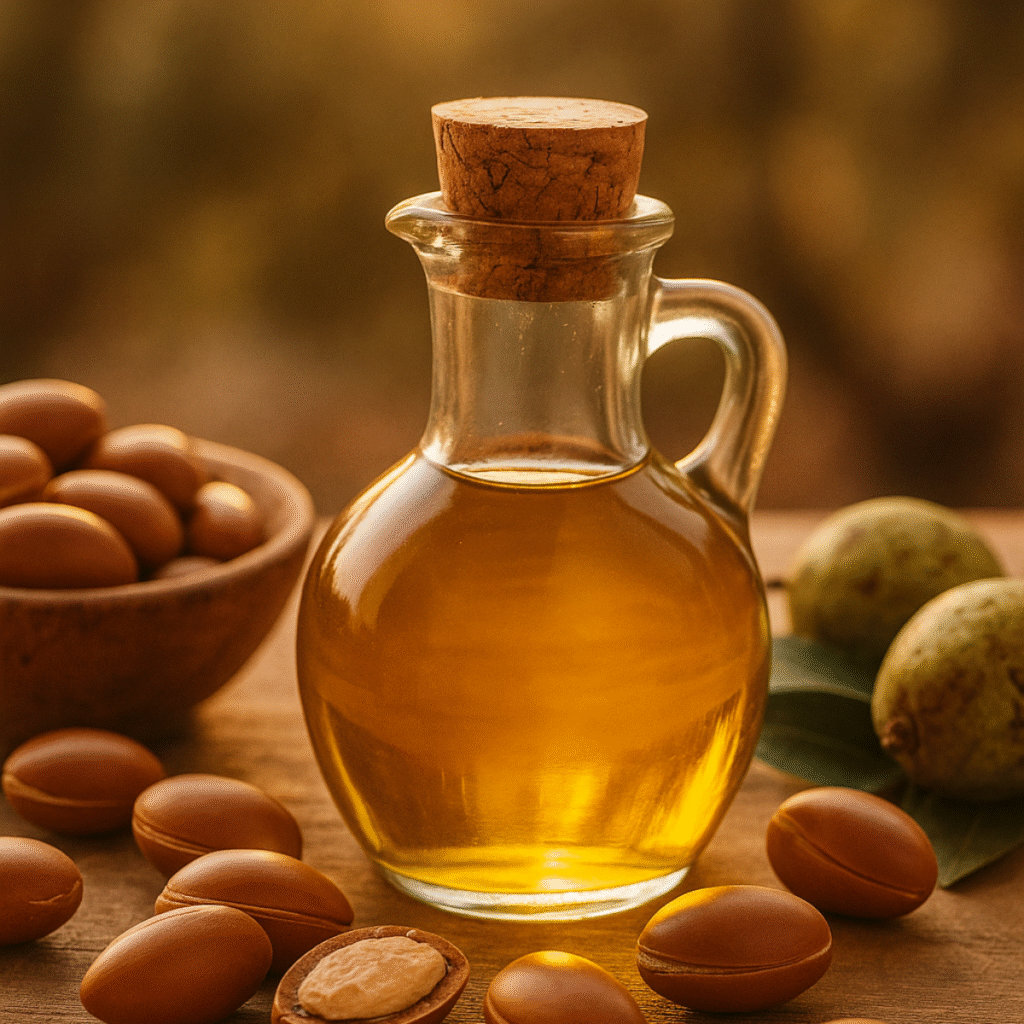
Discover the history, uses, and properties of argan oil, a natural treasure from Morocco with amazing benefits for your skin, hair, and health. Learn how to use it, store it, and tell if it’s authentic.
my first encounter with argan oil
I clearly remember the first time I had a small bottle of argan oil in my hands. A friend brought it to me from a trip to Morocco and said with a smile, “Try it, it’s magic for your skin.” At that moment, I had no idea what was inside that little bottled, but just a few drops were enough for me to understand why—its silky texture, golden color, and warm scent were fascinating to me.
Since then, this oil has become one of my must-haves. I use it on my hair, face, nails, and even in the kitchen. Over time, I’ve learned that behind every drop there are centuries of tradition, artisanal work, and respect for nature.
The Origin of Argan Oil: A Gift from the Desert
The Argan Tree
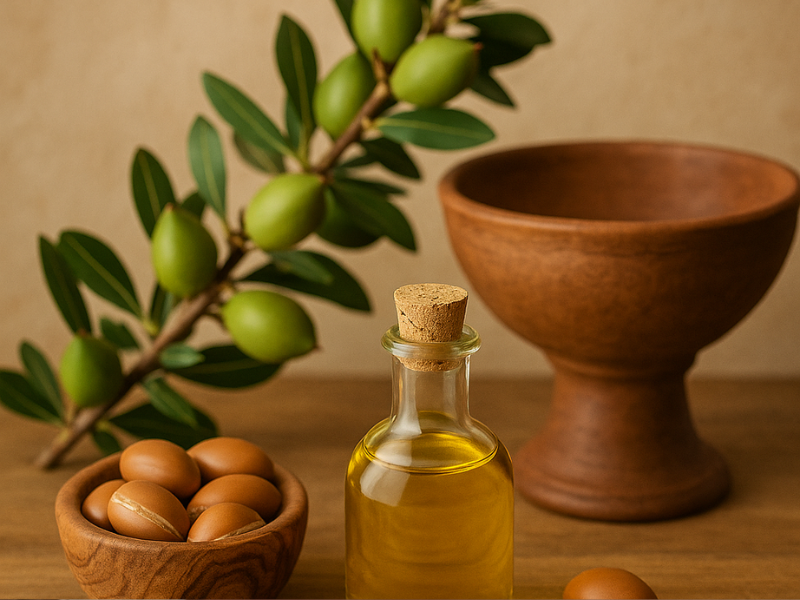
Argan oil comes from the fruit of the argan tree (Argania spinosa), a species that grows almost exclusively in the southwest of Morocco, in the regions around Agadir and Essaouira. It is a hardy, resilient tree that survives extreme temperatures and desert drought.
For centuries, Berber communities have used its fruits for food and personal care. The oil is extracted entirely by hand process is completely handmade and requires time, patience, and skill. Producing just one liter of oil, you need about 30 kilos of fruit.
The Role of Amazigh Women
Berber women have been the true guardians of this tradition. They collect the fruit that has fallen from the trees, dry them in the sun, crack the shells with stones, and grind the seeds to extract the oil. It’s hard work that requires experience and dedication.
With the spread of fair trade, women’s cooperatives have become a symbol of independence and empowerment in rural areas of Morocco. Thanks to their effort, argan oil has not only gained international recognition but has also transformed the lives of many families.
Properties of Argan Oil
A natural cocktail of nutrients.
Argan oil is a true cosmetic and nutritional gem. It is rich in essential fatty acids, vitamin E, antioxidants, and plant sterols, which can help maintain healthy skin and hair.
Essential fatty acids.
It mainly contains oleic and linoleic acid, which help maintain skin hydration, strengthen its natural barrier, and provide elasticity.
Vitamin E.
Its vitamin E content provides antioxidant properties, protects against premature skin aging, regenerates tissues, and adds radiance.
Antioxidants and sterols.
Antioxidants neutralize free radicals and reduce inflammation, while plant sterols may help support skin softness and barrier function.
Cosmetic Benefits of Argan Oil
For the skin.
Argan oil deeply moisturizes without leaving a greasy feeling, helps prevent dry skin, improves elasticity, and gives a natural glow. It’s an ideal ally for sensitive or irritated skin, as it soothes and regenerates.
It may help improve the appearance of dry or uneven-looking skin, and with continued use, it gives the face a more even and healthy texture. I usually apply it at night after cleansing my skin, and when I wake up, my skin feels softer and fresher.
For the Hair
Hair can also benefit greatly from argan oil. Regular use transforms it, restoring shine, softness, and strength.
It moisturizes the ends, reduces frizz, protects from the heat of blow dryers or straighteners, and makes hair more manageable. You can apply it to damp hair, from the mid-lengths to the ends, or use it as an intensive mask, leaving it on for about 30 minutes before washing it out.
For nails and cuticles.
Just a few drops are enough to strengthen brittle nails and soften the cuticles. Applying it every night before bed is a small gesture that can make a difference.
For the body.
It’s ideal to apply it after showering. When applied to slightly damp skin, it absorbs quickly and leaves a long-lasting hydrated feeling. It also improves elasticity and may help keep the skin supple.
Lesser-Known Uses of Argan Oil
Besides its cosmetic use, argan oil also plays an important role in traditional Moroccan cuisine.
Culinary Argan Oil
The oil intended for food consumption is produced from roasted kernels, which gives it a more intense flavor and a slight nutty touch. It is a product highly valued for its richness in antioxidants and its ability to reduce cholesterol.
In Morocco, it is used in salads, couscous, and cold dishes, but it is also mixed with honey and almonds to make a sweet paste called amlou, a popular Moroccan specialty.
How to Choose Genuine Argan Oil
The growing popularity of argan oil has led to imitations and refined products that have lost many of their beneficial qualities, so you need to be careful when purchasing it. Knowing how to identify genuine argan oil is key to enjoying its benefits.
Color
Pure cosmetic argan oil usually has a light golden color; if the color is too pale or transparent, it is probably refined.
Aroma.
The scent should be mild, slightly nutty or toasted. If it has no noticeable scent or rancid, it may be refined or of lower quality.
Texture.
Authentic argan oil is light and absorbs easily. It doesn’t leave a greasy feeling on the skin.
Packaging.
Choose products packaged in dark glass bottles, preferably with a dropper applicator. Light and air degrade its properties.
Certifications.
Make sure it has organic or fair-trade certifications. These certifications can provide greater assurance that environmental and fair-trade standards have been followed.
How to Store Argan Oil
Argan oil should be kept in a cool place and away from direct sunlight. If you keep it well sealed and protected, it can last up to a year without any problem.
Avoid storing it in the bathroom, because humidity and temperature changes can affect its quality. If you notice a rancid smell or a change in color, it means it has oxidized and should no longer be used.
How to Use Argan Oil in Your Daily Routine
On the face.
Apply two or three drops to clean skin and gently massage until absorbed. You can use it alone or mixed with your moisturizer.
On the hair.
Apply a few drops to damp hair, from the mid-lengths to the ends. You can also use it as a mask before washing, leaving it on for at least 30 minutes.
On the body.
After showering, while the skin is still damp, massage a few drops into legs, arms, and décolleté. Let it absorb for a few minutes before getting dressed.
On the nails.
Place a drop on each nail and massage the cuticle. Repeat this every night may help keep your nails and cuticles moisturized and conditioned.
Frequently asked questions.
Can I Use Argan Oil Every Day?
For most people, its light texture makes it suitable for daily use, although it is best to start with a small amount.
Is it good for oily skin?
It may be suitable for oily skin when used sparingly, although individual reactions can vary.
Can I mix it with other oils?
Yes, it can be combined with oils such as jojoba, rosehip, or almond oil.
Can Argan Oil Be Used During Pregnancy?
Pure argan oil is generally used as a moisturizer during pregnancy, but it has not been proven to prevent stretch marks. Consult a healthcare professional if you have sensitive skin, allergies, or any concerns.
Does it have any contraindications?
Possible reactions include irritation or an allergic response. A patch test is advisable before first use.
Common Mistakes and How to Avoid Them
- Using too much. Only a few drops are needed.
- Storing it in unsuitable containers or exposing it to light.
- Buying cheap or uncertified versions. They may be diluted, refined, or adulteratedThey might be adulterated.
- Thinking it’s just for dry skin. It can be used on different skin types, but the amount and frequency should be adjusted to individual needs.
What Argan Oil Has Taught Me
Over time, I’ve understood that argan oil is much more than a cosmetic. It tells a living story of the connection between the land, the people who produce it, and those who use it. It represents balance, respect, and natural beauty.
Every time I use it, it reminds me of the importance of caring for yourself in a simple and mindful way. You don’t need to complicate things to feel good; sometimes, a few drops of something natural are enough to restore radiance to your skin, the shine to your hair, and bring a sense of calm.
Were you familiar with the story of argan oil? How do you use it? Share your experiences and favorite uses in the comments. I’d love to read your thoughts and share more tips and advice about this wonderful gift from nature.