Discover the natural power of poppies, their history, medicinal properties, myths, and traditional uses. Learn how to take advantage of their benefits with care, and connect with the wisdom of nature through this flower as beautiful as it is enigmatic.
tThe Hidden Power of Poppies
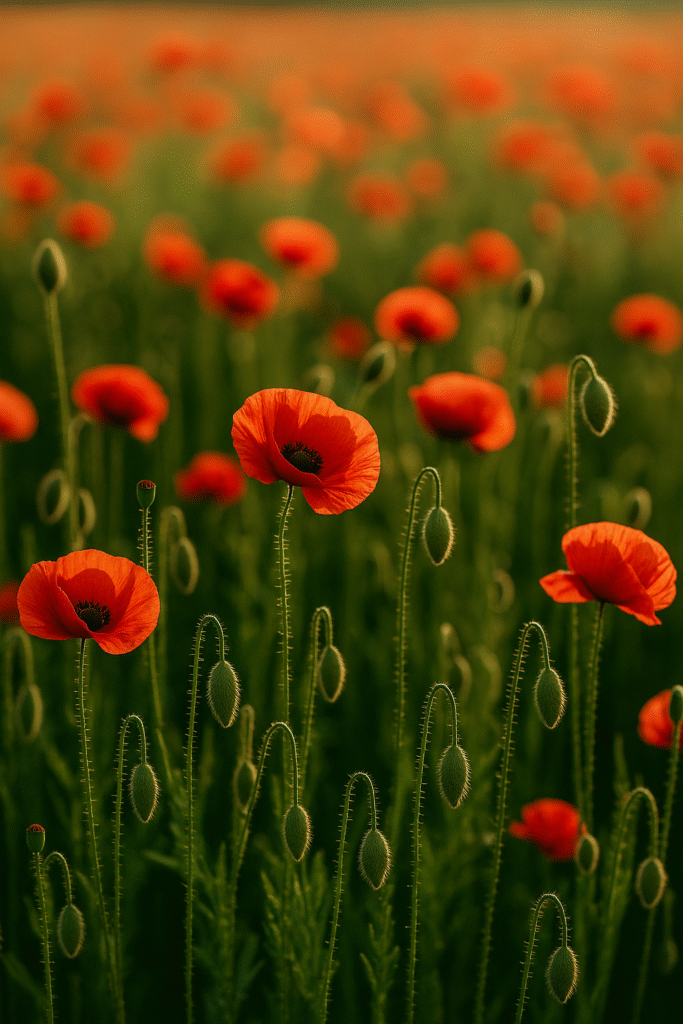
I love poppy fields, especially in spring, when the air smells of damp earth and the wind makes the flowers sway as if they were dancing. They are so simple, light, and fleeting… but their bright red color seems to hold pure life.
But these flowers are not only beautiful; they also have soothing properties and traditional medicinal uses that our ancestors knew very well. Today I want to share with you everything I’ve learned about them: their history, their uses, their properties, and also the care you need to take when using them.
The Poppy: A Wildflower Rich in History and Symbolism
The origin of the poppy.
The common poppy, Papaver rhoeas, is a wild plant that grows in Europe, Asia, and North Africa. Its bright red petals make it unmistakable. It often appears at the edges of paths, among wheat fields, and in disturbed land, which has made it a symbol of rebirth and resilience.
After wars or harvests, when the ground was turned over, poppies would spring up, covering the fields with color and life. Perhaps that is why they have come to symbolize renewal and the strength that can emerge even in the midst of chaos.
Myths and symbolism
In ancient Greece, poppies were sacred to Demeter, the goddess of agriculture, and were associated with sleep and fertility. In Rome, they were also associated with eternal rest.
Centuries later, after World War I, the poppy became a symbol of remembrance. In the fields of Flanders, they grew among the graves of fallen soldiers, and since then, they have been used to honor their memory.
But beyond myth and history, poppies are a true natural treasure.
Medicinal properties of the poppy
Although it is often confused with the opium poppy, the common poppy (Papaver rhoeas) is much milder and safer to use. It does not contain the potent opium alkaloids found in the opium poppy, but it does have other natural substances with relaxing effects.
Natural composition
Poppy petals contain mucilages, alkaloids (like rhoeadine), anthocyanins, flavonoids, and organic acids. This mix of active ingredients is traditionally associated with sedative, cough-relieving, and anti-inflammatory effects.
Main properties
- Calms coughs and soothes the throat.
- Relaxes the nervous system and helps you sleep better.
- Relieves mild headaches and muscle tension.
- May help ease nervousness and mild anxiety.
- Protects the skin thanks to its antioxidants.
How it acts on the body
The common poppy is said to have a gentle, gradual effect; it doesn’t make you suddenly drowsy, but helps the body find its own rhythm. Its calming effect is especially noticeable at night or during stressful moments. Personally, I usually make myself an infusion of dried petals when I need to unwind or before going to sleep. It’s a small gesture that helps me connect with nature and brings me back a sense of calm.
Traditional uses of the poppy
As a Herbal Tea
For centuries, poppy teas have been used to relieve coughs and promote rest.
Preparation:
- A teaspoon of dried petals per cup.
- Hot water, not boiling.
- Steep for ten minutes, then strain.
It has a mild flavor and a beautiful color, between pink and reddish. You can add honey or combine it with lemon balm or linden, it becomes an ideal infusion to relax before sleeping.
In Traditional Syrups
In folk medicine, poppy syrups were made with honey and distilled water, and they were widely used to soothe children’s coughs or soothe irritated throats. Today, they can still be found in herbal shops that still use traditional recipes.
In natural cosmetics
The petals are also used to make soothing tonics or masks, they add radiance and help keep the skin soft. If you add dried petals to a warm bath, the result is relaxing and fragrant, perfect for releasing tension after a long day.
Myths and curiosities about poppies
A Flower of Dreams and Gods
In Greek mythology, the poppy was a flower sacred to Morpheus, the god of dreams. It was said that its petals helped people fall asleep and enter a state of deep calm.
In Egypt, healers used it in natural remedies to ease pain and relax the body, although the distinctions between different poppy species were not clearly understood at the time.
The poppy in art and literature
Poets, painters, and writers have fallen for its charm. Poppies represent fleeting beauty, passion, and the fragility of time. In Monet’s paintings, for example, they seem to float over the fields, inviting you to get lost in their color. There’s something hypnotic about them, a mix of delicacy and strength that makes them one of nature’s most evocative flowers.
Side effects and precautions
Although the common poppy is generally considered mild, it should be used in moderation. Its natural compounds are mild, but that doesn’t mean you should overdo it.
When to avoid it.
- IIf you are taking sedatives or antidepressants
- During pregnancy and breastfeeding.
- In young children without professional supervision.
Possible side effects.
In high doses, it can cause drowsiness, nausea, or mild digestive discomfort. That’s why it’s best to start with a mild infusion and see how your body reacts.
How to collect and preserve poppies
Poppies bloom between May and June, and ideally, you should pick them in the morning when the petals are dry and fully open.
Carefully pluck the petals and spread them on paper or a fine mesh in a ventilated, shaded area. They should be completely dry within a few days.
Once dry, store them in a dark glass jar, away from sunlight and moisture. This way, they will keep their color and properties for months.
How to grow poppies at home
“Growing poppies is simple and rewarding. They require little care, and their presence brightens up any garden or terrace ^^.
Basic care.
- They prefer full sun and loose soil.
- They don’t need frequent watering, just keep the soil slightly moist.
- Sow the seeds directly outdoors in spring.
Seeing them sprout and bloom is a little lesson in patience and beauty. Each bloom lasts only a few days, but while it’s open, it lights up everything around it.
Poppies and Emotions: A Flower for the Soul
Beyond their medicinal uses, poppies also speak to us on an emotional level. Their color, shape, and fleeting nature convey serenity and simplicity. Every time I stop in front of a field covered with them, I feel like they’re teaching me something: that life is change, that beauty is in simplicity, and that even what disappears can leave a lasting impression.
Perhaps that is why the poppy is traditionally associated with soothing not only the body, but the mind as well.
Frequently asked questions about poppies
Is the common poppy the same as the opium poppy?
No, the common poppy is milder and doesn’t contain the potent opium alkaloids found in the opium poppy.
Can fresh petals be used?
Yes, but ried petals are easier to preserve and are more commonly used in infusions.
Can I combine it with other plants?
Yes. It is often combined with lemon balm, chamomile, or passionflower in relaxing herbal teas.
Is it suitable for children?
Only in very small amounts and under professional guidance.
What’s the difference between red poppies and yellow ones?
The red poppy is the variety most commonly used in traditional herbal preparations, while the yellow or white varieties usually only have ornamental value.
The Subtle Power of Nature
Poppies have taught me that the most fragile things can also be strong, that there is strength in simplicity, in things that grow without asking for anything in return.
For centuries, this flower has been a symbol of rest, beauty, and hope, and maybe that’s exactly what we need most today: to remember that calm is not always found in doing more, but in reconnecting with nature. Making a tea, watching a field of poppies, or simply smelling their petals is a reminder that the simple things that matter are still there, waiting for us in every flower.
Did you know about the properties of poppies? Have you tried any infusion or preparation with them?
Share your experience or any questions in the comments. I’d love to hear from you and continue sharing my love of natural remedies with you
If you liked this post, don’t hesitate to check out the plants and flowers’ section of the blog.