Solid cosmetics aren’t a niche trend anymore. They’re a legit way to rethink your personal care routine. Shampoos, cleansers, facial treatments, and body care products can all be made in compact, practical formats that are easy to use and surprisingly satisfying to create.
But going from buying solid cosmetics to actually making them yourself? That’s where the questions start piling up. What ingredients do I need? How much of each? How do I know if a formula is balanced? What about pH? How do I keep it from going bad?
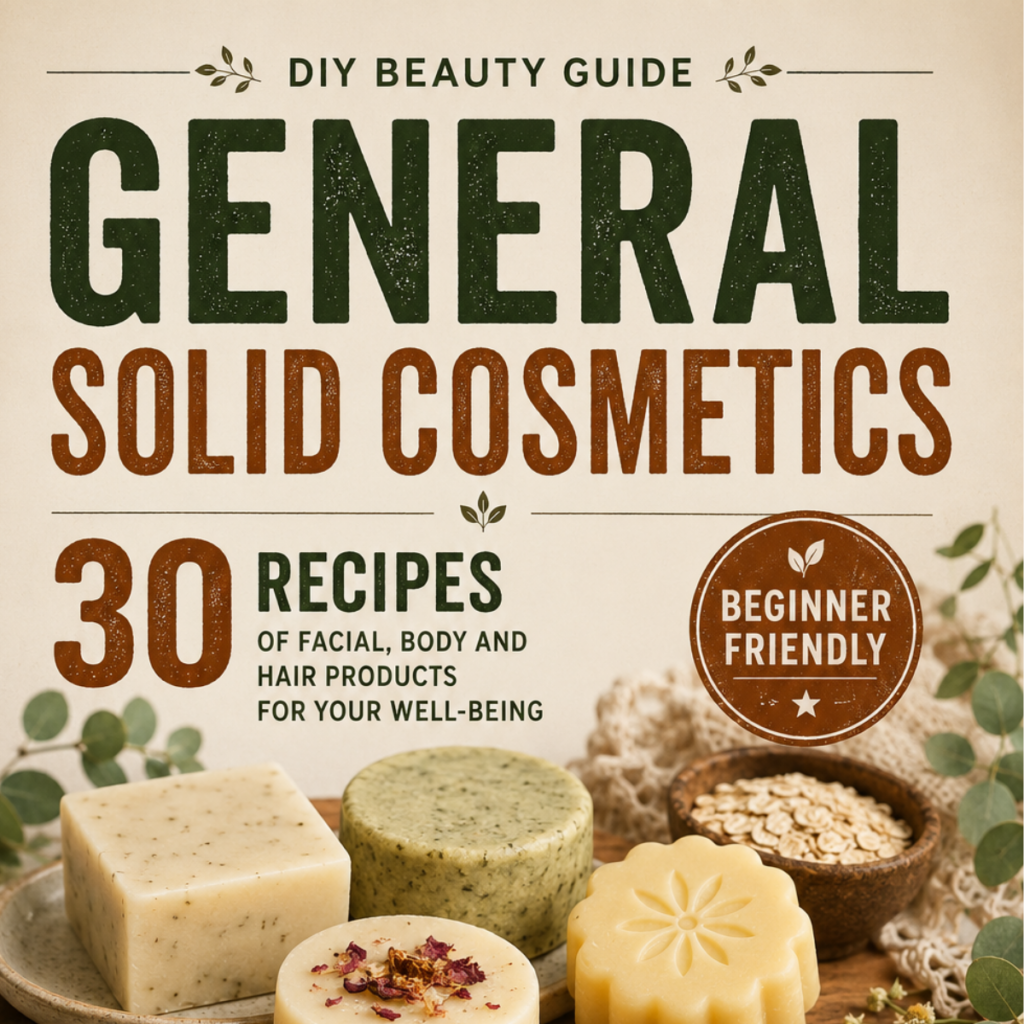
The book “General Solid Cosmetics: 30 Recipes for Face, Body, and Hair Care” was written to walk you through all of that and help you get started making your own cosmetics at home.
This post contains affiliate links.
Way more than just a recipe collection
A solid cosmetic formula needs more than a list of ingredients and a vague “mix until smooth.”
That’s one of the things that sets this book apart. Every recipe includes exact amounts and percentages alongside the full process. You can follow each formula precisely and start understanding how cosmetic formulation actually works.
The book features 30 solid cosmetic recipes covering different areas of personal care.
There are formulas for your face, body, and hair, so you can experiment with different product types and see everything this format has to offer.
Learn to formulate, step by step
When you’re making cosmetics at home, the process matters just as much as the ingredients.
The order you add things, the amounts, the temperature, the final consistency. Small details can make a big difference in how a product turns out.
That’s why every formula comes with step-by-step instructions and formulation tips to help you understand what’s happening at each stage.
The goal isn’t just to copy recipes. It’s to start building real knowledge about cosmetic making and gradually understand what each ingredient does and why it’s there.
Face, body, and hair
One of the best things about “General Solid Cosmetics” is that it doesn’t focus on just one product type.
The 30 recipes cover different needs and let you work solid cosmetics into various parts of your daily routine.
You can explore facial care formulas, try your hand at body products, and dive into one of the most popular areas of solid cosmetics: hair care.
Start with whatever catches your eye, then branch out from there as you get more comfortable.
Understanding what you’re actually making
Making cosmetics at home means picking up some concepts that’ll help you get better results over time.
pH levels, preservation, ingredient ratios, final texture. These things matter in any formulation, and the book walks you through them.
Like any hands-on craft, not everything comes out perfect on the first try.
A batch might end up too hard, too soft, or have a texture you weren’t expecting. Learning to spot what went wrong and understanding why a formula behaves the way it does is all part of the process.
What if I’m missing an ingredient?
This is probably the most common question in DIY cosmetics. You find a recipe you’re excited about, then realize you’re missing one thing on the list.
That’s why knowing how to swap ingredients is so valuable. Understanding which ones can fill similar roles helps you make better use of what you already have and gives you a deeper understanding of how formulas work.
Over time, you stop just following recipes and start understanding why they’re built the way they are.
The satisfaction of making your own products
There’s something genuinely rewarding about making a cosmetic product with your own hands.
You start by weighing ingredients and following instructions. Before you know it, you’re recognizing textures, getting comfortable with percentages, and noticing how small changes completely shift the final result. Every batch teaches you something new.
Solid cosmetics open up a huge world of possibilities. Different ingredients, scents, textures, and formats. Once you get going, there’s always something new to try.
A book for learning by doing
This book is a great pick for anyone curious about homemade cosmetics, anyone who enjoys making things from scratch, or anyone looking to go deeper into solid formulation. It also makes a thoughtful gift for someone into natural beauty, handmade products, or self-care.
Ready to explore solid cosmetics?
Thirty recipes can be a lot more than thirty products.
They can be the starting point for discovering new ingredients, understanding how cosmetic formulas work, and building real skills you can keep developing over time.
If you want to get into this world and learn how to make face, body, and hair care products from scratch, “General Solid Cosmetics: 30 Recipes for Face, Body, and Hair Care” is a solid place to start.
It’s available now on Amazon.
Sometimes the best way to learn cosmetics is the simplest one: pick a recipe, get your ingredients together, and start making.