Discover St. John’s wort, one of the best studied plants in herbal medicine. I’m sharing my own experience, what the research does and doesn’t say about its effect on mood, how to use it safely, and the interactions you absolutely need to know about before you try it.
You’ve probably walked through a field in early summer and seen those vivid yellow flowers that look like they’ve captured all the energy of the sun. That’s St. John’s wort. It isn’t just a pretty plant for a vase, it holds compounds that interact with our bodies in genuinely interesting ways. In this post I’ll share everything I’ve learned about it, from its history to how it might fit into your self care routine if you use it properly. One note before we start: this is general information, not medical advice, and this particular plant is one where checking with a doctor or pharmacist first really matters.
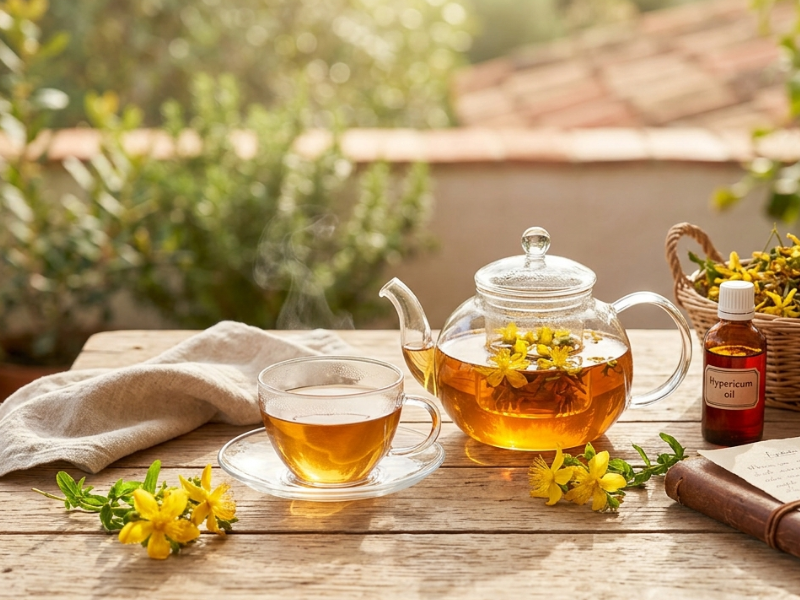
Illustrative image created with AI assistance
This post may contain affiliate links. If you buy through them you support my work, at no extra cost to you.
What St. John’s wort actually is
St. John’s wort belongs to the Hypericaceae family, and its scientific name is Hypericum perforatum. The perforatum part has a lovely explanation. If you hold one of its leaves up to the light, it looks like it’s full of tiny holes.
They aren’t actually holes, they’re small glands full of aromatic oils, and that’s where much of the plant’s activity lives. It’s as if the plant were designed to let light pass through it, which is a nice hint at the role it’s traditionally played in emotional wellbeing.
This plant has been used for centuries in traditional medicine across Europe. In the past it was credited with almost magical powers, and modern research has since identified some real chemistry behind the folklore. Its two best known constituents are hypericin and hyperforin.
These are the compounds thought to be responsible for its effects on the nervous system, although researchers still aren’t certain exactly how it works or which constituent matters most. It’s fascinating that something growing wild in our fields turns out to be this chemically complex.
People often confuse it with other yellow flowers, but St. John’s wort has a deep golden color that’s hard to forget once you can identify it. It blooms right around the summer solstice, when the days are longest. That’s part of why it’s so associated with brightness and clarity. It’s as if the plant stored up all that summer light to hand back to us when we need it most ^^
| Key point | Details and recommendations |
| Common names | St. John’s wort, Klamath weed, goatweed. |
| Active constituents | Hypericin and hyperforin, the compounds most associated with its effects on mood. |
| Main internal use | Studied mainly as support for mild to moderate low mood. Not a treatment for severe depression. |
| Main external use | Infused red oil, traditionally used to soothe minor skin irritation, small superficial burns and sore muscles. |
| Forms available | Teas, standardized capsules (often 0.3% hypericin) or tinctures. |
| Time to effect | Any noticeable change usually takes 2 to 3 weeks of consistent use. |
| Sun sensitivity | It’s photosensitizing. Avoid sun exposure after applying it to skin and use sunscreen if taking it internally. |
| Interactions | Serious and well documented. It can reduce or cancel the effect of birth control and many other medications, and combining it with antidepressants can be dangerous. |
| Cycles of use | Many herbalists suggest a break after 3 or 4 months. Discuss with your doctor. |
| Symbolism | A plant linked to sunlight and the return of vitality. |
What it’s best known for: emotional balance
If there’s one thing St. John’s wort is famous for worldwide, it’s as a natural support during low periods. I’m not talking about a magic fix that makes you happy in an instant, but about something gradual. Its mechanism appears to overlap with how some conventional medications keep neurotransmitters like serotonin available in the brain, though the details are still debated and the plant contains many compounds rather than one.
A lot of people turn to this plant when work stress or daily responsibilities start to feel like too much. It’s most often used for mild low mood or mild anxiety, the kind where your head won’t stop circling the same worries. Many people describe a kind of quiet steadiness that helps them see things with more perspective. It’s worth being clear, though, that the evidence for anxiety specifically is much thinner than for low mood.
Some people also find their sleep improves, likely as a knock on effect of feeling less wound up during the day. Others get the opposite and find it makes them restless or gives them vivid dreams, so pay attention to how you respond in the first couple of weeks.
And one thing I want to say plainly, friend to friend: if what you’re going through is persistent, if it’s affecting your ability to work or care for yourself, or if you’ve had any thoughts of hurting yourself, please talk to a doctor or a mental health professional. A plant is not the right tool for that, and reaching out isn’t a failure of the natural approach, it’s part of taking care of yourself properly.
Traditional and modern uses on the skin
We tend to focus on what St. John’s wort does internally, but its topical uses are just as old. The famous infused oil, recognizable by its deep red color, is a classic of the home remedy cabinet. That red comes from compounds released when the flowers macerate in a vegetable oil, usually olive or almond, in sunlight.
The oil has a long history of use for soothing and supporting skin recovery. People traditionally reach for it after small household burns, the kind you get cooking or with an iron, and many find it comforting on the area. Keep in mind that this applies only to minor superficial burns: anything blistering, larger than a coin, on the face or hands, or not improving needs proper medical attention rather than an infused oil. The same goes for open wounds, which shouldn’t be covered in oil at all.
Another common use is for sore muscles and stiff joints. Massaging a bit of this oil into a tense area like your neck or lower back feels warming and relaxing, and it’s a nice ritual after exercise or a long day in the same position. There’s one detail you must remember, though: St. John’s wort is photosensitizing. If you apply it to your skin, you cannot go out in the sun right afterward, because you risk a burn or pigmentation. Use it at night and let it work while you sleep.
How to add it to your routine safely and effectively
If you’re thinking of trying St. John’s wort, you have a few options depending on your lifestyle. The most classic is a tea. Brewing a cup can become a lovely little self care ritual: you just need the dried flowering tops and hot water. It’s a moment to pause, breathe in the aroma and give yourself a few minutes alone. Do note that a tea delivers a much less predictable dose than a standardized extract.
For those who want something more consistent, there are dried extracts in capsules or tablets. This option is convenient because you know exactly what you’re taking. Look for quality products that state the extract is standardized, which means the lab has analyzed the plant and guarantees a consistent amount of active constituents. Products vary enormously between brands, which is one reason study results vary too. Follow the manufacturer’s directions or, better, the guidance of a health professional.
Tinctures are another option, more concentrated liquid extracts taken diluted in water or juice. Whichever form you choose, consistency matters most. This isn’t a plant with an immediate effect like a painkiller. It needs time, and people generally report noticing something from the second or third week of continuous use. So don’t be discouraged if nothing happens on day one. Equally, if you’ve given it six to eight weeks and nothing has shifted, that’s useful information too, and a sign to talk with a professional rather than simply increasing the dose.
Important precautions before you take this plant
Natural doesn’t mean we can take anything without care. St. John’s wort is genuinely powerful, and precisely because of that it interacts with a long list of medications. I want to be very clear here because this is a safety issue, not a formality. The plant activates certain liver enzymes that make other drugs clear from the body faster than they should, which can leave those medications working poorly or not at all.
If you take oral contraceptives, be extremely careful, because St. John’s wort can make them fail. The same applies to blood thinners like warfarin, heart medications, immunosuppressants, HIV and hepatitis antivirals, certain chemotherapy drugs, and some anti-seizure medications. Combining it with conventional antidepressants deserves its own warning: that combination can cause serotonin syndrome, which is a medical emergency, so it should never be done without a doctor’s supervision. It’s also worth telling your surgeon if you’re having an operation, and remembering that stopping the plant changes how your other medications are metabolized too. My advice is always the same. Before you start, ask your doctor or pharmacist whether it’s compatible with everything else you take. It costs nothing to ask.
Pregnancy and breastfeeding are worth mentioning too. There isn’t enough evidence to consider it safe in these stages, so it’s generally advised against. Better to choose gentler alternatives or wait until this particular chapter has passed. Knowing these limits doesn’t make the plant any less valuable, it just means we use it with the respect our bodies deserve.
St. John’s wort during hormonal transitions
Women go through constant cycles that affect how we feel and how much energy we have. St. John’s wort is a plant many turn to during these stages. In the days before a period, plenty of us feel raw, or sad for no reason we can point to. Some small studies have looked at St. John’s wort for premenstrual symptoms with modestly encouraging results, though the research is limited and far from conclusive.
During perimenopause and menopause it comes up often as well. Hot flashes, mood changes and disrupted sleep are common and can really wear you down. There are small trials suggesting it may help with some menopausal symptoms, particularly the mood related ones, but the evidence isn’t strong enough to present it as an alternative to hormone therapy. If your symptoms are significantly affecting your life, that’s a conversation worth having with your doctor, who can walk you through all the options including this one. And bear in mind the interaction issue applies here too, since St. John’s wort can affect how hormone treatments are metabolized.
As for the dip in libido that sometimes accompanies these changes, any benefit is likely indirect: when your mood and energy improve, reconnecting with your body tends to get easier. Hormonal health isn’t isolated from mental wellbeing, they’re deeply linked. Using this plant as one piece of support during these transitions can help, as long as we’re realistic about what it can and can’t do.
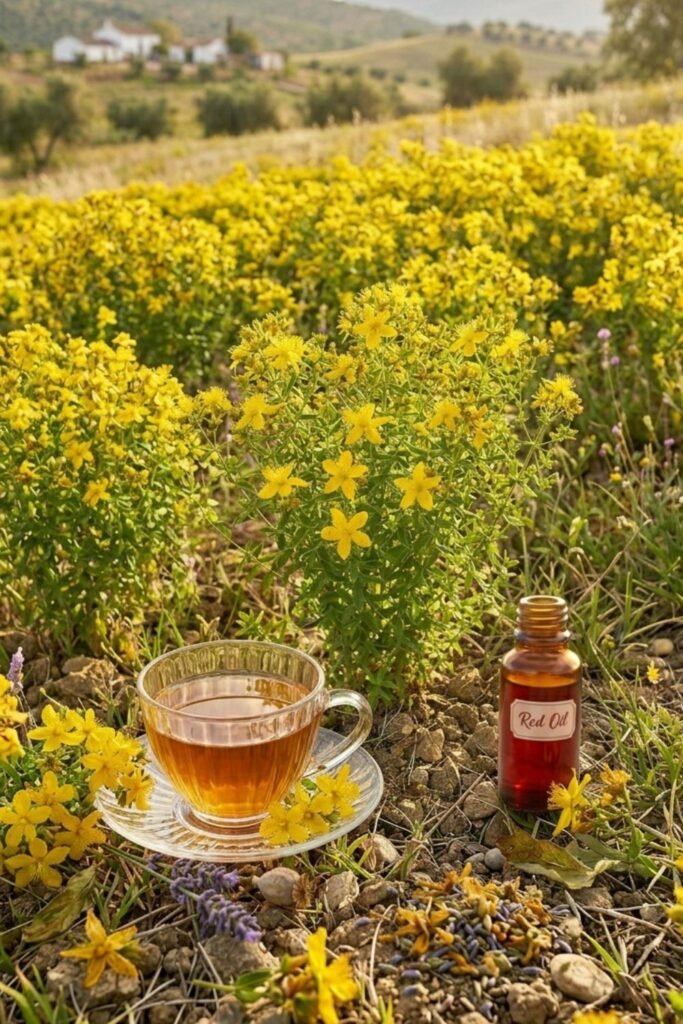
Illustrative image created with AI assistance
The science behind the plant and what the studies actually show
I like understanding why things work, and with St. John’s wort there’s a real body of research to draw on. This isn’t only a tradition passed from grandmothers to granddaughters, it’s one of the most studied plants in modern herbal medicine. A number of clinical trials, many of them European, have compared St. John’s wort extract with conventional antidepressants. Reviews of that research have generally found comparable results for mild to moderate depression, with fewer reported side effects.
That said, the picture comes with real caveats. Trial quality varies a lot, the extracts used differ from study to study, results from German trials have tended to be more favorable than others, and none of this applies to severe depression. So the honest summary is: promising for mild to moderate low mood, not a replacement for treatment when things are serious.
In trials it does tend to produce fewer side effects than conventional medication, though it isn’t free of them. Sun sensitivity, digestive upset, restlessness, headache and fatigue all show up. And the interaction profile, as we covered above, is the opposite of gentle. It’s also worth knowing that the plant contains a whole complex of compounds rather than a single isolated molecule, which is part of why standardization between products is such a challenge.
Researchers think hyperforin may be the most relevant constituent for modulating neurotransmitters, appearing to slow the reuptake of serotonin, dopamine and norepinephrine. With more of these available between neurons, communication improves and mood may lift. The exact mechanism is still being worked out, and it’s likely several compounds acting together rather than one doing all the work.
How to grow and harvest your own, ethically
If you’re lucky enough to have a small garden or live near open country, growing your own plants is a beautiful way to connect with the cycle of the seasons. St. John’s wort is hardy and undemanding, and it loves direct sun, which as we’ve said is where it draws its strength. It prefers well drained soil and doesn’t need frequent watering. Watching it go from seed to a shrub full of yellow flowers is deeply satisfying. One caveat worth knowing: in parts of the United States it’s classified as an invasive noxious weed and it’s toxic to grazing livestock, so check your local rules before planting it.
Harvesting should always be done with respect for the surroundings. The ideal moment is dawn on a clear day in late June. Tradition says flowers gathered on Midsummer’s morning have special power, but honestly any day in full bloom works. Cut the flowering tops, meaning the upper part of the plant with the flowers and youngest leaves. Never pull a wild plant up by the roots, since it needs to keep growing and feeding pollinators. And if you’re foraging, be completely certain of your identification before using anything.
Once harvested, you can dry it hanging upside down somewhere dark, dry and well ventilated. Proper drying prevents mold and concentrates the aromatics. If you want to make the red oil, use freshly cut flowers, pack them into a glass jar and cover them completely with olive oil. That’s the first step of a forty day process. Make sure the flowers stay fully submerged and that no water gets in, since damp plant material under oil is exactly the situation you want to avoid. This direct relationship with a plant, from growing it to transforming it, adds something you don’t get from a bottle off a shelf.
Myths and truths about using St. John’s wort
Medicinal plants always attract stories that end up confusing people. One common claim is that St. John’s wort is dangerous because it interacts with medications. The nuance here is that the interactions are entirely real and some of them are serious, so this isn’t a myth to wave away. What’s true is that the risk is manageable when you know about it and check with a professional first.
Another common belief is that it takes months to do anything. It isn’t instant, but some people notice subtle changes in energy and sleep within the first couple of weeks.
People also say it’s only for sadness, which undersells it. As we’ve covered, its uses for skin and sore muscles matter too. And some assume that because it’s natural you can take it indefinitely without a break. Most herbalists suggest periodic breaks, both to reassess how you’re actually doing without it and to avoid taking something long term without reviewing whether you still need it.
There’s also a belief that the red oil works as a tanning oil because of its color and its association with the sun. This is a half truth and a dangerous one. Hypericin is photosensitizing, so going into the sun with the oil on your skin risks a significant reaction. The truth is that it’s a nice after sun repair oil, but it should never be worn during sun exposure. Knowing the real story lets us enjoy herbal medicine without unnecessary fear and without unnecessary risk.
St. John’s wort as a tool for reflection and inner connection
Beyond its chemistry, this plant carries a symbolic weight we can use for our own growth. In many traditions it stands for protection and mental clarity. When you drink your tea, try doing it mindfully, using that time to observe your thoughts without judging them. It’s an opportunity to shine some light on the parts of ourselves we sometimes keep in shadow out of fear or embarrassment.
The plant reminds us that to bloom that brightly it first had to sink roots into the earth and survive the cold of winter. Our low moments serve a purpose too, helping us value the light and build resilience. Bringing St. John’s wort into your life can be the starting point for a broader wellbeing routine that includes journaling, walks in nature or meditation. The point is creating a space where you can be yourself without outside pressure.
The red oil as a treasure in your home remedy cabinet
What fascinates me most about herbal medicine is being able to make your own remedies from things as simple as sunshine, oil and flowers. St. John’s wort oil is the perfect example of this natural alchemy. As I mentioned, its blood red color is almost hypnotic, the result of macerating fresh flowering tops. Beyond burns, it’s a lovely thing to have on hand for shoe rubs or the chafing we sometimes get from clothing during summer walks or workouts.
On the cosmetic side, people are discovering it for facial care, always used at night only. It’s a nourishing oil that can help skin feel softer and look more even over time. If you have old acne marks that never quite fade, a small drop before bed may help them look less noticeable, though results vary a lot and this isn’t a substitute for treatments with real evidence behind them. Think of it as extra nourishment while your skin does its overnight work.
One traditional use I want to flag rather than recommend is putting the oil in the ear for earache. I’d steer clear of that one. You can’t tell from the outside whether an eardrum is perforated, and putting oil into the ear canal when it is can cause real damage. Ear pain, especially with discharge, fever or hearing loss, is something to have looked at properly. Keep the oil for skin, and make sure it’s clean and well filtered. A bottle of this beautiful red liquid in the cabinet is a genuinely useful thing to have for everyday scrapes and dry patches.
How to spot good quality St. John’s wort when you buy it
Not everyone can head out to a field to gather flowers or grow a shrub on the balcony. So if you’re buying from a specialty shop or health store, it helps to know what to look for. With dried herb for tea, start with the color. The flowers should still be a golden yellow or slightly brownish tone, never gray or lifeless. If it looks like straw and has no smell, it’s probably been sitting around too long and lost most of its aromatics.
With capsules, the label is everything. Don’t stop at the plant name on the box. Look for the section listing the active constituents. A good supplement will state that it contains standardized hypericin, which tells you the lab has analyzed the material and guarantees a minimum concentration. It’s also worth remembering that supplements aren’t reviewed by the FDA for effectiveness before they’re sold, so third party testing and a reputable brand matter more here than usual.
The container matters too. Oils and tinctures should always come in dark glass, ideally amber or cobalt blue. Since we know the plant reacts to light, a clear bottle would let the active constituents degrade quickly in daylight. Choosing products that get these details right means the money you spend on your health is actually doing something. It’s worth paying a little more for a brand that offers these guarantees.
How it can affect focus and mental performance
We sometimes think that focusing better requires stimulants like large amounts of coffee or tea. But often the problem isn’t a lack of energy, it’s mental noise. When we’re overwhelmed by a hundred tasks, the mind scatters and can’t settle on one thing. This is where St. John’s wort may play an indirect but meaningful role. By taking the edge off that background hum, it can make it easier to be present with what you’re doing.
I’ve noticed that when my mind feels steadier, my productivity improves in a much more natural, less forced way. It isn’t about moving faster, it’s about working with the kind of clarity that leads to better decisions and less exhaustion. Mental fatigue often comes from resisting difficult situations, and feeling calmer makes it easier to move through them. That said, there’s no good evidence that this plant improves cognition directly, so treat any focus benefit as a side effect of feeling better rather than a reason to take it.
And when sleep improves, the brain gets a proper chance to rest and reset. A rested brain learns better, remembers more and analyzes more sharply. So the benefit isn’t only emotional, it can be practical too. When the fog of low mood lifts a little, everything else tends to come into sharper focus.
How it differs from other calming plants
It’s easy to feel lost at the herb shop among lemon balm, linden, California poppy and passionflower. Each has its own personality. Linden and lemon balm are lovely for the kind of nerves you feel in your stomach, or that restlessness before a big event. They’re gentle and act quickly but not deeply over time.
Passionflower and California poppy are the sleep specialists, the ones to reach for if your main issue is persistent insomnia or waking repeatedly at night. St. John’s wort is different from all of them because its action is more structural. It isn’t trying to relax you in the moment, it’s working over weeks. Where a cup of linden helps you sleep tonight, St. John’s wort is aimed at something more sustained.
So it’s better not to see these plants as substitutes for each other but as possible companions. You might take St. John’s wort during the day and a passionflower tea at night if you need extra help sleeping. One caution: because St. John’s wort affects how many substances are processed, don’t assume all herbal combinations are automatically fine, and check before stacking things. St. John’s wort is the plant of light and resilience, the one that helps us stay standing when the wind picks up, while the others are more like warm blankets for the end of the day.
The symbolism of St. John’s wort and its link to solar joy
Throughout history plants have been not just medicine but powerful cultural symbols. St. John’s wort has always been tied to the sun because of its shape and color, and because it blooms at the year’s brightest moment. In antiquity people believed its flowers could catch the sun’s rays and hand them back to us during the darkest winter months. I find that image beautiful and, symbolically, quite fitting.
When we bring this plant into our lives, we’re bringing in something of that expansive, open energy. Sadness often pushes us to close up, stay home and avoid contact with the world. St. John’s wort represents the opposite. It invites us to open our inner windows and let fresh air in. It’s a plant associated with enthusiasm for new projects and with the ability to enjoy the small things everyday life offers.
Even the ritual of brewing the tea or applying the oil can be a symbolic act of self respect. It’s a moment where we declare that we deserve to shine and don’t have to settle for living at half light. Caring for our emotional health is a way of honoring the part of us that keeps looking for the light, no matter how long the night has been. It’s a reminder that joy is worth reaching for, and that sometimes we just need a small nudge from the earth to find it again.
Frequently asked questions to clear up any doubts
Can I take St. John’s wort if I’m pregnant or breastfeeding?
On this one it’s better to err on the side of caution. Even though it’s a plant, there isn’t enough research to be confident it’s harmless for the baby, and it can also interfere with other medications you may need during this time. My advice, friend to friend, is to skip it for now and ask your doctor or midwife about safer options. There will be plenty of time to come back to it later.
Does St. John’s wort cause weight gain or change your appetite?
It doesn’t contain anything that would make you gain weight on its own, and weight change isn’t among its commonly reported effects. Some people find that when their mood steadies, the late night fridge raids ease off too, which can help indirectly. If your appetite changes noticeably after starting it, that’s worth mentioning to your doctor.
How long before I notice anything?
This is where I’ll ask for some patience. It doesn’t work like a headache tablet that kicks in within twenty minutes. It’s subtle and cumulative, and most people report feeling a difference in energy and mood somewhere in the second or third week of daily use. If you’ve given it six to eight weeks and nothing has changed, don’t just increase the dose, talk to a professional about what else might help.
Can I be in the sun while using the oil or taking capsules?
This is one of the most important points. St. John’s wort is photosensitizing. If you put the red oil on and head to the beach, you’re risking a burn or pigmentation. Taken internally, your skin can also be more sensitive to UV light, especially at higher doses or if you’re fair skinned. Use the oil at night only, and if you’re taking it internally, wear good sunscreen and don’t push your luck in strong sun.
Is it safe to have it with my morning coffee?
There’s no direct contraindication, but if you’re sensitive to caffeine or you notice the plant already leaves you feeling wired, switching to decaf might suit you better. Restlessness is one of the more commonly reported effects, so listen to your body here.
What if I forget a dose one day?
Nothing dramatic happens, so don’t worry. Just pick your routine back up the next day. Don’t double up to compensate. What matters is that consistency is the rule and forgetting is the exception.
Can I stop taking it all at once when I feel better?
It isn’t habit forming, so stopping isn’t dangerous in itself. Still, if you’ve been taking it for months, tapering over a week or so is a gentler approach, and some people report feeling off when they stop abruptly. One thing that genuinely matters: if you take any other medication, tell your doctor when you stop, because stopping changes how those drugs are processed and doses may need adjusting.
I truly hope this tour through the world of St. John’s wort has been useful and, above all, that it’s inspired you to take a little better care of yourself. Your emotional wellbeing is the foundation everything else is built on. Nature is generous and offers us remarkable gifts like this plant, but it’s up to us to learn to use them wisely, which in this case means asking questions before we start.
If you decide to try it, do so with curiosity and respect for your own body. Listen to the signals it sends and be patient with nature’s timing. There are no shortcuts to real wellbeing, and there’s no shame in combining a plant like this with professional support if that’s what you need. I hope you find that light that sometimes seems to hide, and that St. John’s wort turns out to be, as it has been for so many people across the centuries, a small beacon of hope and vitality.
Share your experience and let’s talk
I’d love to know what you think of everything I’ve shared. Did you already know about the red oil, or were its skin uses a surprise? Have you ever tried St. John’s wort to lift your mood during a rough patch? Tell me anything you like in the comments, whether it’s a question, a personal experience or a trick of your own you want to share with everyone. I love reading your stories and having this be a place where we learn from each other.
I’ll be here to answer whatever you write. Sometimes simply sharing how we feel or what has worked for us helps us feel less alone in the search for wellbeing. Thank you so much for making it this far and for giving me this bit of your time. I hope to see you again soon in the next post. Take good care of yourself, and keep looking for the light in the small details of your day.