Everything you need to know about sage in one complete, down-to-earth guide: what it actually does, how it’s been used traditionally and how we use it now, recipes, precautions, storage and FAQs. I’ll tell you how I use it day to day and how to bring it into your routine in a way that makes sense.
If I had to pick one plant that gives me a feeling of quiet strength, the kind that grounds you without making a fuss, it would be sage. There’s something unmistakable about the smell. It’s sharp, clean and warm all at once, as though it were designed to clear your head and remind you that you can handle whatever’s coming.
It’s funny, because sage has a reputation as a “powerful plant,” but not in an aggressive way. It’s powerful in the sense that you notice it. It’s one of those plants that doesn’t slip by unnoticed. And at the same time, used with a bit of sense, it’s an incredible ally for everyday life.
What sage is, and why it’s been used for centuries
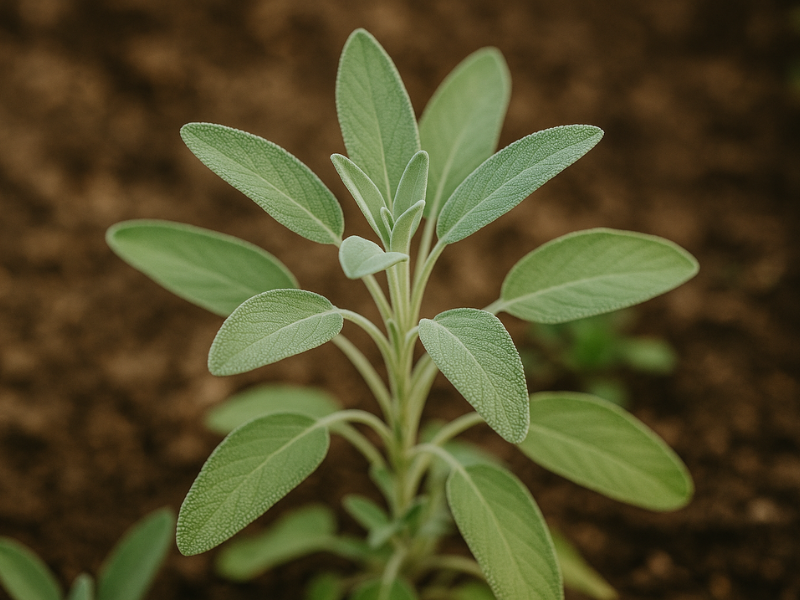
Sage is an aromatic, medicinal plant from the Salvia genus, and the best known for traditional use is Salvia officinalis, common sage. It’s a small shrub with gray-green leaves, slightly velvety, and a very distinctive smell that to me reads as clean, like dry countryside and Mediterranean cooking. It’s one of those plants where even if you don’t know it, one whiff has you thinking “I know that from somewhere.”
It’s been used across Europe for centuries as both a medicinal herb and a seasoning, and that’s no accident. Sage has a set of properties that made it genuinely valuable in folk tradition, especially for the throat and mouth, for digestion, and — something a lot of people discover late — for supporting women through certain hormonal stretches.
What I love about sage is how versatile it is. You can use it as a tea, as a gargle, in steam inhalations, in cooking, as an infused oil, even in the bath. But it’s also a plant that deserves respect. It isn’t one you sip on for months without thinking. It comes with precautions and sensible doses, which is why I like explaining it properly, so you can use it calmly and without unnecessary fear.
Why sage still makes sense today
Something happens to me with medicinal plants. The louder things get out there, the more sense the simple stuff makes. And sage in particular strikes me as one of those plants that fits modern life because it answers very modern problems. Throats wrecked by air conditioning. Meals eaten fast and at odd hours. Stress you can feel in your body. Hormonal shifts that throw you off.
Sage isn’t here to replace anything or promise miracles, but it can keep you good company. And it has a ritual quality I love. Making a cup of sage tea isn’t like pouring a soda. There’s something more deliberate about it, a way of telling yourself “okay, today I’m taking care of myself.” Do that consistently, even in small gestures, and your body notices.
What sage is traditionally used for
Sage has a mild antiseptic action, particularly in the mouth and throat, which is exactly why it’s been used so heavily in gargles and rinses. When your throat feels rough or your gums are tender, sage can bring some relief.
It’s also credited with anti-inflammatory and astringent properties. Meaning it helps calm irritated tissue and can ease that swollen feeling in the mucous membranes. That’s why it fits so well with sore throats, canker sores and small irritations in the mouth.
On the digestive side, sage has traditionally been used for heavy meals and gas. It has an aromatic bitterness that stimulates and supports. I like it especially after rich food, or when I’m feeling bloated, though this varies a lot from body to body.
Then there’s the hormonal side, which is what people talk about most with sage. It’s traditionally been used to support wellbeing through hormonal changes like menopause, and to help with excessive sweating in some people.
Sage is also an antioxidant, meaning it contains compounds that help protect the body from oxidative stress. In a life full of rushing and stress, that’s not nothing.
How I brew sage tea so it’s pleasant and safe
Sage is intense. Brew it too strong and it turns overpowering, even a little bitter. So I like to make it with some care, aiming for a balanced cup.
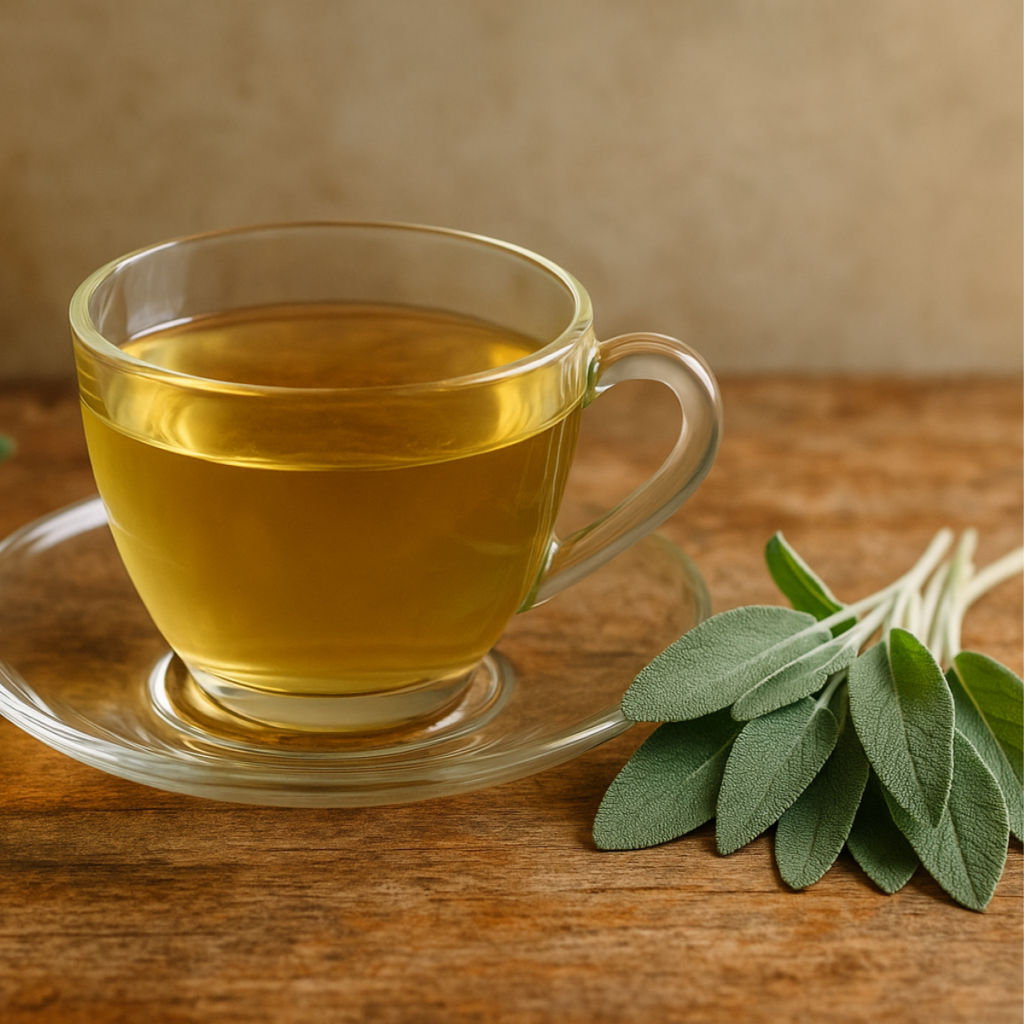
I usually use a teaspoon of dried leaves per cup. With fresh leaves I use less, since they’re stronger in aroma. I heat the water, pull it off the heat once it’s hot, add the sage and let it steep covered for five to seven minutes. I don’t leave it any longer or it gets far too intense.
Then I strain it and drink it slowly. Sometimes I stir in a little honey if I’m using it for my throat, or a squeeze of lemon if I want something brighter. But the point is that this isn’t a tea to drink just to be drinking something. It’s a plant I use as occasional support or in short stretches, not as my daily water for months on end.
The effects you notice first, and why they hook you
There are uses of sage you feel almost the first time. Gargling with sage when your throat is rough, for instance, gives you that sense of being cleaned out and soothed. Or rinsing with it when your mouth is tender and feeling it settle down.
That hooks you, in the good way, because you realize you have a simple, natural resource sitting in your kitchen that you can actually put to use. Sage is one of those plants that makes you feel like you’re doing something for yourself.
Sage for your throat and mouth
If there’s one reason sage earned its reputation, it’s this. For the throat and mouth it’s a very rewarding plant. One well-made infusion gives you a practical resource for those days when your throat feels off, your mouth is tender, or your gums are bothering you.
I like it because the relief is noticeable. It isn’t that “well, I took something, we’ll see” feeling. Sage leaves a fairly obvious sense of cleanness and calm, especially as a gargle or a rinse. That said — and I always say this — if there’s a high fever, severe pain, white patches or anything that worries you, see a doctor. Sage can help, but it doesn’t replace a proper evaluation when you need one.
Sage gargle for a sore throat
When my throat is bothering me, the first thing I do is brew some sage. I let it steep a few minutes, strain it well and wait until it’s lukewarm. Not hot — lukewarm. That matters, because if it’s too hot you can irritate the area further.
Then I gargle for a few seconds, spit, and repeat. It usually feels good. Your throat feels “cleaner,” less swollen, like the tension has eased. It isn’t an instant cure, but it’s real relief, and in my case it helps a lot.
I like to do it two or three times a day when I need it, for a day or two, and then stop. Sage is strong, and it works better for me when I use it that way — as occasional support.
Sage mouth rinse for tender gums
This is one of my favorite uses, because it’s so simple and you feel it. If I’ve had a day of sensitive gums, or my mouth feels irritated, I brew some sage, let it cool completely and rinse with it like a homemade mouthwash.
Sage has a strong flavor, fair warning. Brew it too concentrated and it’s a lot. So I make a lighter infusion for rinses, which is much more pleasant. The soothing effect still comes through.
Something I like is that there’s no alcohol and no artificial fragrance. It feels more natural, cleaner. Just strain it well — I don’t want little leaves floating around that could irritate.
Sage for canker sores, carefully
Some people use sage for small canker sores or mouth irritations. I’ve done it a few times with a mild sore, always with the idea of taking the edge off. I brew the tea, let it cool and rinse gently.
The important thing here is not to obsess or make it worse. If a sore isn’t improving, if it really hurts or if they keep coming back, get it checked. Sage can be a help, but it isn’t a universal answer to everything going on in your mouth.
Sage for digestion
Sage is also widely used for digestion, even if that isn’t its most famous role. I find it an interesting plant for those days when you feel heavy, sluggish or gassy. It has an aromatic bitterness that can be very welcome after a rich or heavy meal.
One important detail, though. Sage isn’t as “neutral” as chamomile. It’s much more assertive. So if you have a sensitive stomach, start with a small amount and see how it sits.
Sage tea after a heavy meal
When I’ve eaten something heavy, I brew a mild cup of sage and sip it slowly. I don’t make it strong, partly because I don’t want that intense bitterness and partly because it isn’t necessary. A small teaspoon of dried leaves per cup is usually plenty.
What I notice is that my stomach feels lighter and less “stuck.” It also helps me avoid that overstuffed feeling afterward. Sometimes I combine it with a little mint if I want something fresher.
Sage for gas, bloating and heaviness
On bloated days it works better for me if I drink it in a calm moment. That sounds like a small thing, but it isn’t. If you’re tense, your body doesn’t digest the same way. So I try to drink it and sit down for a while.
Sage can help ease that feeling, but it also invites you to slow down. A lot of the time, that gesture is part of the effect.
Sage and sweating, the use most people find late
This is one of the topics that comes up most once you start reading about sage. It’s traditionally been used to help with excessive sweating in some people, and it comes up constantly in relation to hot flashes and the changes of menopause.
If you’re going through hormonal changes or you sweat heavily, the sensible approach is to use it as occasional support and pay attention to what happens. And if there are medical conditions or medications involved, ask first.
With that said, here’s what I’ve seen myself and how people close to me use it.
Sage for hot flashes, realistically
Sage has traditionally been used as support during menopause, hot flashes especially. I’m not going to promise you miracles, but I can tell you plenty of women have made it part of how they take care of themselves.
The usual approach is drinking sage tea in short stretches, not indefinitely, and watching how your body responds. It works well for some people and does very little for others. Which is why I like doing this calmly, without inflated expectations, and listening to your body.
Sage for excessive sweating
Some people sweat a lot from stress, from heat, from hormonal moments, or just because that’s how they’re built. Sage comes up as a plant that may help regulate that in some people. If you want to try, I’d always start with a mild infusion, observe, and not stretch it out for months on end.
And of course, if you’re sweating very heavily with no explanation, see a doctor — sometimes the body is flagging something else.
Sage on your skin, gently and occasionally
Sage is better known for the throat, the mouth and the hormonal side, but it has its place on the skin too. It isn’t the obvious choice for sensitive skin, since it’s fairly astringent, but used well it can be great for oily skin, for the occasional breakout, or for areas that need something purifying.
I use it occasionally. Not as a daily toner for months, but when I feel like my skin needs a deeper clean, or when I have a blemish I want to calm down without attacking it with harsh products.
A sage compress for the occasional breakout
If I have an inflamed blemish, I brew some sage, let it cool and use a clean gauze pad as a compress. I hold it there for a few minutes and the area settles. It doesn’t always disappear in a day, but the swelling does come down.
The key here is paying attention. If your skin is very sensitive, you might prefer chamomile. Sage is more intense, so test a small area first.
An occasional toner for oily skin, well diluted
Some people use sage as a toner for oily skin because it helps balance and tighten. If you do, I’d keep it well diluted and only for short stretches, not daily. A light infusion, carefully strained, applied with a cotton pad and always followed by moisturizer — because even oily skin needs to be cared for, not stripped.
The sage recipes I actually make at home
Once you start using sage, you realize it’s a very rewarding plant for making things at home, not just tea. Rinses, steams, infused oils, even blends for the kitchen that lift a dish without any effort. I like it because, used well, it’s one of those plants that makes you feel resourceful.
That said, with sage I always come back to the same thing. Less is more. The aroma is so strong that you don’t need much for it to show up. In fact, overdo it and the flavor takes over, or turns a bit heavy. So I generally prefer simple, balanced recipes — the ones you repeat because you want to, not because you feel like you “should.”
Mild sage and honey tea for a sore throat
This is one of my favorites when my throat feels rough or irritated. I brew it with only a little sage, because I want it gentle. I let it steep five or six minutes, strain it, and let it cool to warm. Then I add a spoonful of honey.
Letting it cool before the honey goes in matters, I think. Partly for flavor, partly because the honey blends in better and the whole drink feels kinder. It’s a cup that comforts me enormously, especially in the afternoon or evening. I don’t treat it as medicine, I treat it as care. Sometimes that’s exactly what we need most — something that lowers the tension in your body and gives you a sense of relief.
Homemade sage rinse for tender gums
When I make a rinse, I use a light infusion. I’m not after a strong drink, I want a liquid I can hold in my mouth for a few seconds without it being unpleasant. I let it cool completely, strain it thoroughly and rinse after brushing, or whenever my mouth feels sensitive.
I like it because my mouth genuinely settles. If I’ve had sensitive gums or a small irritation, it’s a gentle bit of support. And there’s real peace of mind in knowing exactly what I’m using. A plant and water. That’s it.
Sage steam inhalation for a stuffy nose
This is a very traditional use and a pleasant one when you’re congested, or when the air is dry and you feel clogged up. I put hot water in a bowl, add a few sage leaves and lean over carefully, with a towel over my head so the steam rises around me.
Caution is everything here. Don’t burn yourself and don’t push it. I do a few minutes, calmly, breathing softly. It usually feels great, like something has opened up. It isn’t magic, but it does help your breathing feel freer. One thing worth saying: steam inhalations aren’t appropriate for small children, given how easily a bowl of near-boiling water gets knocked over.
The smell of sage also clears my head. It’s as though it cleans the air around you.
Sage-infused oil for massage
This is a preparation I love, though I only make it now and then because it takes time. You put sage leaves — thoroughly dry, to avoid any moisture — into a glass jar and cover them with a vegetable oil like mild olive or sweet almond. Leave it somewhere dark for several weeks, then strain.
The oil is lovely for massage, especially anywhere you’re carrying tension. I like it on my shoulders or neck when they feel tight. It’s a beautiful bit of self-care. The scent lingers softly on your skin, like a reminder to stay calm.
I always say the same thing here: be careful with the cleanliness of the jar and make sure the leaves are bone dry, because any moisture will spoil it.
Sage in the kitchen, because it’s delicious too
I love it when a medicinal plant is also a culinary one, because then you bring it in naturally, without feeling like you’re using it “because you’re supposed to.” Sage in cooking has a gorgeous Mediterranean quality. It’s aromatic, intense and very elegant when you use it with a little balance.
If you’ve never cooked with it, start small. Sage has a strong flavor, and a few leaves will perfume an entire dish. But once you find the right amount, it’s a gem.
Sage butter or oil for simple dishes that taste like a restaurant
This one’s a classic. Sage butter, or even a sage-infused oil, transforms the simplest dishes. I use it with pasta, roasted potatoes, roasted vegetables and mushrooms.
What I do is warm a little butter or oil, add a few sage leaves and let them release their aroma. There’s no need to fry them hard, just enough to perfume the fat. Then you build the dish on top of that.
It’s remarkable how much a gesture that small changes a plate of food. And there’s something comforting about cooking this way, like taking care of yourself through what you eat.
Sage with chicken, fish or beans
Sage works beautifully with white meats and bean dishes, because it balances flavors and adds an aromatic lift. I like adding a leaf to a stew, always in moderation, and pulling it out at the end if I don’t want it dominating.
In bean dishes especially, it can add a pleasant aromatic, digestive note. Not a magic fix for digestion, but a gentler way of cooking.
Blending sage with other herbs to soften it
Because sage is so intense, combining it with other plants can make it more balanced and easier to drink. I like this because it lets you adapt to what you need, and because it makes the flavor more pleasant, especially if you’re just starting out and finding it strong.
Sage and thyme for the throat
This pairing is well known in throat care, always as an infusion for gargling or drinking in moderate amounts. Thyme is another plant used heavily for the respiratory tract. Together they can be an interesting bit of support when your throat is rough.
I’d be careful with quantities here. There’s no need to brew something enormously strong. I’d rather have it mild and repeat it through the day if necessary than make a flavor bomb I can’t finish.
Sage and chamomile to soften and soothe
I like this blend because chamomile takes the edge off sage. If I want something calming with a hint of sage behind it, this is a good combination. Chamomile brings the softness, sage brings that note of strength and cleanness.
It’s a nice mix if you’re new to sage and want it less assertive.
Sage and mint for digestion
Mint and sage together make an interesting digestive tea if you want something fresher. I like it on bloated days, because the coolness of the mint makes the whole cup feel lighter.
One caveat: if you have reflux, mint doesn’t sit well with some people. This is very individual, so let your body decide.
How to store sage so it keeps its aroma
Sage is one of those plants that smells incredible when it’s been stored well. You open the jar and get that clean, powerful aroma that practically clears your head. Stored badly, it loses strength fast and turns into something sad and flat. Since the aroma is part of both its effectiveness and the pleasure of using it, it’s worth a little care.
I store it the way I store any herb I use often. In an airtight container, ideally glass, somewhere dark and dry. If the jar is clear, I keep it inside a cabinet rather than out on display. Direct light degrades the aromatic compounds over time, and you can tell. I also try not to keep it near the stove or the sink, because steam and temperature swings mean moisture, and moisture is the worst thing for dried leaves.
One detail that seems small but really isn’t: I always use a dry spoon to take out what I need. No hands in the jar, no damp spoons. If moisture gets in, the leaves can clump, pick up a strange smell or even develop mold. With dried herbs, humidity is the silent enemy.
Loose dried leaves versus tea bags
If you have loose dried sage, an airtight jar is the way to go. The more whole the leaves, the better they hold their aroma. Once they’re crushed, they lose potency faster. So if you get to choose, I’d take whole leaves or large pieces.
Tea bags keep well enough too, but store them in a closed container rather than leaving the box open for months. They may look protected, but the aroma escapes and eventually there’s not much left.
Storing fresh sage
Fresh sage is wonderful, but it doesn’t last as long, obviously. When I buy it fresh, I wrap it in a slightly dry paper towel inside a container or bag in the refrigerator, and use it within a few days. Too much moisture and it spoils faster, so I’d rather let it breathe a little.
If you grow it at home, you can cut sprigs and use them fresh for cooking. To dry it, the best way is somewhere well ventilated, out of direct sun, with patience. Once it’s completely dry, into an airtight jar it goes and it’ll last far longer.
How to tell if your sage is still good
Your nose decides. Open the jar and if it smells good, with that strong herbal character, you’re fine. If it smells like almost nothing, it’s probably old and has lost its punch. And if it smells damp or off, I wouldn’t use it.
Look at it too. Clumps, strange spots or any sign of moisture and it’s better in the trash. And if it tastes odd, flat or unpleasant when you brew it, don’t force yourself. Dried herbs are meant to be enjoyed, not endured.
Precautions and who should avoid sage
This section matters. Sage is a potent plant, which is wonderful when you use it well, but it also means it isn’t something to use carelessly. It isn’t a plant to drink by the quart for months without thinking. It’s a plant to use with intention, for reasonable stretches of time.
One of the reasons sage comes with so many precautions is that it contains active compounds, thujone among them, which can be problematic in high doses. That doesn’t mean an occasional cup is dangerous, but it does mean you shouldn’t overdo it or use it continuously for long periods without guidance.
When to avoid sage or check first
If you’re pregnant, the general recommendation is to avoid medicinal use of sage in concentrated or frequent infusions. In cooking, in the small amounts you’d use as a seasoning, it’s a different story — but for medicinal use, err on the side of caution.
If you’re breastfeeding, sage has traditionally been used to reduce milk supply, so be careful here too and check before drinking it regularly.
If you have epilepsy or a history of seizures, sage generally isn’t recommended, because of the thujone. In that case it’s better avoided as a medicinal herb.
If you take medication or have a medical condition, check first, particularly if you want to use it regularly for hormonal reasons or for sweating. Sage may lower blood sugar, so it’s worth mentioning to your doctor if you’re diabetic or on medication that affects blood glucose. I’d always rather have the peace of mind.
How I use it to avoid overdoing it
I use it occasionally. A few days of gargling if my throat is rough, say. Or a short stretch for a specific situation, and then a break. I don’t turn it into a daily tea for months.
I also use it a lot in cooking, where the amounts are small and the whole approach is different. To me that’s a beautiful and safe way to bring it in, because you’re using it as part of your food rather than at medicinal doses.
Frequently asked questions about sage
Here are the questions that come up most when someone starts getting interested in sage.
Can I drink sage tea every day?
I wouldn’t recommend it as a daily habit for months at a time. You can drink it several days running if you have a specific reason, but it’s best used in short stretches with breaks in between. If you want a daily tea for your routine, there are gentler options. I’d save sage for the moments when you actually want it as support.
How much sage per cup?
I usually use a teaspoon of dried leaves per cup, and sometimes less if it’s fresh sage or I want it mild. With sage, less really is more. Overdo it and it comes out so strong you won’t want to finish it.
How long should sage tea steep?
Five to seven minutes usually works well. Leave it much longer and it turns bitter and intense. I like it effective but pleasant, so I don’t let it sit forever.
Is sage good for a sore throat?
Yes, it’s one of its most traditional uses, especially as a gargle or a rinse. Plenty of people use it as support when there’s irritation or that rough, scratchy feeling.
Does sage help with hot flashes?
It’s traditionally been used for that kind of discomfort, but the answer depends on the person. If you want to try it, do it cautiously, and if there’s medication or a significant hormonal condition involved, check first.
Can I use sage on sensitive skin?
I’d be careful here. Sage can be astringent. For oily skin or the occasional blemish it can work well, but if your skin is very sensitive you might prefer chamomile or calendula. If you do want to try it, test a small area first and always keep it well diluted.
Sage, to me, is a plant with personality. It isn’t shy, you notice it. It smells strong, it tastes strong and it acts clearly. But that’s exactly why I like it so much, because when I use it I feel like I’m doing something with intention, something that makes sense.
I love having it in the house because it gives me options. For my throat, for my mouth, for the occasional digestive moment, for cooking with that Mediterranean touch that lifts something simple. And I love it because it reminds me that some plants deserve respect. Not out of fear, but out of awareness. Using them well is what makes them true allies.
If you’d like to start with sage, my advice is to start gently. A light tea. An occasional rinse. A dish with a few leaves in the pan. From there, pay attention. Your body will tell you.
Now I’d love to hear from you. Do you already use sage? As a tea, in cooking, for gargling, some other way? Do you keep a pot of it and use it fresh? Are you tempted to try it for your throat or your digestion?
Tell me in the comments, really. I love reading real experiences, because new ideas always come out of them. And if you have questions, leave those too.