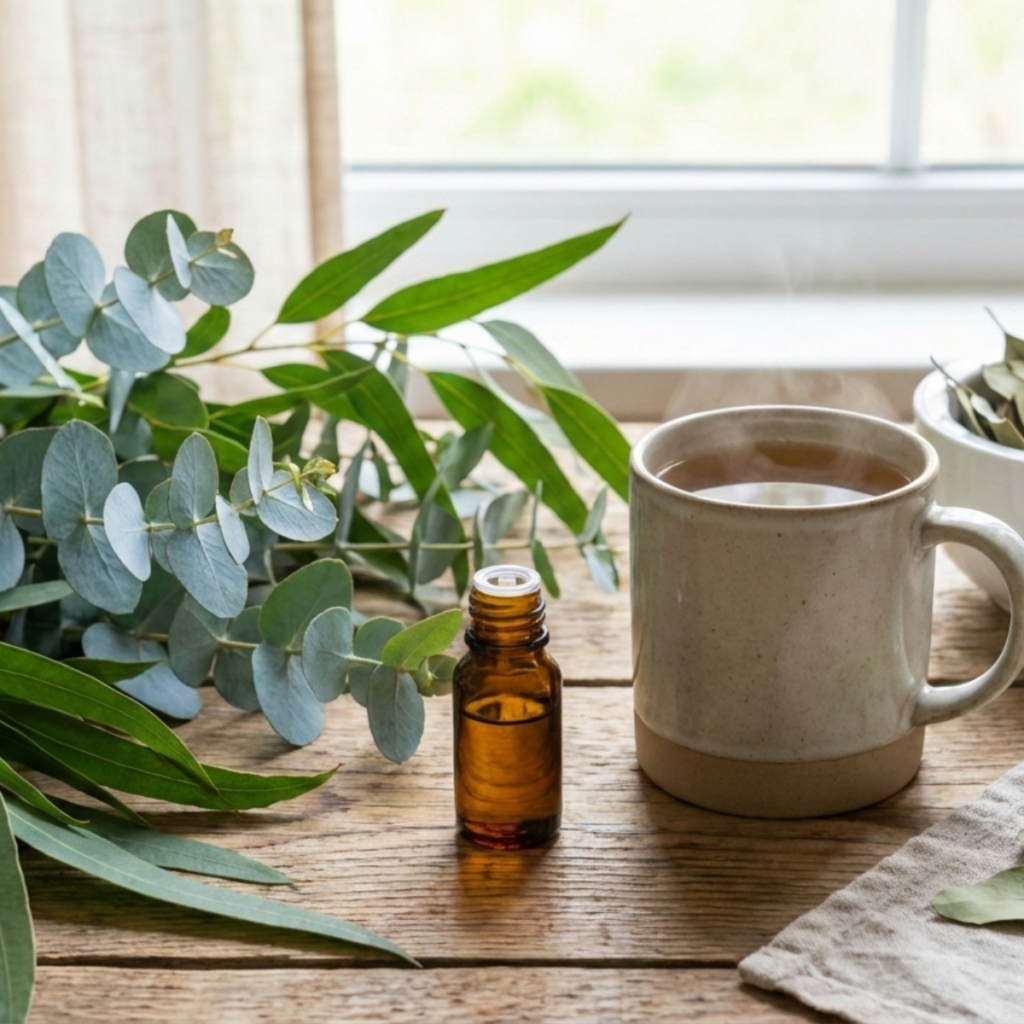
Discover the most complete guide to eucalyptus you’ll find. Properties, origins, species and the secrets of this astonishing tree, told from personal experience.
I’ve always felt I have a special connection with the plant world, but eucalyptus is on another level entirely. Has a smell ever transported you instantly to a happy memory, or cleared your head in a second? That’s what happens to me every time I walk past one of these giants, or open a bottle of its essential oil.
In this post I want to pour out everything I’ve learned, from its fascinating history to how to tell its many species apart, taking in its medicinal, industrial and decorative uses along the way. Make yourself a good coffee or a cup of tea, get comfortable and come with me.
What exactly is eucalyptus? Much more than a shade tree
When we think of eucalyptus, what usually comes to mind is a tall tree with long leaves and that unmistakable smell. But the reality is far more complex and far more interesting. The genus Eucalyptus belongs to the myrtle family and includes more than seven hundred species. Yes, you read that right, more than seven hundred.
Most of them are native to Australia and Tasmania, where they dominate the landscape almost completely. It’s genuinely hard to picture the Australian ecosystem without them. They’re the born survivors of the plant kingdom, able to adapt to conditions that would make other plants give up.
What amazes me most is how fast they grow. Some specimens reach dizzying heights, making them the tallest trees in the world after the redwoods. But it isn’t only the height that impresses, it’s the energy. They have a vitality you can feel standing under the canopy. There’s a freshness to them that seems to purify not just the air but your thoughts as well.
The origins of a tireless traveler
To understand why eucalyptus is now growing in Spanish hillsides and in gardens across half the world, we have to travel back in time. As I said, its home is Australia. There, Aboriginal Australians knew its secrets long before European botanists ever set foot on the continent.
Different peoples had different names for it, but they all agreed on one thing: it was a living pharmacy. They used the leaves to wrap wounds, to bring down fevers and to ease aching muscles. I love thinking about that ancestral knowledge, passed down generation after generation, that we’re still confirming today with all our technology.
Eucalyptus didn’t reach Europe until the end of the eighteenth century. It came via the Cook expeditions and other explorers who were struck by its stature and its scent. At first the trees were brought over as botanical curiosities, but their potential soon became obvious. In Spain, for instance, it was Father Rosendo Salvado who sent the first seeds from Australia to Galicia in the mid nineteenth century. What began as something ornamental ended up reshaping the landscape of entire regions.
The botany of eucalyptus: a perfect piece of natural design
If we get slightly more technical (only slightly, I don’t want to bore you), this tree’s structure is a marvel of biological engineering.
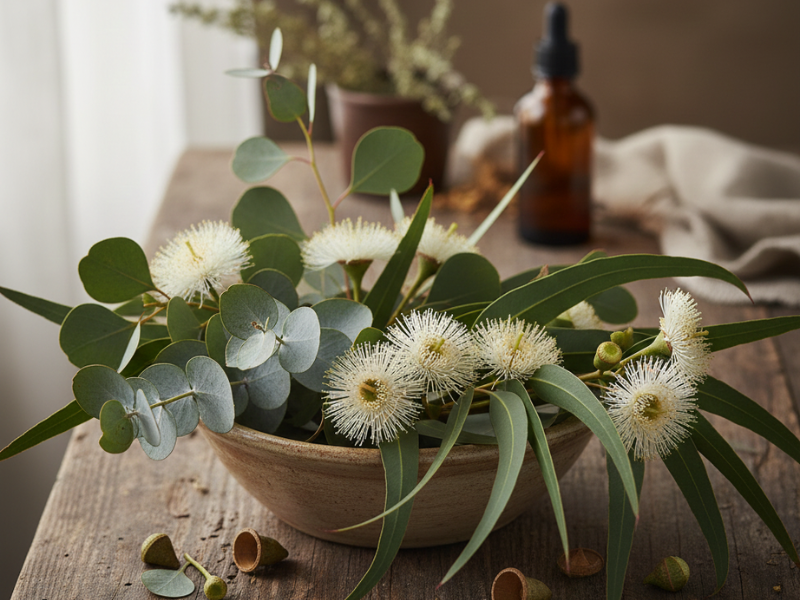
The leaves are probably its most famous feature. What’s curious is that eucalyptus shows something called heterophylly, meaning the young leaves are very different from the adult ones. Young leaves tend to grow in opposite pairs, are oval in shape and have a bluish or grayish tone. Adult leaves, by contrast, grow alternately, curve like a sickle and are a deeper green. That transformation has always struck me as a lovely metaphor for life: how we change shape to fit our surroundings better as we grow.
And what about the bark? Some species have smooth bark that peels away in long strips, revealing surprising colors underneath, from cream to reddish tones. Others have rough, persistent bark. Touching the trunk of a eucalyptus is a genuinely unusual sensory experience. Sometimes it feels like cool, smooth skin, and sometimes like solid rock.
The flowers are another hidden gem. They don’t have petals as we usually know them. What we see is a mass of stamens emerging from a kind of cup. When the bud opens, a little lid called an operculum falls away, and that’s where the name comes from: the Greek eu, meaning well, and kalyptos, meaning covered. From these flowers, bees gather the nectar for the famous eucalyptus honey, one of my favorites for its intense flavor.
The most common species and what each one is for
As I mentioned, there are hundreds of species, and they aren’t all alike or good for the same things. Through travel and reading I’ve learned to tell the important ones apart, and I want you to be able to do the same.
Eucalyptus globulus: the king of the oils
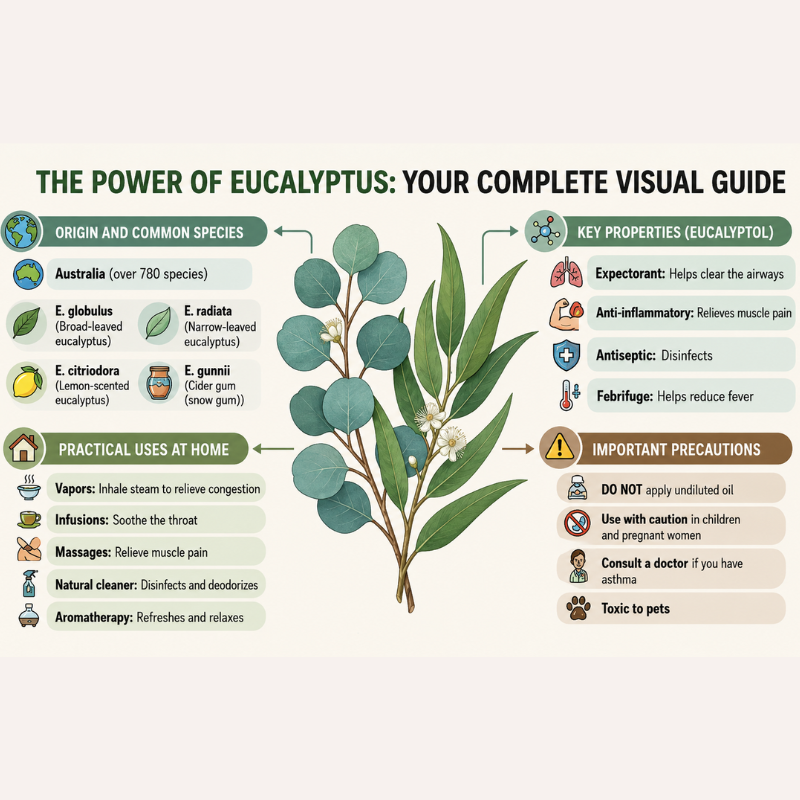
This is the best known one in Spain, the blue gum. It’s what you see in the forests of the north and it’s the main source of essential oil rich in cineole, or eucalyptol. If you’re after that powerful aroma that opens up your lungs at once, this is the one. It’s a vigorous tree, fast growing and with a sheer force to it.
Eucalyptus radiata: the gentle one
If globulus is brute strength, radiata is finesse. Its aroma is sweeter and less aggressive. I like using it when there are children around, or when I want something more balsamic and calming without being so penetrating. It’s excellent respiratory support with a much gentler character.
Eucalyptus citriodora: lemon eucalyptus
This one is a summer favorite of mine. It smells literally of lemon, thanks to its high citronellal content. It’s a spectacular tree, with a very white, elegant trunk. Its uses are quite different from the others: it’s widely used as a natural insect repellent and for skin and joint concerns, thanks to its anti-inflammatory properties.
Eucalyptus gunnii: the garden jewel
This one tends to stay smaller and is used a lot in decorating. Its young leaves are almost circular and a beautiful silvery blue. If you’ve ever bought a bouquet with bluish green foliage in it, this was probably it. It’s cold hardy and looks lovely in any corner, giving a space that rustic and elegant feel at the same time.
The therapeutic properties that make eucalyptus such a treasure
If anything defines eucalyptus, it’s how effective it is. It isn’t one of those plants you have to use for months before you notice anything. Its effect tends to be fairly immediate, especially when it comes to clearing the airways. And it doesn’t stop there, its benefits go well beyond a simple cold.
Cineole: the active heart of this green marvel
To understand why it works so well, we need to talk about its star component: eucalyptol, also known as 1,8-cineole. This natural compound is responsible for that penetrating smell and for most of its medicinal virtues. It’s a well studied expectorant, antiseptic and anti-inflammatory.
When we inhale the aroma of eucalyptus, the cineole comes into contact with our mucous membranes and starts working straight away. It helps thin mucus so it’s easier to clear, and it reduces inflammation in the airways. It’s as though the tree lends you a little of its strength to help you breathe freely again. It feels almost magical to me, but it’s pure natural chemistry.
A deep breath: your lungs’ number one ally
It’s impossible to talk about this plant without mentioning the respiratory system. That’s easily its best known and most valued use. I always keep some eucalyptus on hand when fall arrives and the first cold weather starts making trouble.
It isn’t only useful for ordinary nasal congestion. Eucalyptus is a good support during more stubborn stretches, like a lingering cough or a blocked up sinus, and it’s traditionally been used to help bring down a fever, something Aboriginal Australians knew thousands of years ago.
One important exception, and I want to be clear about it because you’ll often see it recommended the other way around: if you have asthma, eucalyptus is not automatically your friend. In some people the concentrated aroma can trigger bronchospasm rather than relieve it. If you’re asthmatic, don’t use it in steam inhalations, and check with your doctor before using it at all.
Antiseptic and anti-inflammatory power for your skin and body
It isn’t all about breathing. Eucalyptus has a lesser known but equally useful side: caring for skin and easing aches. Thanks to its antiseptic properties, it’s great for cleaning up small scrapes and cuts, or for dabbing on the occasional breakout.
As for muscles and joints, eucalyptus oil (especially the citriodora variety I mentioned) is a remarkable natural pain reliever. If you have discomfort from arthritis, or you’ve simply overdone it at the gym, a massage with a carrier oil and a few drops of eucalyptus can work wonders. Going on, it creates a cool sensation followed by a comforting warmth that relaxes muscle fibers deeply.
How to use eucalyptus at home, safely and effectively
Now that we know what it does, let’s look at how to invite eucalyptus into our daily routine. There are plenty of ways, and each has its moment. Here are my favorites, the ones I use myself.
Steam inhalation: the classic technique
This is the old reliable, the one our grandmothers used, and it’s just as effective today. There’s nothing like a good steam to open up your chest and feel the air coming in properly again.
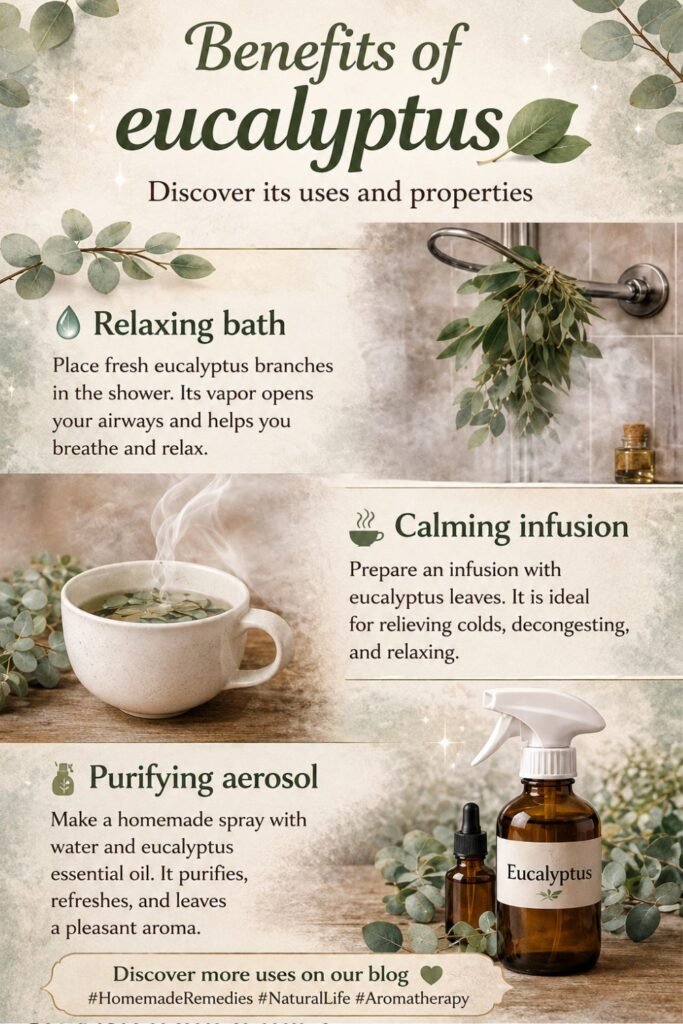
To do it properly, heat water until it boils, take it off the stove and add a handful of dried eucalyptus leaves, or a couple of drops of essential oil. Put a towel over your head, covering the bowl, and breathe the vapor for about ten minutes. It’s a pause in the day, a moment with yourself while the plant does its work. Do be careful not to scald yourself, and keep your eyes closed, because eucalyptus is strong and will sting them.
Two things this technique isn’t for: children, because a bowl of near boiling water at face height is one of the most common household burn accidents, and anyone with asthma, for the reason I explained above.
Infusions that comfort body and soul
Eucalyptus tea is another way to benefit from its properties, especially for soothing a sore throat. But here’s a piece of advice from a friend: go easy on the leaves. Eucalyptus is very strong, and an over concentrated infusion tastes unpleasant and sits heavily on the stomach.
A couple of leaves per cup is plenty. Steep them for five minutes in very hot water, strain, and add a little honey. You’ll feel it comfort you from the inside, especially before bed if you’re congested. It’s like a green hug for your throat.
Two caveats worth knowing. This is one for occasional use, not a daily tea, and it isn’t suitable for young children or during pregnancy. And honey should never be given to a baby under one year old, because of the risk of infant botulism.
Massage oils for tired muscles
If you’re into sports, or you carry your tension in your neck (as I do after too many hours writing at the computer), you’ll love this. All you need is a carrier oil, sweet almond or jojoba, and a few drops of eucalyptus essential oil.
I like mixing ten milliliters of almond oil with about five drops of eucalyptus globulus or citriodora. I work it into my shoulders and neck with circular movements. The relief is almost instant. And the scent that lingers is so clean and fresh that it lifts mental fatigue too. Two for the price of one.
Precautions you should know about
Like everything powerful in nature, eucalyptus should be used with respect and knowledge. Natural doesn’t mean harmless, and knowing when not to use it is essential.
First and most important: eucalyptus essential oil must never, and I mean never, be swallowed neat. It’s extremely concentrated and genuinely toxic. Even small amounts have caused serious poisoning, particularly in children, so keep the bottle somewhere they can’t reach it. Always use it diluted, or follow the guidance of a health professional.
As for the little ones, extra care is needed. Eucalyptus globulus, with its high cineole content, is too strong for young children and can cause breathing difficulties. Standard guidance is not to apply cineole rich oils anywhere near the face of a child under ten, and not to use them at all on babies. If you want something for a child, choose a gentler variety like Eucalyptus radiata, keep the dose very low, use it away from the face, and check with your pediatrician first.
People with asthma need to be cautious too, as I explained above. And during pregnancy and breastfeeding it’s always better to ask your doctor before using essential oils regularly.
Eucalyptus around the house: a natural cleaner and a beautiful scent
If you’re like me and you like to cut down on chemical products at home, eucalyptus is about to become your new best friend. It smells glorious, and it’s a lovely way to keep surfaces fresh. I stopped buying those multipurpose sprays with synthetic scents that made me sneeze a long time ago.
One of my favorite ways to use it is in a homemade surface cleaner. It couldn’t be simpler: a glass jar, cleaning vinegar and a good handful of eucalyptus leaves (fresh is better). Fill the jar with leaves, cover with the vinegar and leave it in a dark place for a couple of weeks. The vinegar draws out the plant’s aromatic oils. Then strain it, pour it into a spray bottle and use it on kitchen counters, glass, even floors. The vinegar smell vanishes quickly, leaving that fresh trace of the forest behind.
One thing I want to flag clearly, because you’ll see it recommended a lot: if you have cats or dogs, do not add eucalyptus essential oil to your mop water. Eucalyptus is toxic to both, and cats in particular can’t process these compounds. They walk on the floor and then groom their paws. If you have pets, use the vinegar infusion on its own, without added essential oil, and keep them out of the room until the floor is completely dry. It still cleans beautifully.
The shower trick: a spa in your own bathroom
This is easily the trick I recommend most to friends. It’s so simple and so effective that it changes how you start the day. All you need is a few branches of fresh eucalyptus (the round leaved gunnii looks gorgeous, but any of them work) tied together with string.
Hang the bunch from the shower head, positioned so the water doesn’t fall directly on the leaves. The idea is for the heat and steam to activate the oils. Within a minute your bathroom becomes an aromatic sauna. It’s remarkable how much it helps clear your head in the morning, or shed the weight of the day at night. The bunch lasts a couple of weeks and looks beautiful too. A small daily luxury that costs almost nothing.
Eucalyptus in decorating and emotional wellbeing
We can’t overlook how good this plant looks. Its grayish green and blue tones go with any style. I love putting tall vases of dried eucalyptus branches in the corners of the living room. They don’t just decorate, they keep releasing that subtle scent for months.
On an emotional level, eucalyptus is said to clear negative energy from a space. Whether or not you believe in that, what’s undeniable is that a room that smells of eucalyptus invites concentration and mental clarity. When I have a lot of work piled up or I’m feeling overwhelmed, the scent helps me focus. It’s as though it carries off some of the mental noise and lets me see things with more perspective. If you like the idea of burning a few dried leaves the way you’d burn incense, do it in a heatproof dish, never unattended, and with a window open, because eucalyptus leaves are full of oil and catch very readily.
Can you grow eucalyptus? Tips for having your own
This is a question I get a lot: can I have a eucalyptus in my garden or on my balcony? The answer is a resounding yes, with some important caveats you’ll want to know if you don’t want the tree becoming a problem.
If you have a large garden, a eucalyptus can be the absolute centerpiece. But be warned, they grow very, very fast. Their roots are powerful and relentless in seeking out water, so never plant one near pipes, pools or the foundations of your house. It needs full sun to look its best and isn’t fussy about soil, though it prefers good drainage.
Eucalyptus in a pot: is it possible?
For those of us in apartments or houses with a terrace, the best option is Eucalyptus gunnii. It takes pruning very well and can live in a large pot for several years. The key things are plenty of light and steady watering, especially in summer, because pots dry out far faster than open ground.
I love having one on the balcony. It’s a pleasure watching the new leaves come through, so round and blue. And having it close means I always have fresh leaves for my steams and baths. If it gets too big, don’t be afraid to prune it. Eucalyptus is very forgiving and will come back stronger.
The environmental debate: let’s talk about conservation
As I said at the start, I like to be transparent with you. Eucalyptus is a wonderful tree, but its mass introduction into countries like Spain has been genuinely controversial. That’s not the tree’s fault, of course, but the way we humans have managed it.
Because it grows so fast and has such high industrial value for paper and timber, enormous monocultures have been planted that have sometimes displaced our native oak and chestnut forests. It’s also a thirsty tree and, because of its essential oils, highly flammable, which can make wildfires worse without proper management.
The way I see it, the key is balance. This isn’t about hating eucalyptus, it’s about respecting it in context. In our gardens and for our personal use, it’s a gem. At scale, we need to be backing forest diversity. Loving nature also means understanding that every plant has its ideal place. So when you go out to gather a few branches, do it respectfully: never tear off whole limbs in a way that damages the tree, and make sure foraging is allowed where you are. Conservation starts with small gestures of gratitude toward what the earth gives us.
Preserving eucalyptus: keeping its essence alive all year
We don’t always have a eucalyptus tree to hand when we need one, which is why learning to preserve the leaves matters. I do one big gathering once or twice a year, always with respect, so my green medicine cabinet is always stocked.
Air drying: the traditional and most effective method
This is my favorite because it best preserves that lovely blue tone and, above all, the volatile oils. The trick is not to rush. Gather your branches, make sure they’re free of dust and insects, and tie them into small bunches with jute or cotton twine.
Hang the bunches upside down somewhere dark, dry and with a little airflow. Darkness is key, because direct sunlight degrades the chlorophyll and the essential oils, leaving the leaves brown and lifeless. Within a couple of weeks the leaves will feel crisp. That’s when you strip them, or store the bunches as they are.
Storage, so it doesn’t lose its magic
Once you have your dried leaves, the container you keep them in makes all the difference. Forget plastic bags, which trap moisture and invite mold. Amber or violet glass jars are best, since they block light. If you don’t have dark jars, use clear glass but keep them inside a cabinet.
Always label your jars with the date you gathered them. Eucalyptus keeps a long time, but ideally use it within a year to enjoy its full aromatic strength. Every time you open the jar and catch that smell, I promise it’ll put a smile on your face.
Frequently asked questions about the green giant
Is eucalyptus toxic to pets?
This is a really important question. If you have cats or dogs, you should know that eucalyptus, and especially its essential oil, is toxic to them if swallowed or applied to their skin. Cats in particular have livers that can’t process certain essential oil compounds.
If you use a diffuser, make sure the room is well ventilated and that your pet can leave if the smell bothers them. Never apply eucalyptus products directly to their coat. Don’t add the essential oil to floor cleaner either, since they’ll walk through it and then groom their paws. As decoration around the house it’s usually fine, unless your dog decides to chew the branches, which you should discourage. If your pet ever seems unsteady, drools or vomits after exposure, call your vet.
Can I have eucalyptus honey if I’m diabetic or have allergies?
Eucalyptus honey is wonderful for a sore throat, but it’s still honey, which means sugar. If you’re diabetic, talk to your doctor about quantities. As for allergies, if you react to pollen in general it’s always sensible to try a very small amount first and see how you do. One thing that isn’t negotiable: never give honey of any kind to a baby under one year old, because of the risk of infant botulism.
Does eucalyptus dry out the soil where it’s planted?
As we discussed in the environmental section, eucalyptus has a big demand for water. Its roots are extremely efficient at finding it, which can leave smaller plants nearby struggling when water is scarce. So if you’re planting one in your garden, make sure it has enough space and won’t be competing with your vegetable patch or with delicate plants. It’s a tree that prefers its own company.
Can I use fresh leaves for infusions?
You can. Fresh leaves have a much more intense aroma. But remember what I said: they’re strong. Use only one or two leaves per cup, keep it occasional rather than daily, and skip it entirely for young children or during pregnancy. Dried leaves give a slightly softer, more manageable flavor, but if you’re lucky enough to have a tree nearby, fresh leaves are wonderful for steams and baths.
A commitment to nature
Writing this guide has been my way of thanking nature for everything it gives us. Sometimes we move through life so fast that we never stop to look at the trees around us, without realizing that they hold ancient wisdom and a capacity to heal that’s right there within reach.
Eucalyptus has taught me that you can be strong and flexible at once, that you can grow fast without losing your essence, and that our own scent, the mark we leave on the world, can be a source of relief for other people. I hope with all my heart that this article has helped you see this tree differently, and to invite it into your life more consciously and respectfully.
Remember that nature is a delicate balance. Use eucalyptus to feel better, to clean your home, to decorate your special moments, but always knowing we’re part of something bigger. Conserving these species and our forests is everyone’s responsibility.
Now it’s your turn. I’ve poured out everything I know, but I’m sure you have stories, tricks or questions to share too. Do you have a childhood memory tied to the smell of eucalyptus? Have you tried any of the recipes or tricks here, like the shower one?
It genuinely makes my day to get your comments. I read every single one, and I love that this blog is a place where we all learn from each other. So please don’t go without leaving a comment below. Tell me what you thought of the guide, whether it was useful, or whether there’s another natural topic you’d like me to cover in this much depth. And if you’re still hungry for more, take a look around the plants section.
Thank you so much for coming with me all the way to the end of this long green road. It’s been a pleasure sharing it with you.